

IOC details Russia stance for Olympics, cites human rights
Advertisement
Read this article for free:
or
Already have an account? Log in here »
To continue reading, please subscribe:

Digital Subscription
One year of digital access for only $205*
- Enjoy unlimited reading on winnipegfreepress.com
- Read the E-Edition, our digital replica newspaper
- Access News Break, our award-winning app
- Play interactive puzzles
*First annual payment billed as $205.00 + GST for one year. This annual subscription will automatically renew at $233.00 + GST every 52 weeks (10% off the regular annual price of $259.35). Offer available to new and qualified returning subscribers only. Cancel any time.
To continue reading, please subscribe:
Add Free Press access to your Brandon Sun subscription for only an additional
$1 for the first 4 weeks*
- Enjoy unlimited reading on winnipegfreepress.com
- Read the E-Edition, our digital replica newspaper
- Access News Break, our award-winning app
- Play interactive puzzles
*Your next Brandon Sun subscription payment will increase by $1.00 and you will be charged $17.95 plus GST for four weeks. After four weeks, your payment will increase to $24.95 plus GST every four weeks.
Read unlimited articles for free today:
or
Already have an account? Log in here »
Hey there, time traveller!
This article was published 02/02/2023 (1296 days ago), so information in it may no longer be current.
GENEVA (AP) — The IOC stepped up efforts Thursday to explain its position on trying to help Russian athletes qualify for next year’s Paris Olympics amid a backlash from Ukraine and its allies.
The International Olympic Committee’s move last week to map a pathway to Paris for athletes from Russia and Belarus who have not actively supported the war provoked strong objections from Ukraine, which wants to see those countries remain banned from most international sports.
Publishing a series of explanations and rebuttals to its critics Thursday, the the Olympic body also responded to Ukrainian president Volodymyr Zelenskyy’s invitation for his IOC counterpart Thomas Bach to return and see the ruined city of Bakhmut.
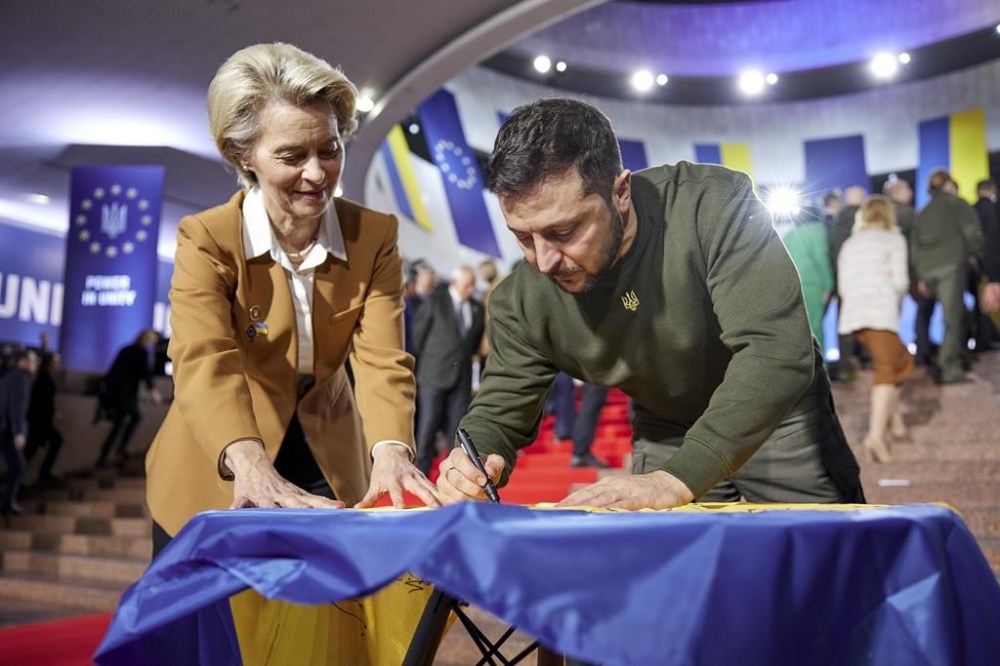
“Currently there are no plans for another visit to Ukraine,” the IOC said, noting that Bach visited Kyiv last July and had since spoken with Zelenskyy in telephone calls.
The IOC once more cited the opinion of two United Nations human rights experts who support the view that Russians and Belarusians should not face discrimination just for the passport they hold. Instead, they could compete under a neutral flag.
That view has been challenged in recent days by two Ukrainian medalists at the Tokyo Olympics, tennis player Elina Svitolina and high jumper Yaroslava Mahuchikh, and by boxer Wladimir Klitschko, who took gold at the 1996 Atlanta Olympics. They want a total ban on Russia and Belarus from Paris.
Olympic officials in Ukraine have warned they could boycott Paris and are meeting Friday to discuss it.
“It is extremely regretful to escalate this discussion with a threat of a boycott at this premature stage,” the IOC said Thursday.
Olympic officials in Latvia and Poland are also threatening a boycott, and those countries were joined by Estonia and Lithuania in a statement Thursday by sports ministers which suggested the sports debate was being used “as a distraction from the illegal aggression against Ukraine.”
“It is natural that there are dissenting voices coming mainly from neighboring countries of Ukraine, given their specific situation,” said the IOC, whose Olympic Charter obliges the 206 national Olympic bodies to send a team to the Summer Games.
At the White House on Thursday, press secretary Karine Jean-Pierre said the United States had “worked to hold Russia accountable for the brutal and barbaric war” before acknowledging the IOC’s position.
“In cases where sports organizations and event organizers, such as the International Olympic Committee, choose to permit athletes from Russia and Belarus to participate in sporting events, it should be absolutely clear that they are not representing the Russian or Belarusian states,” she said.
The IOC also responded to the comparison with Apartheid-era South Africa being excluded from the Olympics for more than 20 years, noting that U.N. sanctions were in place then and also when athletes from the former Yugoslavia competed as independent neutrals at the 1992 Barcelona Olympics.
“There are no U.N. sanctions in place against Russia and Belarus at this moment in time,” the IOC said.
Russia, as a permanent member of the U.N Security Council, can veto any of its proposed resolutions.
The IOC also pointed to having created an aid fund of $7.5 million that is helping more than 3,000 Ukrainian athletes.

“The IOC is deeply saddened to hear of the death of members of the Olympic Community in Ukraine who have lost their lives in this war,” it said.
Government pressure on athletes and sports bodies should also be resisted, the IOC said, adding its stated mission is “to unite the entire world in a peaceful competition.”
Ultimately, the governing bodies of each Olympic sport should decide the conditions for athletes to be able to compete in Paris.
___
More AP sports: https://apnews.com/hub/apf-sports and https://twitter.com/AP_Sports
Related Articles
Olympic echoes of boycott era as Ukraine vs IOC intensifies



Advertisement Advertise With Us
Advertisement Advertise With Us