

Canadian sliders support coach’s decision that drew ire of other athletes, countries
Advertisement
Read this article for free:
or
Already have an account? Log in here »
To continue reading, please subscribe:

Digital Subscription
One year of digital access for only $205*
- Enjoy unlimited reading on winnipegfreepress.com
- Read the E-Edition, our digital replica newspaper
- Access News Break, our award-winning app
- Play interactive puzzles
*First annual payment billed as $205.00 + GST for one year. This annual subscription will automatically renew at $233.00 + GST every 52 weeks (10% off the regular annual price of $259.35). Offer available to new and qualified returning subscribers only. Cancel any time.
To continue reading, please subscribe:
Add Free Press access to your Brandon Sun subscription for only an additional
$1 for the first 4 weeks*
- Enjoy unlimited reading on winnipegfreepress.com
- Read the E-Edition, our digital replica newspaper
- Access News Break, our award-winning app
- Play interactive puzzles
*Your next Brandon Sun subscription payment will increase by $1.00 and you will be charged $17.95 plus GST for four weeks. After four weeks, your payment will increase to $24.95 plus GST every four weeks.
Read unlimited articles for free today:
or
Already have an account? Log in here »
Hey there, time traveller!
This article was published 13/01/2026 (249 days ago), so information in it may no longer be current.
CALGARY – Canadian skeleton racers Madeline Parra and Brielle Durham say they were comfortable with their coach’s decision to pull them from a race in a move that’s created friction between countries trying to qualify athletes for the Olympic Games.
Parra and Durham were among four Canadian women taken out of a North American Cup race Sunday in Lake Placid, N.Y., where sliders chased qualification for February’s Winter Olympics in Milan and Cortina, Italy.
The removal of four of Canada’s six women from the field dropped the number of entries from 23 to 19.
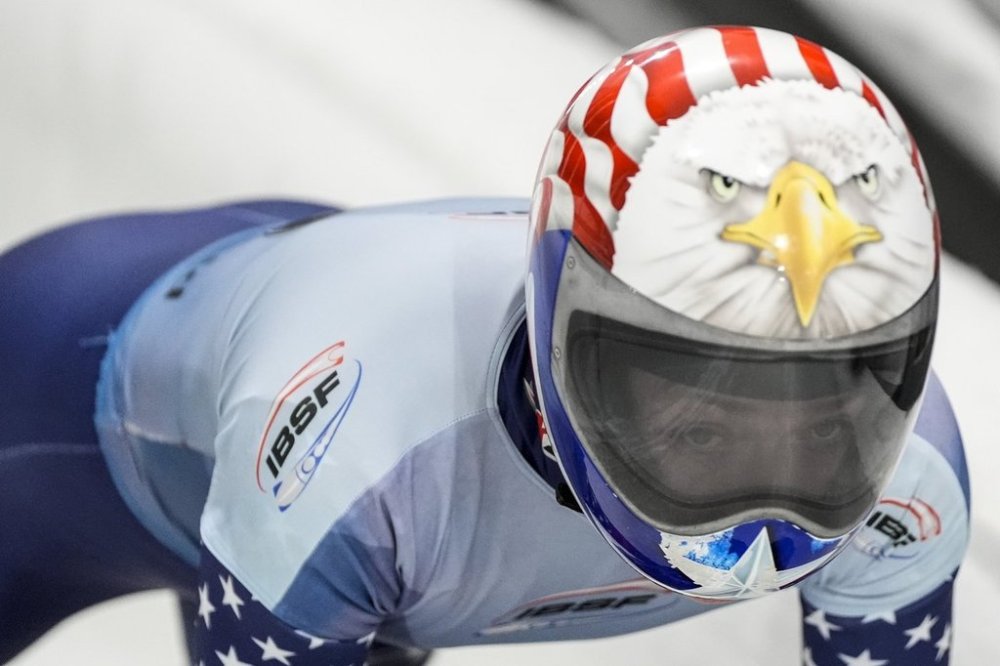
That dropped the number of Olympic qualification points available to competitors, which drew the ire of U.S. veteran slider Katie Uhlaender trying to qualify for a sixth Olympic Games, and Denmark’s bobsleigh and skeleton federation.
Canada was accused of manipulating the field to protect rankings of its senior women for the Olympic Games. Hallie Clarke is ranked 12th and Jane Channell 26th in the world.
Bobsleigh Canada Skeleton countered in a statement the welfare of young athletes was paramount in the third of three straight races in Lake Placid where some had struggled in the first two.
Parra, 18, and Durham, 21, say the reasons given for their withdrawal were both — athlete welfare and enhancing Canada’s chances of more than one woman sliding in the Olympic Games.
“They had come over and explained to us that it would be in the best interest for the way points had worked for Jane, so that we as a team can qualify two spots to the Olympics,” said Parra.
Durham, a first-year slider, had crashed in the second of three races in Lake Placid.
“There are also mental and physical aspects that had to be evaluated on my end with my coaches about sliding,” said the Calgarian.
“It was for the team, but on a personal discussion I had with the coaches, there were also other reasons like my health and how I would handle the following week following my first crash.”
Uhlaender was quoted in a report as saying Canada’s athletes wanted to race and were scared to speak out against the decision.
“I was absolutely comfortable and happy with this decision. I’m in full support of our senior athletes,” Durham said.
Twenty-five women will compete Feb. 13-14 at the Cortina Sliding Centre. Two countries will be able to enter three women, four countries two athletes and 11 countries can enter just one.
A country’s quota will be determined by world rankings as of Sunday.
Athletes’ points earned on the top World Cup circuit and the developmental North American, Europe and Asian circuits factor into their world rankings. A World Cup result is worth more points.
Uhlaender, 41, has yet to race a World Cup this season and competed in North American and Asian Cup events.
She received 90 points for Sunday’s victory in Lake Placid, N.Y., instead of the 120 for her first two wins there because of the reduced field.
“It’s rare that over 21 entries are at a normal North America’s Cup race, but given the proximity to the Games qualification many athletes dropped down and came from World Cup races and flew over to Lake Place to compete in this,” said veteran Canadian slider Grace Dafoe.
“This North America’s Cup circuit is meant to be a development circuit. What happened is we have a five-time Olympian and other World Cup athletes showing up to this race.”
BCS said in a statement it’s well-known that lower-circuit races don’t carry fixed points and that Canada has always treated them as places to develop athletes, and not pursue Olympic qualification.
That might not placate other countries, which felt they had a chance to qualify a woman for the Olympic Games
Denmark’s bobsled and skeleton federation asked the world governing body to look into the matter. The International Bobsleigh and Skeleton Federation has said its Integrity Unit will investigate.
The Danes sent an email on Tuesday to other countries asking those that competed in Lake Placid to come forward with what they saw and heard regarding Canada’s actions.
“We were convinced that such an action would constitute a violation of the IBSF Code of Ethics, safeguarding principles, and competition integrity,” Denmark federation president Carsten P. Wulf wrote in an email to 20 other countries.
“The sliding community needs a strong Canadian Federation — one with whom we can collaboratively address a number of challenges in the years to come. This is only possible if we share the same understanding of Olympic values and the IBSF Code of Ethics.”

Dafoe, 32, was one of two Canadians who competed Sunday and said it will be her final international race after a decade in the sport.
“My job is to trust our coaching staff. Having been from a program that was not collaborative or really athlete-centred at all, I used to have to really take that part into consideration, whether they had the team’s best interest in mind,” Dafoe said.
“Under our current leadership, I have not had to think about that at all. I trust them. We’ve been engaged and transparent in everything about competition planning for the whole season.
“I was OK with the decision because I trusted they had weighed their decision, they had played within the rules, and we really pride ourselves on being a team-focused program, there to support each other.”
This report by The Canadian Press was first published Jan. 13, 2026.
Related Articles
Greenland biathlete pursues Olympic dream while anxious about 'terrifying' threats to her homeland





Advertisement Advertise With Us
Advertisement Advertise With Us