

Empty stadiums for soccer games? It’s not quite that simple
Advertisement
Read this article for free:
or
Already have an account? Log in here »
To continue reading, please subscribe:

Digital Subscription
One year of digital access for only $205*
- Enjoy unlimited reading on winnipegfreepress.com
- Read the E-Edition, our digital replica newspaper
- Access News Break, our award-winning app
- Play interactive puzzles
*First annual payment billed as $205.00 + GST for one year. This annual subscription will automatically renew at $233.00 + GST every 52 weeks (10% off the regular annual price of $259.35). Offer available to new and qualified returning subscribers only. Cancel any time.
To continue reading, please subscribe:
Add Free Press access to your Brandon Sun subscription for only an additional
$1 for the first 4 weeks*
- Enjoy unlimited reading on winnipegfreepress.com
- Read the E-Edition, our digital replica newspaper
- Access News Break, our award-winning app
- Play interactive puzzles
*Your next Brandon Sun subscription payment will increase by $1.00 and you will be charged $17.95 plus GST for four weeks. After four weeks, your payment will increase to $24.95 plus GST every four weeks.
Read unlimited articles for free today:
or
Already have an account? Log in here »
Hey there, time traveller!
This article was published 24/04/2020 (2325 days ago), so information in it may no longer be current.
It will soon be the new norm, a cold and often unnerving sight that soccer and many other sports will have to get accustomed to over the coming months.
Games taking place in empty stadiums.
But will these stadiums actually be empty? Far from it.
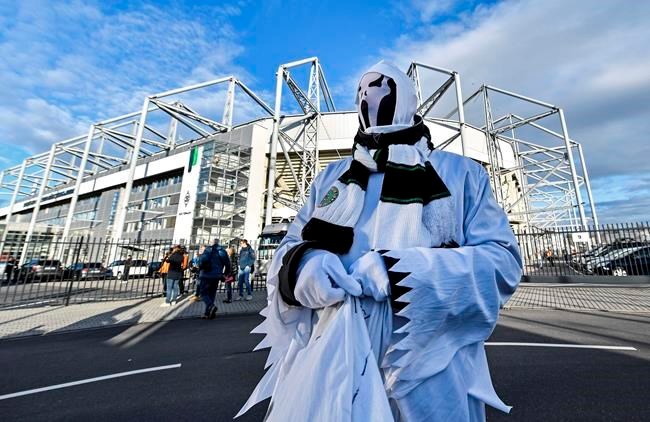
“It’s not about 22 players walking onto a pitch and (kicking) a ball about,” FIFA vice-president Victor Montagliani told The Associated Press, referring to what he called the “phased-in approach” that soccer — and society as a whole — will need to take to get back to normal following the coronavirus outbreak.
Some teams in Europe have experience in staging games without flag-waving and loudly cheering fans — be it while serving a punishment for crowd trouble or, as was the case in February and March, because of a rapidly spreading virus that turned into a pandemic.
Now, almost every club will be planning for such a scenario as soccer leagues start to ramp up preparations for a resumption which will be staggered depending on how well countries have managed to contain the virus.
Of Europe’s major leagues, Germany appears to be closest to lifting its suspension, with some state governors even hoping to resume games on May 9. The Bundesliga is planning to have a maximum of 213 people in the stadium — everyone from players to TV cameramen.
In Britain, which is in the peak of the virus outbreak, a return in late June is the possible — albeit optimistic — call from clubs in the Premier League. One leading club official spoke of the need for at least 300 people at matches.
In Sweden, where soccer authorities are planning for a June 14 restart, a venue official at champion Djurgarden told the AP that it would be possible to limit numbers to 50 if fans aren’t allowed in stadiums. In Switzerland, leaked plans attained by daily newspaper Blick this week stated there should be no more than 200 essential staff at games.
Much depends on the directives from governments and the demands of domestic and international broadcasters, whose money clubs increasingly rely on.
INSIDE STADIUMS
Players and match officials obviously are on the list. Each squad for a match has 18 or 20 players in major European leagues, and some back-ups will be required in case of late withdrawals. There is a four-person team of match officials (referee, two assistant referees and a fourth official), along with a replacement official.
Then there’s the coaching staff — managers, assistants, fitness coaches, physios and a club doctor.
Other essential people include a match delegate, an anti-doping official, official photographers and staff from broadcasters (like sound engineers, technicians, camera crew and producers), and medical workers. In England, for example, there needs to be four paramedics and an ambulance driver at every game.
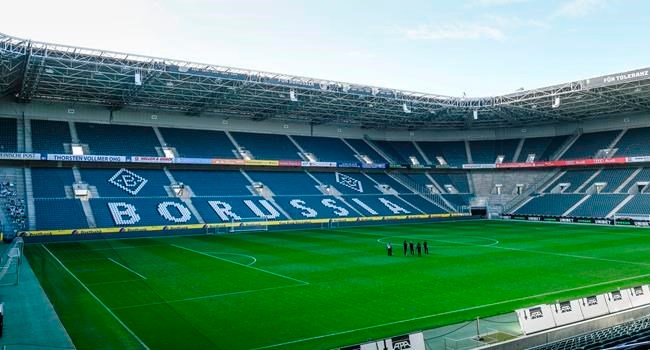
In a list provided by the Spanish league while it planned for games without fans in March, other groups getting stadium access included both teams’ board of directors, community managers, integrity officials and what it termed “technical staff with functions strictly related to holding the games,” which could be a group of up to a maximum of 100 people. That could include caterers, ground staff, ball boys and girls, maintenance, ground-safety officers, people who run advertising hoardings and stewards.
The number of journalists attending would vary from country to country, but that could easily be slimmed down. However, what’s unlikely to be altered is the TV set-up for top European competitions that generally uses between 10 and 15 cameras, plus technicians and interviewers for the host broadcaster.
When Borussia Mönchengladbach played Cologne last month, under different societal circumstances, there were 600 people in the stadium, Gladbach said. That included 250 media representatives, 200 security staff, 80 players and team staff members, 50 other club employees and smaller numbers of ball boys and paramedics.
Tomas af Geijerstam, head of matches and venues at Djurgarden, said if a game was restricted to 50 attendees, as mass gatherings in Sweden currently are, the number of coaches needed could be shrunk, fewer ball boys could be used and press could be limited. He said two locker rooms could be used by each team.
“We can manage a match with 50 people,” af Geijerstam said. “We have to if we want to play.”
OUTSIDE THE STADIUM
Games can still attract a crowd even when spectators are not in the stands.
Thousands of fans gathered outside the empty Parc des Princes to celebrate a Paris Saint-Germain win over Borussia Dortmund in the Champions League on March 11, tightly packed together and waving flares. Players went to celebrate with them.
So, any game played in an empty stadium still will need security guards or police posted around the venue to stop people from gathering. Information from Spain included the need for “public and private security agents,” firefighters and first-response personnel.
Some public officials have expressed concern about people crowding together for TV viewing parties. Liverpool manager Jürgen Klopp made similar comments before the shutdown.
BEFORE AND AFTER MATCHES
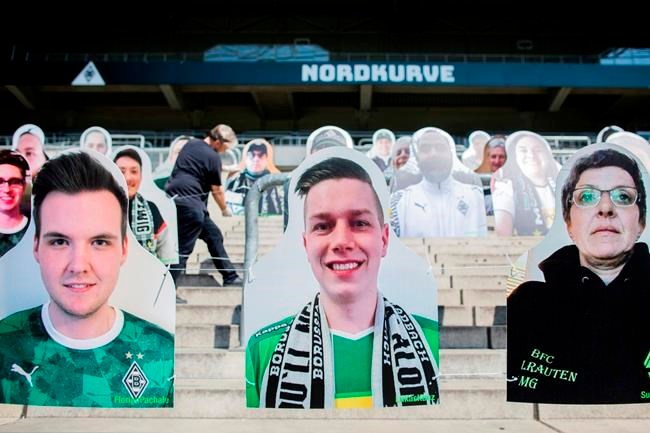
There’s also the question of what players do away from the stadium.
Germany is proposing coronavirus tests for players before each game, which risks a public backlash. The league says it would use “less than 0.5%” of the national testing capacity, but that still means thousands of tests to finish the season.
The deputy head of Germany’s public health body has criticized the plan, saying that tests should be reserved for people who have symptoms or are suspected to be part of an outbreak.

The National Rugby League in Australia has come up with its own idea. Its “Project Apollo” think-tank proposed making players live on a remote island camp. No soccer league has yet tried to copy that plan.
___
AP Global Soccer Writer Rob Harris contributed to this story.
___
More AP soccer: https://apnews.com/Soccer and https://twitter.com/AP_Sports
Related Articles
Spanish health minister says no soccer 'before summer' Polish soccer league plans to restart on May 29 Anger swells at Dutch decision ending football season In South Korea it's literally shut up and play





Advertisement Advertise With Us
Advertisement Advertise With Us