

New FIFA rules to protect female players’ maternity rights
Advertisement
Read this article for free:
or
Already have an account? Log in here »
To continue reading, please subscribe:

Digital Subscription
One year of digital access for only $205*
- Enjoy unlimited reading on winnipegfreepress.com
- Read the E-Edition, our digital replica newspaper
- Access News Break, our award-winning app
- Play interactive puzzles
*First annual payment billed as $205.00 + GST for one year. This annual subscription will automatically renew at $233.00 + GST every 52 weeks (10% off the regular annual price of $259.35). Offer available to new and qualified returning subscribers only. Cancel any time.
To continue reading, please subscribe:
Add Free Press access to your Brandon Sun subscription for only an additional
$1 for the first 4 weeks*
- Enjoy unlimited reading on winnipegfreepress.com
- Read the E-Edition, our digital replica newspaper
- Access News Break, our award-winning app
- Play interactive puzzles
*Your next Brandon Sun subscription payment will increase by $1.00 and you will be charged $17.95 plus GST for four weeks. After four weeks, your payment will increase to $24.95 plus GST every four weeks.
Read unlimited articles for free today:
or
Already have an account? Log in here »
Hey there, time traveller!
This article was published 19/11/2020 (2142 days ago), so information in it may no longer be current.
GENEVA – Female soccer players should soon get their maternity rights protected under new employment rules announced Thursday by FIFA.
The governing body of soccer is preparing to mandate clubs to allow at least 14 weeks of maternity leave paid at a minimum two-thirds of a player’s full salary. National soccer bodies can insist on more generous terms.
“Her club will be under an obligation to reintegrate her into football activity and provide adequate ongoing medical support,” FIFA said.
Any club that ended a player’s contract for becoming pregnant faces having to pay compensation and a fine, and being banned from the transfer market for one year.
“The idea is to protect female players before, during and after childbirth,” FIFA chief legal officer Emilio Garcia said on a conference call.
The move is seen as a key step in professionalizing women’s soccer — and respecting players’ family lives — after a successful 2019 World Cup and more investment by elite clubs in having a women’s team.
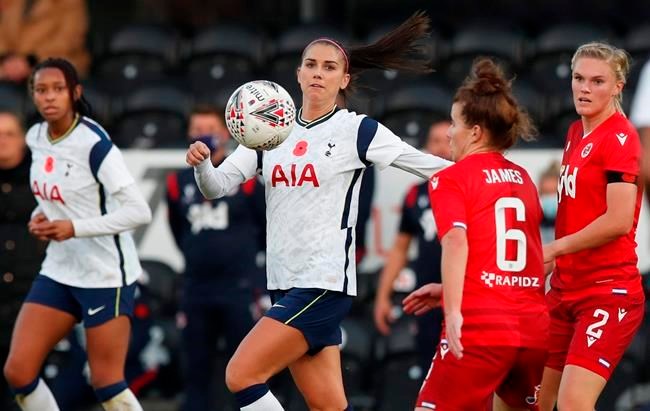
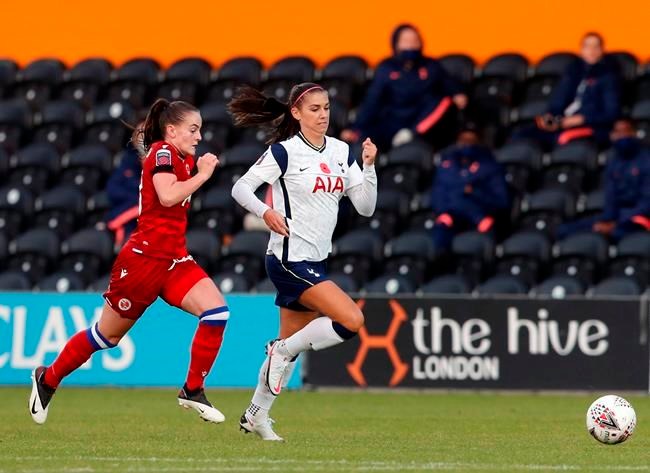
United States forward Alex Morgan, a World Cup winner last year, signed with Tottenham in September, four months after giving birth to her first child. She played her first game this month.
The rules, created with help from world players’ union FIFPro, are expected to be approved by the FIFA Council next month and would take effect on Jan. 1.
Although FIFA’s judicial bodies have not been presented with contract disputes over maternity rights, Garcia targeted getting ahead of potential problems in the fast-growing women’s game.
“We think these rules are part of common sense,” he said of the move, which follow International Labor Organization standards on compensating maternity leave.
At least eight weeks of the 14-week minimum maternity leave must be after the player gives birth.
FIFA also plans to help clubs by letting them register a player outside of a transfer window as a temporary replacement during a maternity leave.

Coaches will also get formal contractual protection in the proposal.
“FIFA has never taken care of them (coaches) for the last 120 years,” Garcia said, predicting the new rules would benefit coaches who work internationally.
The drafted rules aim to “protect contractual stability, achieve greater transparency and make sure that coaches also get paid on time,” FIFA said.
___
More AP soccer: https://apnews.com/Soccer and https://twitter.com/AP_Sports
Related Articles
Sassuolo flying high in Serie A with flamboyant De Zerbi


Advertisement Advertise With Us
Advertisement Advertise With Us