

New Brunswick child advocate offers critique of province’s school LGBTQ policy
Advertisement
Read this article for free:
or
Already have an account? Log in here »
To continue reading, please subscribe:
Monthly Digital Subscription
$0 for the first 4 weeks*
- Enjoy unlimited reading on winnipegfreepress.com
- Read the E-Edition, our digital replica newspaper
- Access News Break, our award-winning app
- Play interactive puzzles
*No charge for 4 weeks then price increases to the regular rate of $19.00 plus GST every four weeks. Offer available to new and qualified returning subscribers only. Cancel any time.
Monthly Digital Subscription
$4.75/week*
- Enjoy unlimited reading on winnipegfreepress.com
- Read the E-Edition, our digital replica newspaper
- Access News Break, our award-winning app
- Play interactive puzzles
*Billed as $19 plus GST every four weeks. Cancel any time.
To continue reading, please subscribe:
Add Free Press access to your Brandon Sun subscription for only an additional
$1 for the first 4 weeks*
*Your next subscription payment will increase by $1.00 and you will be charged $16.99 plus GST for four weeks. After four weeks, your payment will increase to $23.99 plus GST every four weeks.
Read unlimited articles for free today:
or
Already have an account? Log in here »
Hey there, time traveller!
This article was published 12/06/2023 (917 days ago), so information in it may no longer be current.
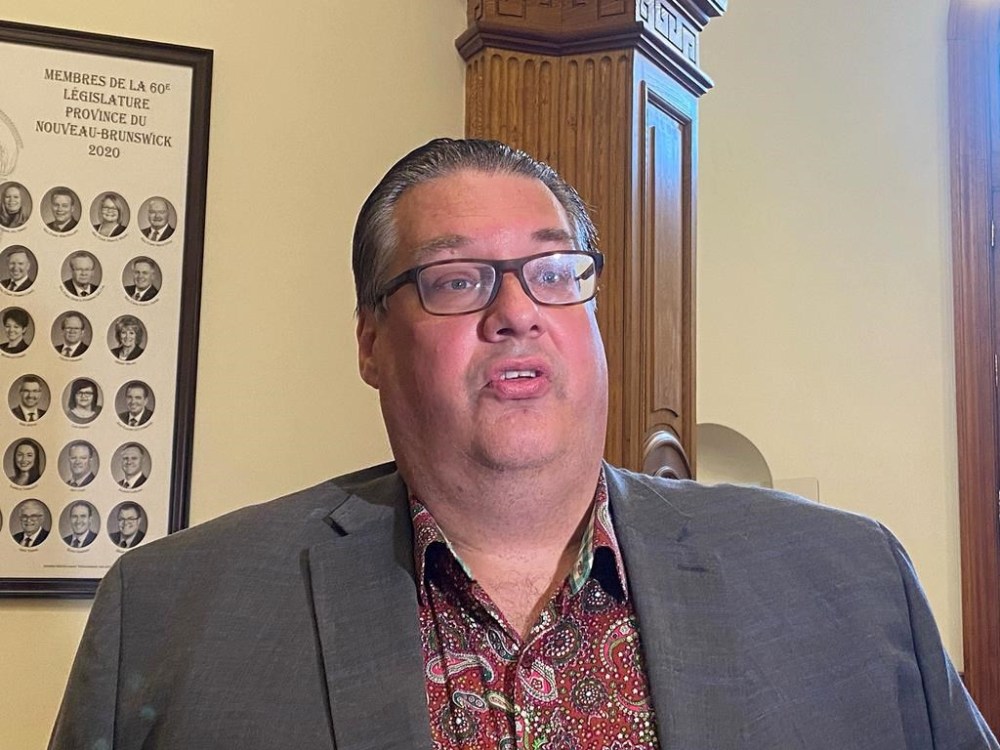
FREDERICTON – Changes announced last week to New Brunswick’s policy on sexual orientation in schools are “incredibly vague and shoddy” and could open the door to discrimination, the province’s youth and child advocate warned Monday.
Kelly Lamrock said the vagueness of the changes could create confusion for school administrators and introduce uncertainty for children at a time when they need understanding.
“The drafting here (of the policy), regardless of the issue, is so shoddy and inadvertently discriminatory that it really doesn’t seem to meet anybody’s purposes,” he told reporters.
The Progressive Conservative government made three changes to Policy 713, which come into effect next month. Students under 16 will now need parental consent to change their name or pronouns at school; universal washrooms will have to be private; and the policy on sports no longer states students’ participation will be “consistent with their gender identity.”
Premier Blaine Higgs said last week the changes to the three-year-old policy were to ensure that “secrets aren’t being kept from parents.”
“My position is very clear in relation to the role that families and parents need to play in their children’s growth,” he said.
Lamrock called the review, which began in April, “incoherent.” Last month he revealed the review was spurred by three complaints, even though the government said they received “hundreds” of concerns from a variety of groups, including parents and teachers.
Both the old and new policies required that students under 16 get parental consent to officially change their name and pronouns. The old policy said they could choose to be called what they liked at school unofficially. The new policy is unclear on unofficial preferences of names and pronouns for students under 16.
“If Terrance wants to be called by a nickname, it would be absurd to ask teachers to agree to use Terry but not Terri because of perceptions about the motivation,” Lamrock said.
“If there is a situation where somebody is choosing a name, and you suspect it might be for gender identity purposes, you have a whole different process and new barriers. That’s textbook legal discrimination.” Calling people the name they wish to be called is a simple courtesy, he added.
He questioned how teachers would deal with other personal issues that students might not want to share with a parent.
“What about straight students who might be dating or sexually active? What about if a student, whose parents are devout Muslim, decides she doesn’t want to wear the hijab at school even though her parents wish she would? What if a child with an ethnic background decides they like a nickname that sounds more North American even though their parents wish they wouldn’t for cultural reasons? What are the rules on all that?”
With regard to universal washrooms, he said schools cannot control what facilities will be available when students are on field trips. And he questioned why the government felt the need to remove wording from the section on sports that referred to participation consistent with their gender identity.
Lamrock said his office is assembling a team of lawyers to draft a memo for schools offering guidance on grey areas in the revised policy. “We’re going to provide that so teachers and principals have something to rely on when making their decisions,” he said.
This report by The Canadian Press was first published June 12, 2023.