

Optimistic, but aware: wet weather easing Fort Nelson, B.C., fire fears
Advertisement
Read this article for free:
or
Already have an account? Log in here »
To continue reading, please subscribe:
Monthly Digital Subscription
$1 per week for 24 weeks*
- Enjoy unlimited reading on winnipegfreepress.com
- Read the E-Edition, our digital replica newspaper
- Access News Break, our award-winning app
- Play interactive puzzles
*Billed as $4.00 plus GST every four weeks. After 24 weeks, price increases to the regular rate of $19.95 plus GST every four weeks. Offer available to new and qualified returning subscribers only. Cancel any time.
Monthly Digital Subscription
$4.99/week*
- Enjoy unlimited reading on winnipegfreepress.com
- Read the E-Edition, our digital replica newspaper
- Access News Break, our award-winning app
- Play interactive puzzles
*Billed as $19.95 plus GST every four weeks. Cancel any time.
To continue reading, please subscribe:
Add Free Press access to your Brandon Sun subscription for only an additional
$1 for the first 4 weeks*
*Your next subscription payment will increase by $1.00 and you will be charged $16.99 plus GST for four weeks. After four weeks, your payment will increase to $23.99 plus GST every four weeks.
Read unlimited articles for free today:
or
Already have an account? Log in here »
Hey there, time traveller!
This article was published 27/06/2024 (630 days ago), so information in it may no longer be current.
FORT NELSON – The mayor of Fort Nelson, B.C., says the community is feeling more comfortable after a week of wet weather and a downgraded drought threat, but that doesn’t mean they’re blind to the risk of wildfires that still exists in the region.
Northern Rockies Regional Municipality Mayor Rob Fraser said Fort Nelson, which was evacuated because of a wildfire in May, received rain for much of this week and has recently been downgraded to a Level 3 drought risk.
The region has previously been at Level 5, the highest risk, where adverse effects from drought were considered “almost certain.”
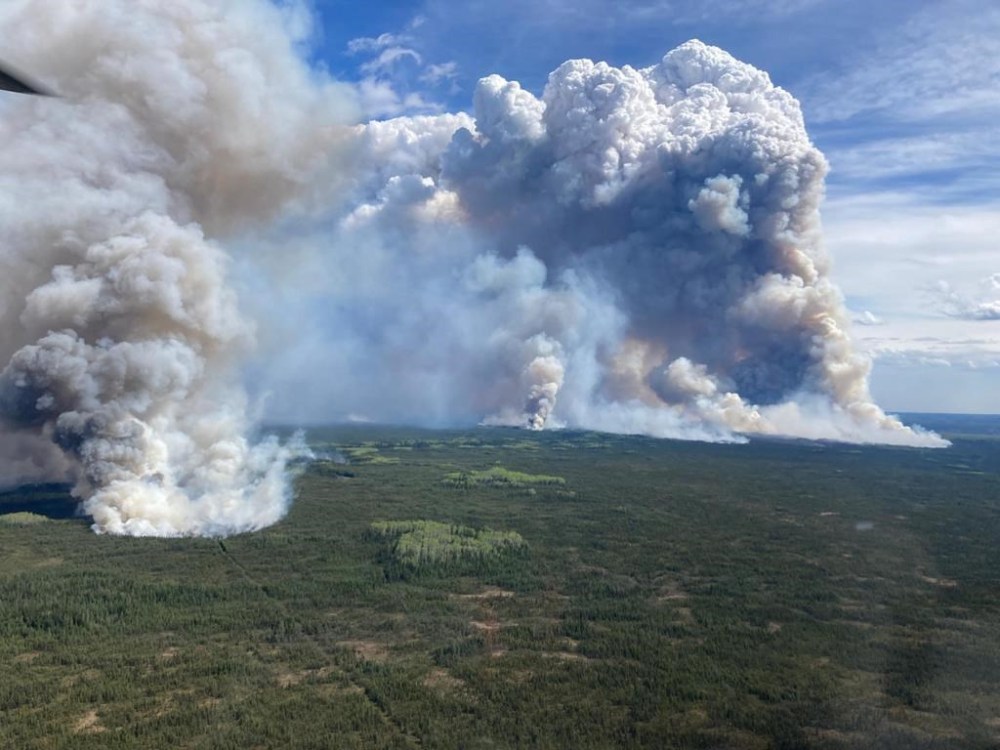
“We’re still nervous. If you look at the fire maps, you can see that the whole northeast corner up here is just one big red blob. So there’s lots of fire on the landscape,” Fraser said. “Still makes us nervous.
“But the fact that the drought level is coming down, we’re getting some rain, is making everybody feel a little bit more comfortable.”
Thursday numbers from the BC Wildfire Service show that 79 of the 91 active wildfires in British Columbia are burning in the province’s northern region, known as the Prince George fire centre.
Fraser said Thursday that plumes of smoke are still visible on hot days, coming mostly from fires burning “in the black,” meaning they are within the charred boundaries of previous fires and not spreading.
“It’s been so dry for so long that if you even get a couple of days of really hot, dry weather, the behaviour kicks up again,” he said.
“And, of course, it makes us nervous when we see those big plumes of smoke close to the community.”
BC Wildfire spokesman Forrest Tower told reporters Thursday that the southern part of the fire centre, which includes Prince George, has received “pretty significant precipitation,” while the same cannot be said for the northern portion including Fort Nelson.
“Looking into the next several weeks, probably going into the month, it looks like it’s going to continue to be hot and dry. So a large amount of our resources right now are up in the Fort Nelson/Fort St. John area,” he said.
“We likely will still see some pretty challenging fire behaviour and conditions, especially in the northeast of B.C. But just this bit of window where we aren’t seeing fire everywhere else, that really allows us to put a large amount of our resources on those pretty significant fires in the northeast of B.C.”
Minister of Emergency Management Bowinn Ma told the news conference that it’s fortunate that resources are able to be directed to the north.
“But let me be clear, even though we have seen a significant amount of precipitation over the last several months, snow pack levels are still very low,” she said.
“And when those rains cease, we are still at risk of severe drought in many parts of the province.”
The government is asking residents and visitors to be prepared for potential wildfires this long weekend and check for road closures, alerts, evacuation orders and other prohibitions before travelling.
Fraser said Fort Nelson is going ahead with its Canada Day festivities, and tourists have been returning since the evacuation ended.
“I think those people, they just held off,” Fraser said. “And now they’re coming. We see our campsite full. We’re seeing people walking around town. The museum is full of people.
“So we’re pretty optimistic as we look over our shoulders at where these fires are burning.”
This report by The Canadian Press was first published June 27, 2024.