

The ongoing precarity in education and health care
Advertisement
Read this article for free:
or
Already have an account? Log in here »
To continue reading, please subscribe:
Monthly Digital Subscription
$1 per week for 24 weeks*
- Enjoy unlimited reading on winnipegfreepress.com
- Read the E-Edition, our digital replica newspaper
- Access News Break, our award-winning app
- Play interactive puzzles
*Billed as $4.00 plus GST every four weeks. After 24 weeks, price increases to the regular rate of $19.95 plus GST every four weeks. Offer available to new and qualified returning subscribers only. Cancel any time.
Monthly Digital Subscription
$4.99/week*
- Enjoy unlimited reading on winnipegfreepress.com
- Read the E-Edition, our digital replica newspaper
- Access News Break, our award-winning app
- Play interactive puzzles
*Billed as $19.95 plus GST every four weeks. Cancel any time.
To continue reading, please subscribe:
Add Free Press access to your Brandon Sun subscription for only an additional
$1 for the first 4 weeks*
*Your next subscription payment will increase by $1.00 and you will be charged $16.99 plus GST for four weeks. After four weeks, your payment will increase to $23.99 plus GST every four weeks.
Read unlimited articles for free today:
or
Already have an account? Log in here »
Hey there, time traveller!
This article was published 13/01/2025 (437 days ago), so information in it may no longer be current.
While many of us would ideally prefer to forget the forlorn experiences associated with the COVID-19 pandemic, the lingering impacts of the global health crisis remain unquestionably evident within society and our public institutions.
We all share common experiences navigating the turbulent circumstances of the pandemic, whether through self-isolating, physical distancing, feeling over-exerted, and/or fearing for the health and well-being of loved ones.
The effects continue to persevere, unfortunately, and have left devastating effects within many public sectors. In particular, precarity in the state of education and health-care systems globally should be cause for considerable concern.
MIKAELA MACKENZIE / WINNIPEG FREE PRESS Files
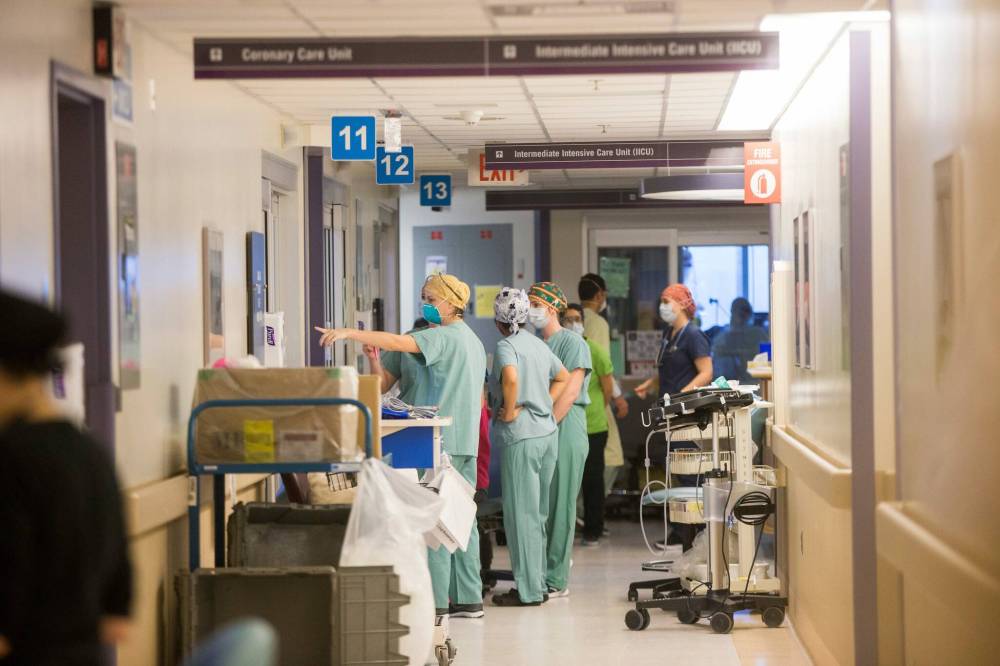
The medical intensive care unit at the Health Sciences Centre in Winnipeg. Burnout among health-care workers remains an issue years after the worst of the COVID-19 pandemic, and its effects are also felt among firefighters, teachers and other professionals.
Workers’ demoralization, burnout, and staffing shortages have emerged to become rampant occupational issues in these public domains. The societal importance these institutions serve is indisputable. Thus, we must proactively act to uphold their ongoing efficacy to serve the public good.
Although research pertaining to teacher burnout has been documented for decades, the pandemic only exacerbated many of these pre-existing tensions. Abrupt pedagogical changes, adapting to virtual and hybrid learning environments, enforcing physical distancing protocols, and adhering to a plethora of miscellaneous mandates amounted to additional stressors in the workplace.
Teacher attrition is a looming existential threat to the profession as the United Nations continues to issue stark warnings over a global shortage. Across Canada, the staffing crisis has resulted in reduced provincial teacher certification requirements, while various school boards resort to hiring underqualified individuals to fill vacant positions (such as parental volunteers).
The situation has become quite dire in various jurisdictions. In Ontario, for example, burnout and staffing shortages have led some school boards to hire private investigators to monitor teachers on medical leave, arguably a concerted effort to dissuade further absences.
Similar occupational tensions are prevalent in health care, as well. Throughout the pandemic, nurses were expected to commit to additional shifts, working daunting overtime hours, and were egregiously overstretched in caring for an unrealistic number of patients.
During the worst stages of the pandemic, reports indicate that ICU nurses were stretched from individual-focused patient treatment to three-to-one care, decried by some physicians as “ridiculous.” Being tasked with a plethora of additional demands while being inadequately resourced has evidently taken its toll.
Attrition is a pressing issue as emerging reports indicate that 30 per cent of Manitoba nurses are exiting the profession before age 35. Recruiting internationally trained nurses and incentivizing resigned nurses to re-enter the field are ongoing ventures to ameliorate this unsettling reality.
The predicament in health care is not confined to nurses, however, as firefighters and paramedics are comparably facing staffing crises and burnout. In addition to inadequate staffing and serving extensive overtime hours, psychological injuries incurred on duty are a mounting concern.
Data from the City of Winnipeg outlines the steady increase in first responders’ absenteeism due to psychological claims, totalling 17,626 hours in 2024. Consequently, insufficient staffing amounts to vacant shifts which, in turn, results in compromised health care accessibility to our fellow citizens.
Another variable complicating this intricate conundrum are precarious working environments. In 2023, Manitoba Workplace Safety and Health officially categorized public schools as the province’s most dangerous work environments, as education workers’ risk of being victim to verbal and/or physical injury significantly surpassed other places of employment.

Health care workers run tests on a COVID-19 suspected patient in a resuscitation bay in the adult emergency department at the Health Sciences Centre in Winnipeg on Tuesday, Dec. 8, 2020. THE CANADIAN PRESS/Mikaela MacKenzie - POOL
Escalating violence experienced by Manitoba nurses is also of paramount consternation. Manitoba nurses have resoundingly expressed feeling unsafe in the work environment, with ample publicly disseminated incidents of violence exercised against our essential public workers.

The intent of this piece is not to advocate for preferential treatment to some and not all. We were all unquestionably affected by the strenuous circumstances of the pandemic and all have relatable stories and experiences. However, we need to acknowledge the unique stressors within these public sectors, as documented burnout is an empirically verified development.
To be blatantly clear, there is no immediate, easy solution to mitigate all of these issues. Amelioration efforts will necessitate a long-term, concerted, collective effort to rebuild and bolster our public education and health care infrastructures.
Our education and health care workers serve a pivotal societal role in servicing the public good. For the benefit of all Manitobans, the crucial need to ameliorate these pressing tensions cannot be understated.
We need to recognize burnout as a legitimate phenomenon, validate workers’ experiences, and empower their professional agency. In doing so, all Manitobans will benefit from enhanced public education and health care.
Jordan Laidlaw is a public school teacher, union activist, and PhD candidate at the University of Manitoba in educational administration.