

Ontario boosts autism budget to $779M, advocates question where money is going
Advertisement
Read this article for free:
or
Already have an account? Log in here »
To continue reading, please subscribe:

Digital Subscription
One year of digital access for only $205*
- Enjoy unlimited reading on winnipegfreepress.com
- Read the E-Edition, our digital replica newspaper
- Access News Break, our award-winning app
- Play interactive puzzles
*First annual payment billed as $205.00 + GST for one year. This annual subscription will automatically renew at $233.00 + GST every 52 weeks (10% off the regular annual price of $259.35). Offer available to new and qualified returning subscribers only. Cancel any time.
To continue reading, please subscribe:
Add Free Press access to your Brandon Sun subscription for only an additional
$1 for the first 4 weeks*
- Enjoy unlimited reading on winnipegfreepress.com
- Read the E-Edition, our digital replica newspaper
- Access News Break, our award-winning app
- Play interactive puzzles
*Your next Brandon Sun subscription payment will increase by $1.00 and you will be charged $17.95 plus GST for four weeks. After four weeks, your payment will increase to $24.95 plus GST every four weeks.
Read unlimited articles for free today:
or
Already have an account? Log in here »
Hey there, time traveller!
This article was published 16/05/2025 (462 days ago), so information in it may no longer be current.
TORONTO – Ontario is increasing funding for its autism program to $779 million this year, the government announced in this week’s budget, but advocates say it’s not yet clear exactly where that money will go.
Finance Minister Peter Bethlenfalvy’s budget, tabled Thursday, contains two lines on the Ontario Autism Program, including touting the new funding.
Children, Community and Social Services Minister Michael Parsa’s office has not yet offered details on how the money will be used, but the Ontario Autism Coalition fears it will not all go toward therapy for children.
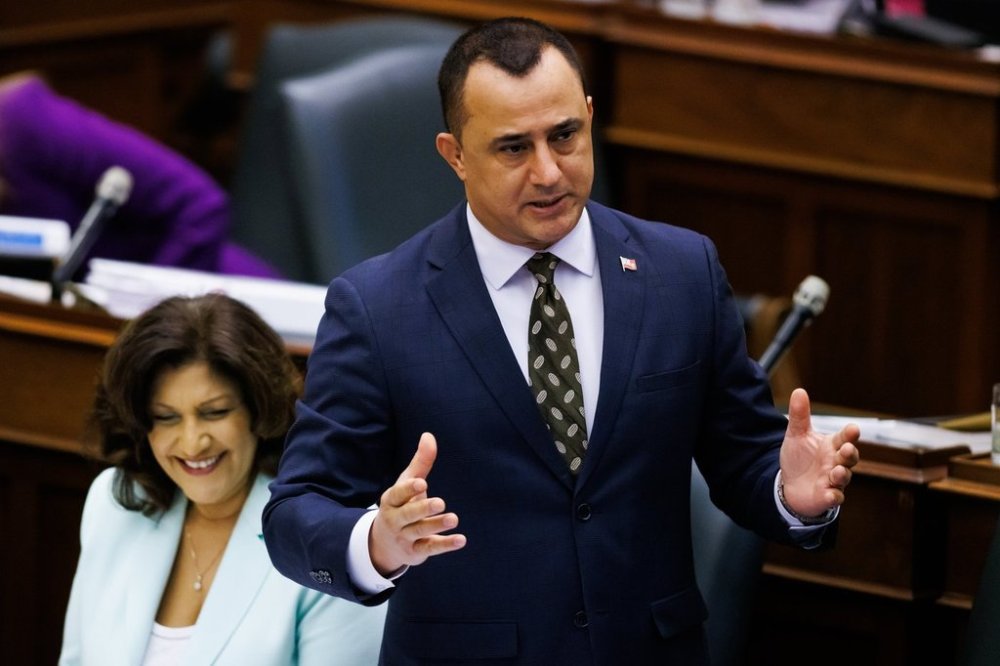
“We’re very happy about any increase to the budget,” said coalition president Alina Cameron. “It’s very welcome and it’s needed. But the way it’s laid out, it just raises a lot more questions than answers for us.”
Last year’s budget for the program was about $720 million, but Cameron said previous boosts of about $60 million don’t seem to have made a huge difference in the wait list.
Figures obtained by the autism coalition through a freedom-of-information request show that as of early February, nearly 80,000 children and youth were registered to seek services through the program, but only about 17,650 were in an active agreement for core therapy funds.
“The rate of registration is higher than the rate of entry to core clinical services,” Cameron said.
“We don’t really see a big change of services at the user end, based upon these yearly increases. They often just get absorbed into system costs, rather than reaching families.”
Parsa recently touted in the legislature that more than 45,000 families are receiving “multiple services and supports.”
The Ontario Autism Program offers an entry-to-school program, urgent response services and some family services, but families often access those as they wait for core clinical services funding, which they can use to pay for key therapy such as applied behaviour analysis, speech-language pathology and occupational therapy.
“Our government continues to prioritize the Ontario Autism Program (OAP) by more than doubling its budget to $779 million,” a spokesperson for Parsa wrote in a statement.
The new investment “will continue to support the enrolment of children and youth in core clinical services,” Diya Soni wrote.
Most families want core services and they are now waiting more than five years from the time they register, Cameron said.
“Early intervention is effectively dead in Ontario at this point,” she said.
NDP autism critic Alexa Gilmour says she wonders how much of the new funding is going to direct supports, since the government has previously indicated the program is adding more staff.
“We don’t know how much is going to core services, how much is going to administration,” she said. “We do know that they’re adding more staffing, but the wait list has ballooned.”
Aside from the long wait to qualify for government funding, Gilmour said, families are reporting difficulty finding available providers even once they have money in hand.
“I think that (money) is a drop in the bucket that doesn’t close the gap,” she said.
This report by The Canadian Press was first published May 16, 2025.