

Egyptian antiquities czar battles the Louvre
Advertisement
Read this article for free:
or
Already have an account? Log in here »
To continue reading, please subscribe:
Monthly Digital Subscription
$1 per week for 24 weeks*
- Enjoy unlimited reading on winnipegfreepress.com
- Read the E-Edition, our digital replica newspaper
- Access News Break, our award-winning app
- Play interactive puzzles
*Billed as $4.00 plus GST every four weeks. After 24 weeks, price increases to the regular rate of $19.95 plus GST every four weeks. Offer available to new and qualified returning subscribers only. Cancel any time.
Monthly Digital Subscription
$4.99/week*
- Enjoy unlimited reading on winnipegfreepress.com
- Read the E-Edition, our digital replica newspaper
- Access News Break, our award-winning app
- Play interactive puzzles
*Billed as $19.95 plus GST every four weeks. Cancel any time.
To continue reading, please subscribe:
Add Free Press access to your Brandon Sun subscription for only an additional
$1 for the first 4 weeks*
*Your next subscription payment will increase by $1.00 and you will be charged $16.99 plus GST for four weeks. After four weeks, your payment will increase to $23.99 plus GST every four weeks.
Read unlimited articles for free today:
or
Already have an account? Log in here »
Hey there, time traveller!
This article was published 08/10/2009 (6023 days ago), so information in it may no longer be current.
CAIRO, Egypt — Egypt’s antiquities czar took his campaign to recover the nation’s lost treasures to a new level on Wednesday by cutting ties with one of the world’s premier museums, the Louvre, over disputed artifacts.
The Paris museum’s refusal to return painted wall fragments of a 3,200-year-old tomb near the ancient temple city of Luxor could jeopardize its future excavations in Egypt. It was the most aggressive effort yet by Zahi Hawass, Egypt’s tough and media-savvy chief archaeologist, in his campaign to reclaim what he says are antiquities stolen from the country and purchased by some of the world’s leading museums.
His move appeared to have borne fruit almost immediately. Both the Louvre and France’s Culture Ministry said they were ready to return the pieces. "The Louvre Museum refused to return four archaeological reliefs to Egypt that were stolen during the 1980s from the tomb of the noble Tetaki," said a statement quoting Supreme Council of Antiquities chief Hawass.
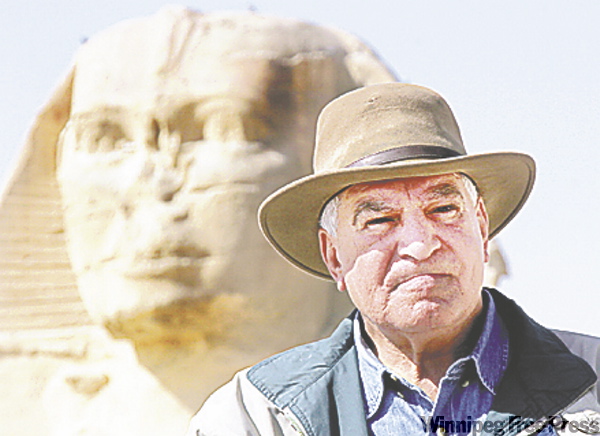
This was not the first time Hawass cut ties with a museum. He took a similar step against the St. Louis Art Museum after it failed to answer his demand to return a 3,200-year-old golden burial mask of a noblewoman. But taking such an action against an institution of the Louvre’s stature is unprecedented.
Egypt immediately suspended the Louvre’s excavation in the massive necropolis of Saqqara, near Cairo, and cancelled a lecture in Egypt by a former curator from the museum.
Thousands of antiquities were spirited out of the country during Egypt’s colonial period and afterward by archaeologists, adventurers and thieves.
Hawass’ office described the disputed fragments as pieces of a burial fresco showing the nobleman Tetaki’s journey to the afterlife and said thieves chipped them from the walls of the tomb near the Valley of the Kings in the 1980s.
Christiane Ziegler, the former curator of the Louvre’s Egyptology department, acquired the four fragments, according to the antiquities council.
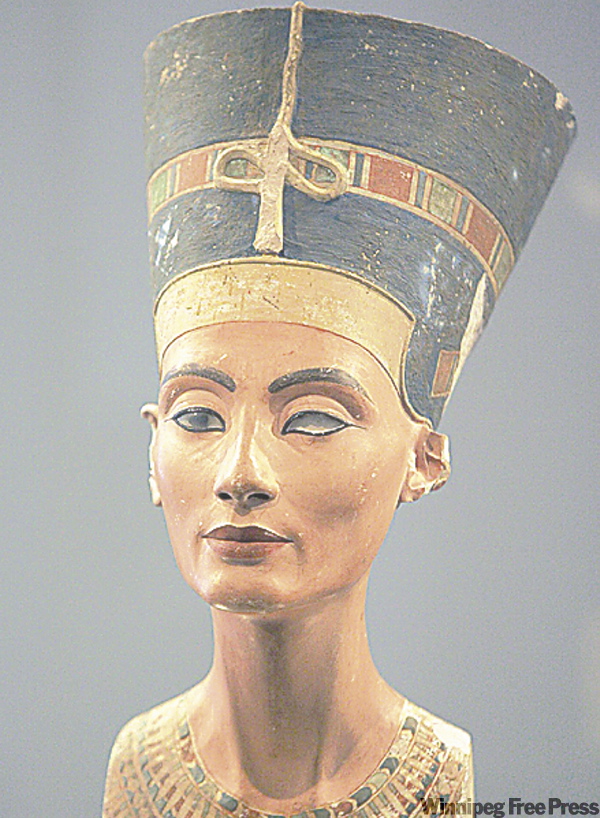
Hawass has drawn up a list of high-profile items he wants back including another piece held by the Louvre, the painted ceiling of the Dendera temple showing the Zodiac. At the top of his list are the bust of Nefertiti — wife of the famed monotheistic Pharaoh Akhenaten — and the Rosetta Stone, a basalt slab with an inscription that was the key to deciphering Egyptian hieroglyphics. The bust is in Berlin’s Egyptian Museum; the Rosetta Stone is in the British Museum in London.
— The Associated Press