

Moon-size planet smallest found outside solar system
Advertisement
Read this article for free:
or
Already have an account? Log in here »
To continue reading, please subscribe:
Digital Subscription
One year of digital access for only $75*
- Enjoy unlimited reading on winnipegfreepress.com
- Read the E-Edition, our digital replica newspaper
- Access News Break, our award-winning app
- Play interactive puzzles
*Billed as $5.77 plus GST every four weeks. After 52 weeks, price increases to the regular rate of $19.95 plus GST every four weeks. Offer available to new and qualified returning subscribers only. Cancel any time.
Monthly Digital Subscription
$4.99/week*
- Enjoy unlimited reading on winnipegfreepress.com
- Read the E-Edition, our digital replica newspaper
- Access News Break, our award-winning app
- Play interactive puzzles
*Billed as $19.95 plus GST every four weeks. Cancel any time.
To continue reading, please subscribe:
Add Free Press access to your Brandon Sun subscription for only an additional
$1 for the first 4 weeks*
- Enjoy unlimited reading on winnipegfreepress.com
- Read the E-Edition, our digital replica newspaper
- Access News Break, our award-winning app
- Play interactive puzzles
*Your next Brandon Sun subscription payment will increase by $1.00 and you will be charged $17.95 plus GST for four weeks. After four weeks, your payment will increase to $24.95 plus GST every four weeks.
Read unlimited articles for free today:
or
Already have an account? Log in here »
Hey there, time traveller!
This article was published 21/02/2013 (4839 days ago), so information in it may no longer be current.
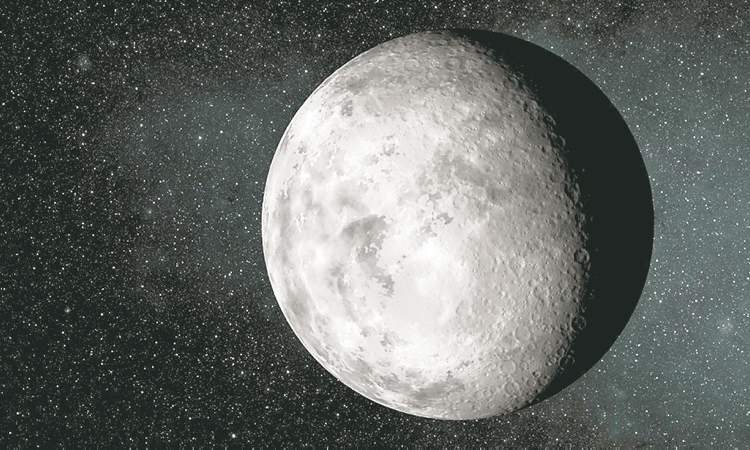
LOS ANGELES — Astronomers searching for planets outside our solar system have discovered the tiniest one yet — it’s about the size of our moon.
But hunters for life in the universe will need to poke elsewhere. The new world orbits too close to its sun-like star and is too sizzling to support life. Its surface temperature is an estimated 371 C. It also lacks an atmosphere and water on its rocky surface.
University of California-Berkeley astronomer Geoff Marcy, one of the founding fathers of the planet-hunting field, called the latest find “absolutely mind-boggling.”
“This new discovery raises the spectre that the universe is jam-packed, like jelly beans in a jar, with planets even smaller than Earth,” said Marcy, who had no role in the new research.
It’s been nearly two decades since the first planet was found outside our solar system. Since then, there’s been an explosion of discoveries, accelerated by NASA’s Kepler telescope, launched in 2009 to search for a twin Earth. So far, 861 planets have been spotted and only recently have scientists been able to detect ones similar in size to Earth or smaller.
While scientists have theorized the existence of a celestial body that’s smaller than Mercury — the baby of the solar system since Pluto’s downgrade — they have not spotted one until now. Nearest to the sun, Mercury is about two-fifths the Earth’s diameter. The newly discovered planet and our moon are about a third the size of Earth.
The teeny planet was detected by Kepler, which simultaneously tracks more than 150,000 stars for slight dips in brightness — a sign of a planet passing in front of the star. The planet, known as Kepler-37b, orbits a star 210 light-years away in the constellation Lyra. It’s one of three known planets in that solar system.
Discoverer Thomas Barclay of the NASA Ames Research Center in northern California was so excited when he spied the moon-size planet that for days, he said he recited the Star Wars movie line: “That’s no moon.” It took more than a year and an international team to confirm it was a bona fide planet.
The discovery is detailed in today’s issue of the journal Nature.
Scientists are looking for an Earth-size planet that’s in the so-called Goldilocks zone — that sweet spot that’s not too hot and not too cold, where water, which is essential for life, could exist on the surface.
While the newly discovered planet isn’t it, “that does not detract from the fact that this is yet another mile marker along the way to habitable Earth-like planets,” said Alan Boss of the Carnegie Institution for Science in Washington, D.C., who was not part of the discovery team.
— The Associated Press