

Secret burial for Boston bomber
'Courageous' person agrees to help: police
Advertisement
Read this article for free:
or
Already have an account? Log in here »
To continue reading, please subscribe:
Monthly Digital Subscription
$1 per week for 24 weeks*
- Enjoy unlimited reading on winnipegfreepress.com
- Read the E-Edition, our digital replica newspaper
- Access News Break, our award-winning app
- Play interactive puzzles
*Billed as $4.00 plus GST every four weeks. After 24 weeks, price increases to the regular rate of $19.95 plus GST every four weeks. Offer available to new and qualified returning subscribers only. Cancel any time.
Monthly Digital Subscription
$4.99/week*
- Enjoy unlimited reading on winnipegfreepress.com
- Read the E-Edition, our digital replica newspaper
- Access News Break, our award-winning app
- Play interactive puzzles
*Billed as $19.95 plus GST every four weeks. Cancel any time.
To continue reading, please subscribe:
Add Free Press access to your Brandon Sun subscription for only an additional
$1 for the first 4 weeks*
*Your next subscription payment will increase by $1.00 and you will be charged $16.99 plus GST for four weeks. After four weeks, your payment will increase to $23.99 plus GST every four weeks.
Read unlimited articles for free today:
or
Already have an account? Log in here »
Hey there, time traveller!
This article was published 10/05/2013 (4713 days ago), so information in it may no longer be current.
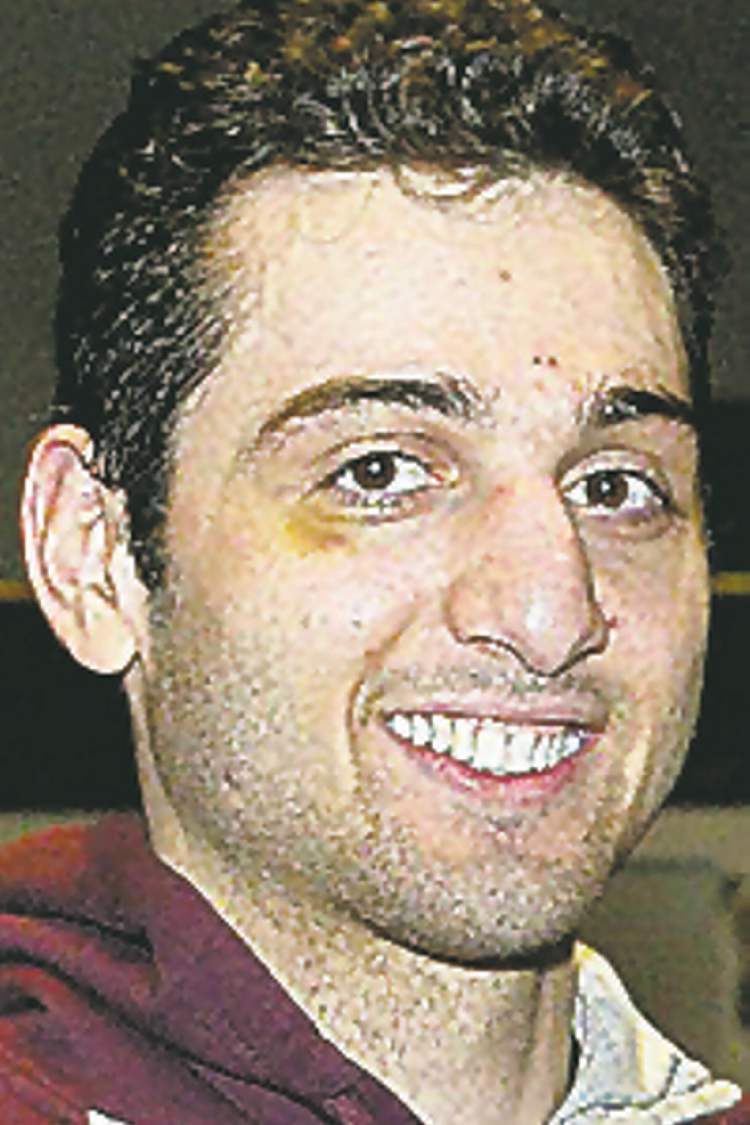
WORCESTER, Mass. — The body of Boston Marathon bombing suspect Tamerlan Tsarnaev was entombed in an unknown gravesite Thursday after police said an anonymous person stepped forward to help arrange the secret burial.
The burial ended a weeklong search for a place willing to take Tsarnaev’s body out of Worcester, where his remains had been stored at a funeral home amid protests. In that time, the cities where Tsarnaev lived and died and his mother’s country all refused the remains.
Amid the frustration, Worcester’s police chief urged an end to the quandary. “We are not barbarians,” he said. “We bury the dead.”
By Thursday, police announced: “As a result of our public appeal for help, a courageous and compassionate individual came forward to provide the assistance needed to properly bury the deceased.”
Police in Worcester, west of Boston, didn’t say where the body was taken, only that it was no longer in the city.
The director of Graham Putnam & Mahoney Funeral Parlors, Peter Stefan, also refused to say where the body was buried or to speak to media gathered outside the funeral home.
Tsarnaev’s burial place is expected to become known with the release of his death certificate.
Tamerlan and his brother, Dzhokhar Tsarnaev, are accused of setting off two shrapnel-packed pressure-cooker bombs April 15 near the marathon finish line in an attack that killed three people and injured more than 260.
Days later, the brothers engaged in a firefight in which Tamerlan Tsarnaev, 26, was shot by police and then run over by his fleeing brother. A wounded Dzhokar Tsarnaev, 19, ditched the car and was later found hiding in a boat parked in a Watertown backyard.
Tamerlan Tsarnaev was pronounced dead at a hospital in Boston, where he could have been buried under state law, because the city was his place of death. But Boston officials said they wouldn’t take the body because Tsarnaev lived in Cambridge, and Cambridge also refused.
The mother of the brothers, ethnic Chechens from southern Russia who lived in Massachusetts, said officials in Russia, where she lives, also wouldn’t accept the body.
In addition, Stefan said scores of individual offers fell through because cemeteries in their communities wouldn’t take the corpse.
On Thursday, Gov. Deval Patrick called the weeklong drama to find a burial site a circus, but said he doesn’t know where the site is. Patrick said he hopes attention can now return to caring for the victims of the bombing.
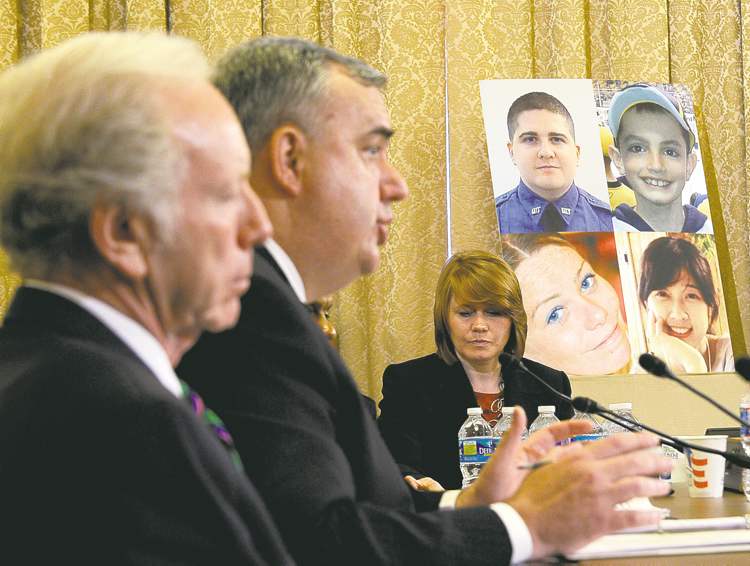
In Washington, Boston Police Commissioner Edward Davis told Congress on Thursday the FBI did not initially share with Boston police the warnings from Russia’s security service in 2011 about Tamerlan Tsarnaev. At the time, four city police representatives were on a federal terrorism task force.
Davis’ testimony at the hearing on the government’s response to the attack revealed a gap in information-sharing between federal and local officials.
The FBI closed its assessment of Tsarnaev after a cursory investigation, and Davis said police might not have uncovered or disrupted the plot even if they had fully investigated Tsarnaev’s family.
“I can’t say that I would have come to a different conclusion based upon the information that was known at that particular time,” he said.
Some lawmakers questioned whether Boston police could have more thoroughly investigated Tsarnaev after 2011, based on Russia’s vague warnings then to the FBI and CIA or the discovery by the Homeland Security Department in 2012 that he was travelling to Russia for six months, and whether Justice Department rules intended to protect civil liberties constrained the FBI’s own inquiry.
“Why didn’t they involve the local law enforcers who could have stayed on the case and picked up signals from some of the students who interacted with them, from the people in the mosque,” asked former senator Joe Lieberman, who also testified. “In this case, aggravatingly, you have two of our great homeland security agencies that didn’t involve before the event the local and state authorities that could have helped us prevent the attack.”
— The Associated Press