

Iran’s Silicon Valley
Despite sanctions, start-ups thrive in country
Advertisement
Read this article for free:
or
Already have an account? Log in here »
To continue reading, please subscribe:
Digital Subscription
One year of digital access for only $1.44 a week*
- Enjoy unlimited reading on winnipegfreepress.com
- Read the E-Edition, our digital replica newspaper
- Access News Break, our award-winning app
- Play interactive puzzles
*Billed as $5.77 plus GST every four weeks. After 52 weeks, price increases to the regular rate of $19.95 plus GST every four weeks. Offer available to new and qualified returning subscribers only. Cancel any time.
To continue reading, please subscribe:
Add Free Press access to your Brandon Sun subscription for only an additional
$1 for the first 4 weeks*
- Enjoy unlimited reading on winnipegfreepress.com
- Read the E-Edition, our digital replica newspaper
- Access News Break, our award-winning app
- Play interactive puzzles
*Your next Brandon Sun subscription payment will increase by $1.00 and you will be charged $17.95 plus GST for four weeks. After four weeks, your payment will increase to $24.95 plus GST every four weeks.
Read unlimited articles for free today:
or
Already have an account? Log in here »
Hey there, time traveller!
This article was published 15/11/2014 (4216 days ago), so information in it may no longer be current.
About 15 years ago, he was the first kid in his Tehran high school to get the Internet. “Don’t try to tell anybody else about it,” he recalls his principal warning. “It might affect their culture, their beliefs.”
She was an early Internet user, too, and obsessed with Yahoo messenger. She’d message strangers in chat rooms while assuring her concerned parents she wasn’t revealing too much.
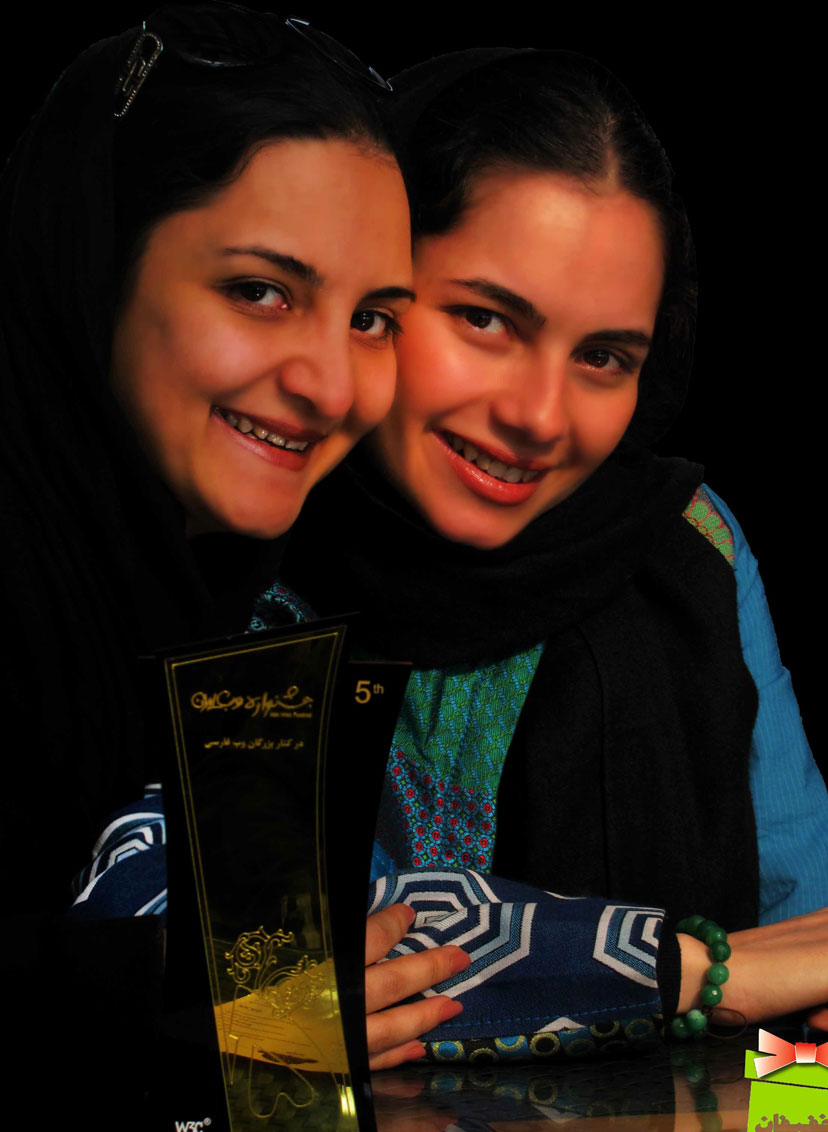
Fast-forward to today and the duo is at the helm of some of Tehran’s thriving start-ups. Both left Europe for careers in Iran. Cafe Bazaar co-founder Hessam Armandehi, 28, and Takhfifan founder Nazanin Daneshvar, 30, have turned profits, had to move to larger offices and gained thousands of customers. His high school now has Wi-Fi. And she’s too busy for chat rooms, but has come to idolize Yahoo chief executive Marissa Mayer.
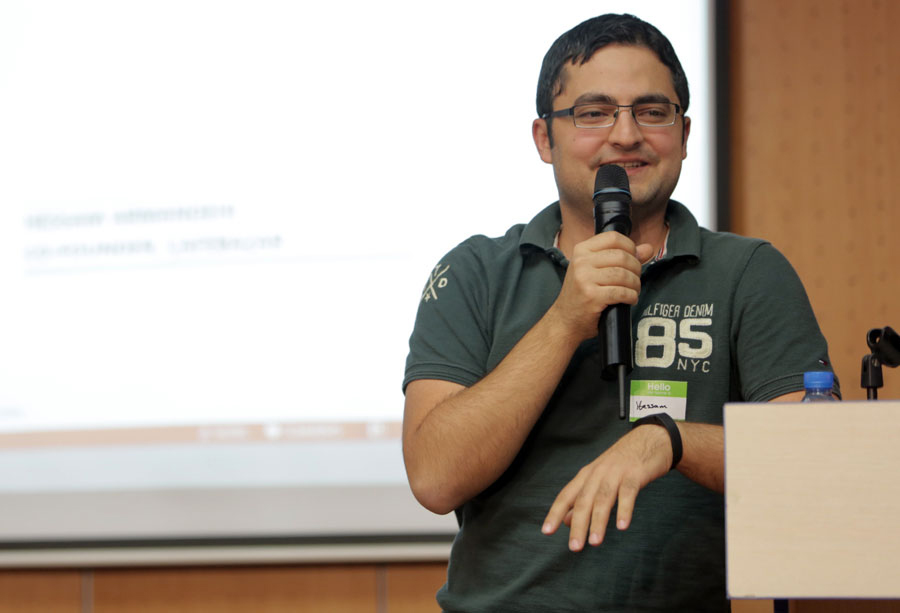
Shades of Silicon Valley are bubbling up in Tehran, which is home to a growing tech ecosystem with start-ups, accelerators and a venture capital firm, despite the significant challenges of launching a tech company in Iran.
“It’s definitely more difficult than any other country,” said Eyad Alkassar, who manages the Middle East investments for Rocket Internet, a German company that replicates successful businesses in the developing world.
Insiders say there has been a turning point in the past two years.
“When I came to Iran, no one even knew the word start-up,” said Daneshvar, who returned to her native country three years ago after working in Germany.
“If you look at the use of the words like entrepreneurship, start-ups and venture capital, I think you will see a trend that there was absolutely a minimum, nothing mentioned in Iran for two years,” said Said Rahmani, who founded Tehran’s first venture capital firm, Sarava. “Now you can talk about venture capital, VCs, its become a fashion.”
Rahmani was born in Iran but left as a teenager for the United States. He worked for IBM and launched a start-up in upstate New York. Later as an employee of Internet company Naspers, he was asked to evaluate the possibility of investing in Iran start-ups. Ultimately, Naspers decided not to invest, but Rahmani was convinced of the country’s potential and returned to where he was born.
He and others point to the combination of a young, educated population, the proliferation of smartphones and increasing Internet speeds as fertile landscape for start-ups. The country’s leading start-up — Digikala — is similar to Amazon.com. The World Start-Up Fund says it is worth $150 million.
There are other signs, too. Iran Web Festival, launched in 2008 to recognize the country’s best websites, started with just 100 applicants. This year, 8,000 websites entered, and 450 people attended a related conference. Start-Up Grind has opened a chapter in Tehran to connect and mentor entrepreneurs.
Iran now has three accelerators, including Avatech, which accepted its first class in October. They offer mentors such as Reza Hashemi, 38, who started the popular Persian Blog in 2001 as the Iranian equivalent of Blogger. At that time, Hashemi wasn’t able to raise money for his site as he encountered investors who were unfamiliar with the Internet.
On the front lines of Iran’s growth are Armandehi and Daneshvar, who know well the challenges, advantages and frustrations of launching an Internet company in Iran, where sanctions are both a gift and a curse.
Daneshvar’s profitable business — Takhfifan — is essentially a Groupon clone. Her site has more than one million email subscribers and offers 25 deals per day. One especially successful deal sold 20,000 tickets to a movie. She also launched a website that resembles Yelp, and has 20,000 user-written reviews.
Although international sanctions on Iran are imposed to hinder the economy, they’re somewhat of a benefit to entrepreneurs who don’t have to compete with international companies that are barred from operating in the country. But the road to a successful start-up is bumpy, and entrepreneurs can’t dream of scaling their business globally. Growing locally isn’t always easy either.
“Where’s your manager?” Daneshvar remembers being asked in a meeting with a prospective client.
“I am the manager,” she said.
“Look, go back and come back with your manager. The idea is good but just come back with your manager.”
Disappointed and saddened, she went home and told her father. “Welcome to Iran,” he said.
She rescheduled the meeting and came back with her father. This time a deal was struck. For a year, Daneshvar would bring her father to meetings. He’d first introduce himself as the manager, then sit back quietly as his daughter took over and explained the business.
Armandehi has tangled with his own issues, and became frustrated with how Silicon Valley companies have handled Iranian sanctions. After college, Armandehi attended a graduate program in Sweden, but chose to return home.
“If I came back to Iran, I would lose everything that I could do outside Iran — reservation via Airbnb, working on Android Market. I was losing everything and still I was not that unhappy with it. I felt that we can create everything inside Iran ourselves,” Armandehi said.
Because Google’s app store for Android wasn’t initially available in Iran, it opened a door in 2010 for Armandehi to co-found Cafe Bazaar, which is essentially an Android app store for Iranians. It had 100,000 users within three months, and now has 10,000 local apps available from more than 2,000 developers. According to World Startup Report, it’s worth $20 million.
— The Washington Post