

And baby makes… four
China's two-child policy slow to take hold
Advertisement
Read this article for free:
or
Already have an account? Log in here »
To continue reading, please subscribe:
Monthly Digital Subscription
$1 per week for 24 weeks*
- Enjoy unlimited reading on winnipegfreepress.com
- Read the E-Edition, our digital replica newspaper
- Access News Break, our award-winning app
- Play interactive puzzles
*Billed as $4.00 plus GST every four weeks. After 24 weeks, price increases to the regular rate of $19.95 plus GST every four weeks. Offer available to new and qualified returning subscribers only. Cancel any time.
Monthly Digital Subscription
$4.99/week*
- Enjoy unlimited reading on winnipegfreepress.com
- Read the E-Edition, our digital replica newspaper
- Access News Break, our award-winning app
- Play interactive puzzles
*Billed as $19.95 plus GST every four weeks. Cancel any time.
To continue reading, please subscribe:
Add Free Press access to your Brandon Sun subscription for only an additional
$1 for the first 4 weeks*
*Your next subscription payment will increase by $1.00 and you will be charged $16.99 plus GST for four weeks. After four weeks, your payment will increase to $23.99 plus GST every four weeks.
Read unlimited articles for free today:
or
Already have an account? Log in here »
Hey there, time traveller!
This article was published 18/07/2015 (3893 days ago), so information in it may no longer be current.
dWeijia is a typical Chinese seven-year-old. He loves riding his bike and anything to do with cars. He is a badminton fanatic, and has lessons twice a week.
In a few months’ time, however, he will become rather less typical. He will have a brother or sister, something most urban Chinese children lack. His parents are taking advantage of a 2013 relaxation of the country’s strict family-planning rules. Couples are now allowed to have a second baby if one parent is an only child.
After more than 35 years of often-brutal enforcement of the one-child-per-couple policy, some had expected a baby boom to follow. The National Health and Family Planning Commission estimated that the new rules would allow 11 million more couples — there already were exemptions for some — to have a second child. It thought that two million of them would try in the first year.
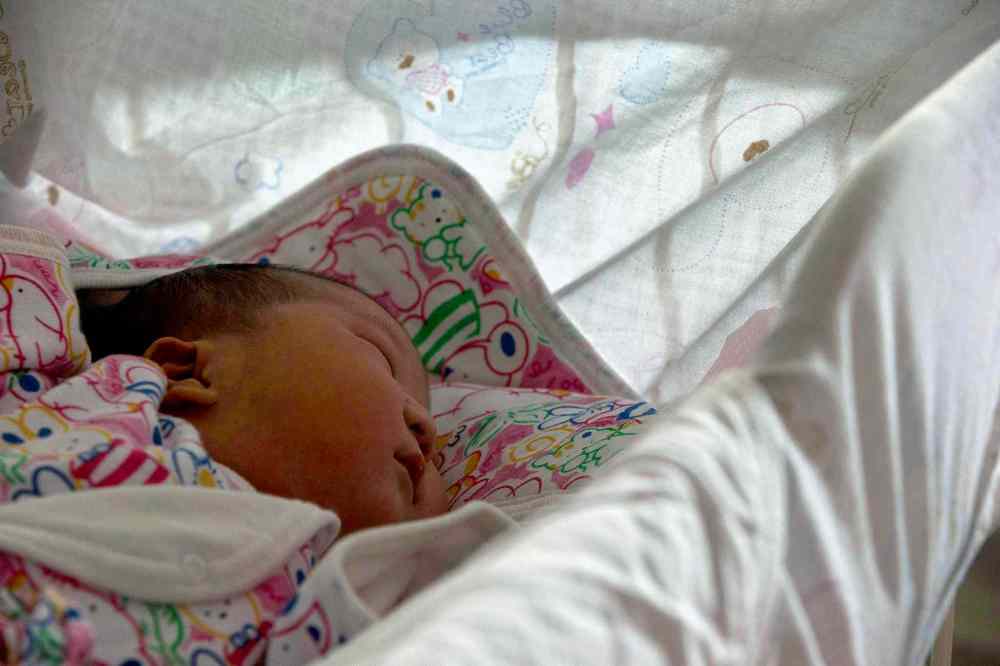
By the end of 2014, however, fewer than 1.1 million people had applied for the necessary permit.
That worries the government, which has tweaked the rules not out of sympathy for lonely only children or for parents who want a spare heir, but because of a population crunch. The country is aging rapidly. In 2012 its labour pool shrank for the first time in 50 years. In the largest cities the fertility rate, meaning the number of children an average woman is likely to have during her lifetime, is among the lowest in the world, at around one. For the country as a whole, it is less than 1.6, far below the level of 2.1 needed to keep the population steady.
The one-child policy did not curb Chinese fertility as much as its boosters imagine. By the time it was introduced in 1979, the fertility rate already had fallen to 2.8 from 5.8 in less than a decade, thanks to usually less-coercive efforts to encourage fewer births. Ruthless enforcement of the new policy resulted in widespread forced abortions and infanticide. It inflicted misery on parents who wanted larger families. Its overall impact on births was limited, however.
In most countries rising affluence has led to fewer babies. India’s fertility rate fell steadily during the same period without such formal policies, even though its economy did not grow nearly as fast as China’s. In wealthy South Korea the birth rate has fallen to 1.3 children per woman, down from six in 1960.
China’s authorities have now changed tack, from relentlessly proclaiming the virtues of having only one child to encouraging eligible couples to “procreate legally.” They should not be surprised, however, that this is failing to achieve the desired effect.
Since the 1980s rural families whose first child was a girl have been allowed to try for another. More recently couples who are both single children have been allowed to have a second. The payoff has been low, however. Academics, including Cai Yong of the University of North Carolina at Chapel Hill, conducted a study in 2007-2010 in the coastal province of Jiangsu. They found that, among the 2,500 urban and rural women surveyed who were entitled to have a second child, only 6.5 per cent did so. Ethnic minorities, nearly a tenth of the population, long have been allowed to have two or more, but on average each ethnic-minority woman bears only about 1.5 children, according to a census in 2010.
Cai believes that rising incomes have been a big cause of shrinking family size.
“Development is the best contraceptive,” he said.
Births would have plummeted even without the one-child policy, he reckoned, though not as fast or as low. Families worry about the expense of having babies, because good education and health care are increasingly pricey. A 2013 study by Credit Suisse found that couples typically spend more than $3,600 a year to raise a child to the age of 18. That is more than three-quarters of the average annual disposable income per person of urban households. A 2015 government report said that, in the first five years of a child’s life, city parents spend twice as much as rural ones, even without including the high cost of urban housing, particularly near the best schools.
Chinese families want their offspring not only to get a good education, but also to gain an edge in the global job market. Hence Weijia’s parents spend nearly 15 per cent of their annual income on classes for him, including weekly English lessons. More than half of children younger than six take extra classes in addition to those at kindergarten, according to iResearch, a Chinese market-research company.
Grandparents help to reduce the cost of child care, because often they live with their grown-up children. Since people marry and have children later than they used to, however, the age of live-in grandparents is rising too. Fewer are sprightly enough to deal with two children.
It has become so common in China to have only one child that society no longer is geared to handle multiple offspring. Hotel rooms for two children cannot be booked online, so parents must call ahead. Play vehicles in parks seat two adults and one youngster, and toothbrush-holders in family bathrooms often have space for only three brushes.
Decades of propaganda about the benefits of single children have changed the way parents think, said Wang Feng of the University of California at Irvine. A belief that China has too many people is widely shared, as is a conviction that the country would have been far worse off without the one-child policy. Many Chinese are surprisingly willing to blame the country’s terrible traffic and its air and water pollution on overpopulation, rather than on bad planning. Having only one child still has the whiff of the patriotic about it.
The government’s next step may be to allow all couples to have two children. There is much speculation the country’s parliament will approve this next year.
Family-planning bureaucrats still fret about what might happen if restrictions were to be lifted, but the same factors of cost and hassle will continue to suppress the birth rate, regardless of how fast the policy is adjusted. Growing numbers of young Chinese people now prefer not to marry or to have children at all.
— Distributed by the New York Times Syndicate