

Emperor expresses ‘deep remorse’ for war
Phrase seen as soft rebuke of Japan's prime minister
Advertisement
Read this article for free:
or
Already have an account? Log in here »
To continue reading, please subscribe:
Digital Subscription
One year of digital access for only $1.44 a week*
- Enjoy unlimited reading on winnipegfreepress.com
- Read the E-Edition, our digital replica newspaper
- Access News Break, our award-winning app
- Play interactive puzzles
*Billed as $5.77 plus GST every four weeks. After 52 weeks, price increases to the regular rate of $19.95 plus GST every four weeks. Offer available to new and qualified returning subscribers only. Cancel any time.
To continue reading, please subscribe:
Add Free Press access to your Brandon Sun subscription for only an additional
$1 for the first 4 weeks*
- Enjoy unlimited reading on winnipegfreepress.com
- Read the E-Edition, our digital replica newspaper
- Access News Break, our award-winning app
- Play interactive puzzles
*Your next Brandon Sun subscription payment will increase by $1.00 and you will be charged $17.95 plus GST for four weeks. After four weeks, your payment will increase to $24.95 plus GST every four weeks.
Read unlimited articles for free today:
or
Already have an account? Log in here »
Hey there, time traveller!
This article was published 16/08/2015 (3942 days ago), so information in it may no longer be current.
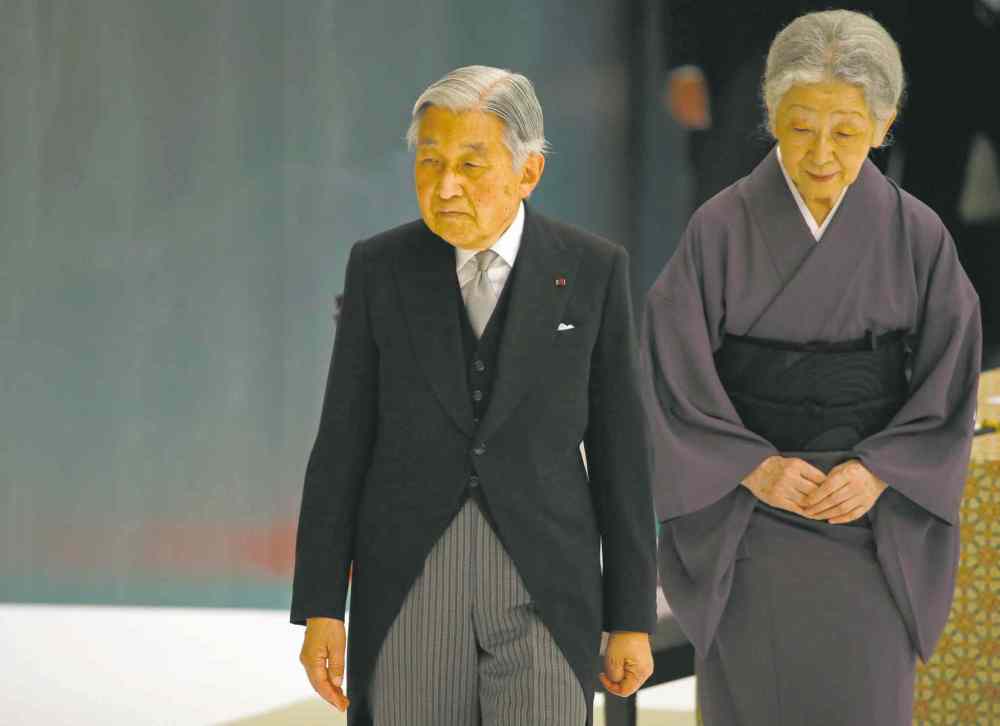
Japan’s emperor expressed “deep remorse” for his nation’s wartime actions Saturday on the 70th anniversary of Japan’s Second World War surrender.
“On this day to commemorate the war dead and pray for peace, my thoughts are with the people who lost their precious lives in the last war and their bereaved families,” Emperor Akihito, 81, said.
“Reflecting on our past and bearing in mind the feelings of deep remorse over the last war, I earnestly hope that the ravages of war will never be repeated.”
The brief remarks made at a ceremony in Tokyo were nearly identical to those in previous years, with the exception of the phrase “deep remorse,” which he hadn’t used previously, Japanese media reported.
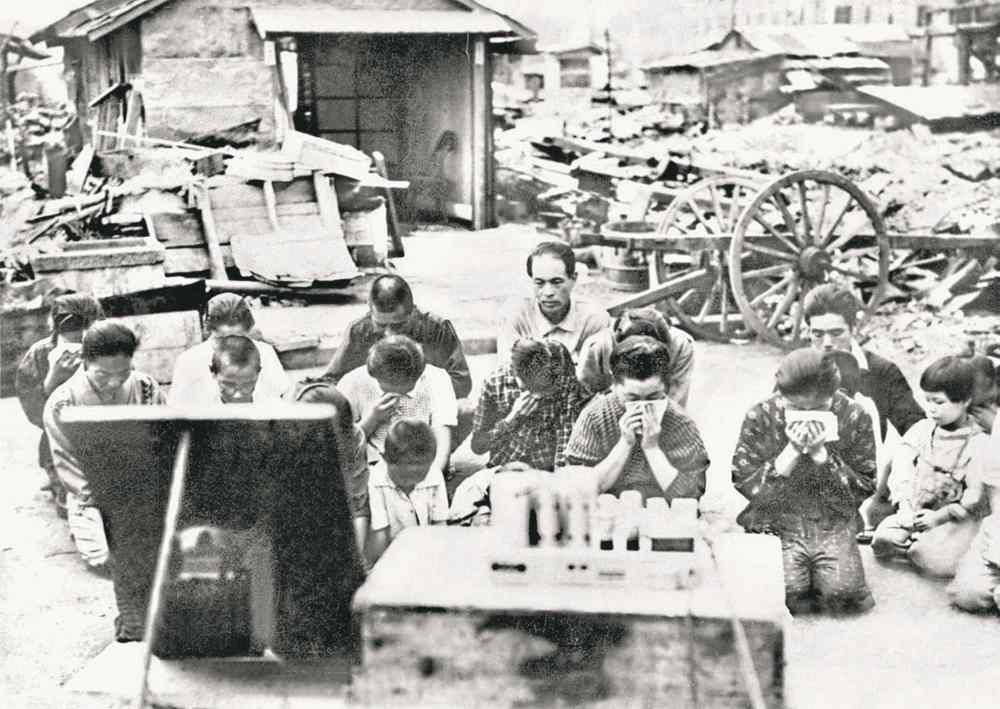
The event began at noon with a moment of silence to mark the exact date and time when emperor Hirohito — the father of Emperor Akihito — announced in a nationwide radio broadcast Japan had surrendered to the United States and Allied forces on Aug. 15, 1945.
Japan Today reported the emperor’s departure from his normal script could be seen as a subtle rebuke of Prime Minister Shinzo Abe. The ceremony came a day after Abe fell short of a full apology for his nation’s wartime atrocities, expressing only “utmost grief.” Instead, he endorsed past statements of government apologies and also indicated frustration at calls for Japan to continue to apologize for its past mistakes.
“I bow my head deeply before the souls of all those who perished both at home and abroad. I express my feelings of profound grief and my eternally, sincere condolences,” Abe said in a carefully worded, 25-minute speech broadcast live on national television Friday.
Abe drew fire in December 2013 when he visited the controversial Yasukuni Shrine — where 14 wartime leaders convicted of war crimes are enshrined.
‘My thoughts are with the people who lost their precious lives in the last war and their bereaved families’
— Japanese Emperor Akihito
On Saturday, he stayed away, sending a ritual offering to the shrine for the war dead as he has done in previous years.
Instead, Abe laid flowers at a national cemetery where unidentified Japanese soldiers who died in the Second World War are buried.
— USA Today
Related Articles
Great-grandson of wartime PM wrestles with bitter heritage
Advertisement Advertise With Us