

Death-row inmates faced with dilemma
California prisoners conflicted over ballot propositions on executions
Advertisement
Read this article for free:
or
Already have an account? Log in here »
To continue reading, please subscribe:
Monthly Digital Subscription
$1 per week for 24 weeks*
- Enjoy unlimited reading on winnipegfreepress.com
- Read the E-Edition, our digital replica newspaper
- Access News Break, our award-winning app
- Play interactive puzzles
*Billed as $4.00 plus GST every four weeks. After 24 weeks, price increases to the regular rate of $19.95 plus GST every four weeks. Offer available to new and qualified returning subscribers only. Cancel any time.
Monthly Digital Subscription
$4.99/week*
- Enjoy unlimited reading on winnipegfreepress.com
- Read the E-Edition, our digital replica newspaper
- Access News Break, our award-winning app
- Play interactive puzzles
*Billed as $19.95 plus GST every four weeks. Cancel any time.
To continue reading, please subscribe:
Add Free Press access to your Brandon Sun subscription for only an additional
$1 for the first 4 weeks*
*Your next subscription payment will increase by $1.00 and you will be charged $16.99 plus GST for four weeks. After four weeks, your payment will increase to $23.99 plus GST every four weeks.
Read unlimited articles for free today:
or
Already have an account? Log in here »
Hey there, time traveller!
This article was published 18/09/2016 (3456 days ago), so information in it may no longer be current.
SAN QUENTIN, Calif. — California voters face two capital-punishment choices on the November ballot: end the death penalty or speed the way for execution.
On death row, inmates are conflicted on the prospects of one-shot appeals, mandated lawyer assignments and simplified execution rules meant to rekindle a capital-punishment system that hasn’t executed anyone in a decade, or the simple alternative: throw out the death penalty in favour of life without parole.
Scott Pinholster has more reason than most to care. He’s one of only a dozen inmates, out of 747 California condemned, who have exhausted their legal appeals. In his words, he is “ready to go.”
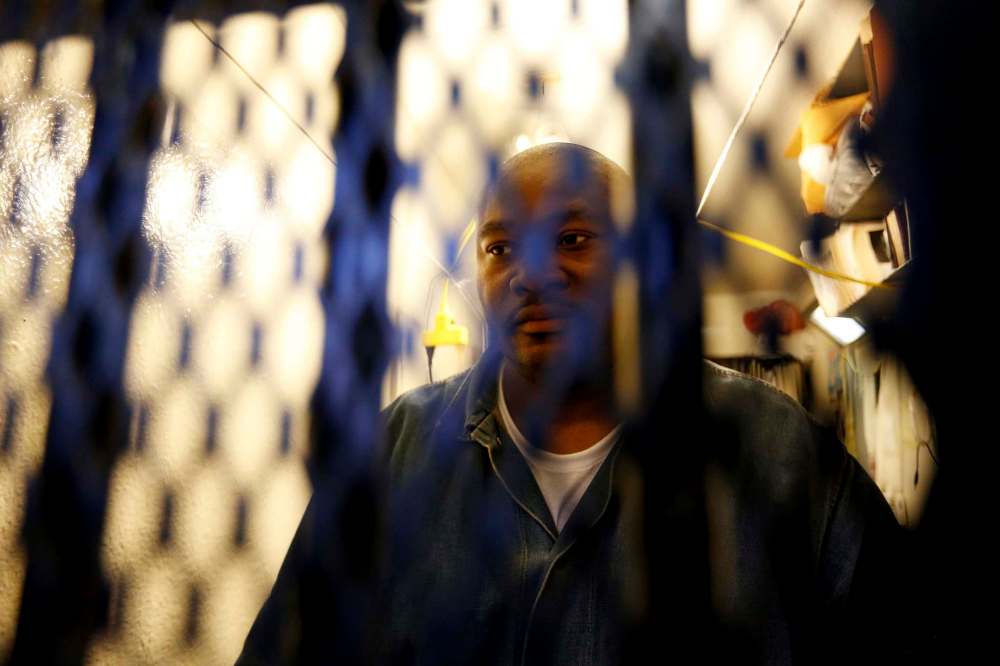
But Pinholster expressed ambivalence — about the vote and about his own fate. It’s been 34 years since he stabbed to death two men who barged in on the robbery of a drug house. The hope he once placed on legal appeals setting him free faded decades ago. And he doubts voters who refused to end the death penalty in 2012 have changed their minds.
“If they start up executions, I’ll be in line, but it doesn’t matter,” the 57-year-old said in a drawl barely audible through the glass door of a solitary-confinement cell.
His neck and chest are as burly as when he was first locked up, but the thick black handlebar mustache is now salt-and-pepper. His bunk, cleared of bedding to double as a desk, was stacked with ink drawings done in painstaking detail.
“After 30 years, you don’t care one way or the other,” he said.
But pre-vote opinions among the condemned are varied at San Quentin, the historic San Francisco Bay prison that by state law houses both a new, never-used execution chamber and the state’s condemned men. In interviews by phone and during two rare tours, condemned inmates embraced the repeal of the death penalty even as others favoured faster appeals, despite accelerating their own march to execution. Others voiced anxiety and predictions of violence if they were cast out into the general prison population.
“They’re a minority,” said Paul Tuilaepa, pacing beneath the bright sun in a kennel-sized exercise yard. Tuilaepa, condemned because he killed a man in 1986 who knocked down his partner during a bar robbery, said he was certain most welcome an end to the threat of death. “They just don’t say it.”
If the death penalty is divisive, it is more so on death row.
“Death row is complicated,” said state prison spokeswoman Terry Thornton, who has been fielding questions since 1999 about the western world’s largest assemblage of people sentenced to die for their crimes.
Two measures on the November ballot propose to fix what proponents contend is a broken capital-punishment system. Proposition 62 would convert death sentences to life without parole. Proposition 66 would set time limits on appeals, limit challenges to execution methods and allow the state to house condemned men outside San Quentin. If both measures pass, the one with more votes would become law.
‘If you are going to execute me, execute me. But if you are going to let me go, let me go’– convicted killer James Thompson, 64
The last time California voters went to the polls on capital punishment (Proposition 34 in 2012 would also have replaced the death penalty with life without parole), death-row tensions ran so high the entire population was placed on suicide watch. Thornton said 24-hour vigils are again planned during voting this November to “address the mental-health needs” of the condemned.
At San Quentin, the danger is real. In 2010, a despondent condemned man hanged himself five days after a judge converted his death sentence to life.
Three-fourths of the condemned men at San Quentin live in East Block, a cavernous 1930s granite block building in which steel-fronted cells are stacked five high in two long rows. The inmates eat, sleep or otherwise occupy themselves in these single steel-front cells, allowed to leave a few times a week in small groups to exercise, or alone to shower or go to the law library.
Their days are largely undisturbed.
There are few newcomers and fewer departures. There have been only 13 executions since 1978 and none since 2006.
Outside, the state’s 34 prisons remain crowded, with men double-bunked in cells built for one. Maximum-security yards are tense, rocked by the arrival of gang leaders released from solitary confinement, the result of a 2015 federal court settlement to disband the state’s gang-management practice of indefinite isolation.
Many condemned inmates are leery of joining that world.
“There’s a lot of anxiety building up. Some of them are scared,” said Clifton Perry, 47, condemned since 1995 for shooting a clerk during a robbery.
“Me, I don’t know if I can handle a bunkie after 20 years of living by myself.”
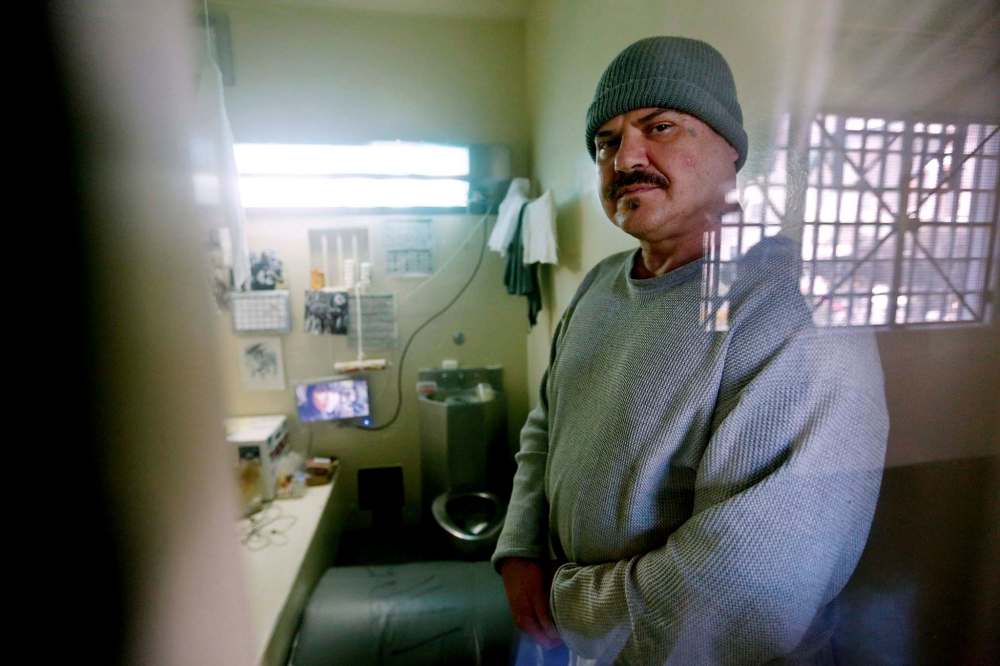
Perry’s worries include being moved from San Quentin, where he has struck up friendships with a college professor and a poet who visit and mentor him in theology and prose. How, he wonders, does that happen if you are a lifer locked away in the north woods at Pelican Bay State Prison in Crescent City, Calif.
And he worries prisoners, “after being here chained up like monkeys and animals in a cage,” will have trouble adjusting to yards where violence is frequent.
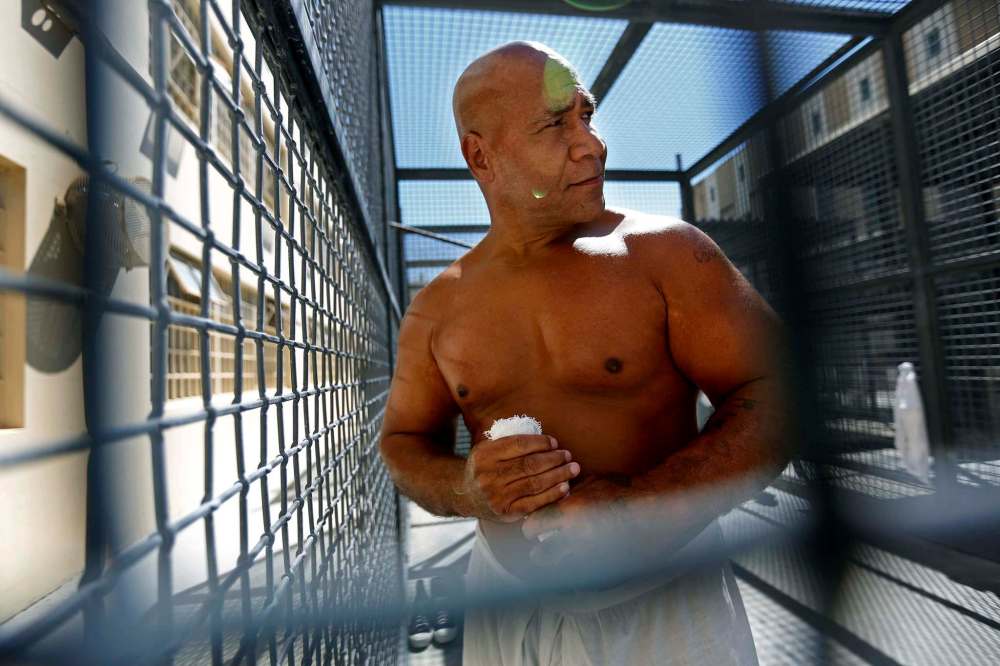
“I’ll have to hurt someone,” was the immediate reaction of James Thompson, 64, grizzled and sitting in an exercise yard the size of a tennis court. A guard stood overhead with a loaded rifle while a line of aging, heavily tattooed men in white boxer shorts paced in military precision.
On a new yard, Thompson will have to “re-establish” himself, he said. After 20 years, Thompson is “comfortable” on East Block.
He is experienced in the differences between death row and ordinary prison. Before he robbed and killed a man in California, Thompson served a long stretch locked up in Texas, also for murder. What rubs him about California is the 20 years his appeal has been in limbo. He agrees with other condemned inmates who favour the ballot proposal to keep the death penalty but speed appeals.
“If you are going to execute me, execute me,” Thompson said.
“But if you are going to let me go, let me go.”
Death-row experts said states that have repealed the death penalty have successfully absorbed the condemned into their general populations, though in Connecticut, two killers had to be sent to Pennsylvania to ensure their safety.
California would relocate condemned inmates through the same assessment program it uses for new arrivals, Thornton said, assigning them to yards and cells based on their security threat.
There are other reasons condemned inmates may not root for an end to the death penalty, said Terry Kupers, a forensic psychiatrist and expert on prison mental health based in Berkeley, Calif.
Condemned inmates are guaranteed relatively extensive legal representation that can foster hope. They receive better-than-par psychiatric care. And they attract the attention of a large international anti-death penalty community.
In the general population, “They’ll spend the rest of the lives behind bars,” Kupers said.
“Prisoners are forgotten.”
— Los Angeles Times