

Judge wigs survive colonial purge
Advertisement
Read this article for free:
or
Already have an account? Log in here »
To continue reading, please subscribe:
Digital Subscription
One year of digital access for only $1.44 a week*
- Enjoy unlimited reading on winnipegfreepress.com
- Read the E-Edition, our digital replica newspaper
- Access News Break, our award-winning app
- Play interactive puzzles
*Billed as $5.77 plus GST every four weeks. After 52 weeks, price increases to the regular rate of $19.95 plus GST every four weeks. Offer available to new and qualified returning subscribers only. Cancel any time.
To continue reading, please subscribe:
Add Free Press access to your Brandon Sun subscription for only an additional
$1 for the first 4 weeks*
- Enjoy unlimited reading on winnipegfreepress.com
- Read the E-Edition, our digital replica newspaper
- Access News Break, our award-winning app
- Play interactive puzzles
*Your next Brandon Sun subscription payment will increase by $1.00 and you will be charged $17.95 plus GST for four weeks. After four weeks, your payment will increase to $24.95 plus GST every four weeks.
Read unlimited articles for free today:
or
Already have an account? Log in here »
Hey there, time traveller!
This article was published 23/09/2017 (3180 days ago), so information in it may no longer be current.
NAIROBI — The British gave up their last colonies in Africa half a century ago. But they left their wigs behind.
Not just any wigs. They are the long, white, horsehair locks worn by high court judges (and King George III). They are so old-fashioned, and so uncomfortable, that even British barristers have stopped wearing them.
But in former British colonies — Kenya, Zimbabwe, Ghana, Malawi and others — they live on, worn by judges and lawyers.
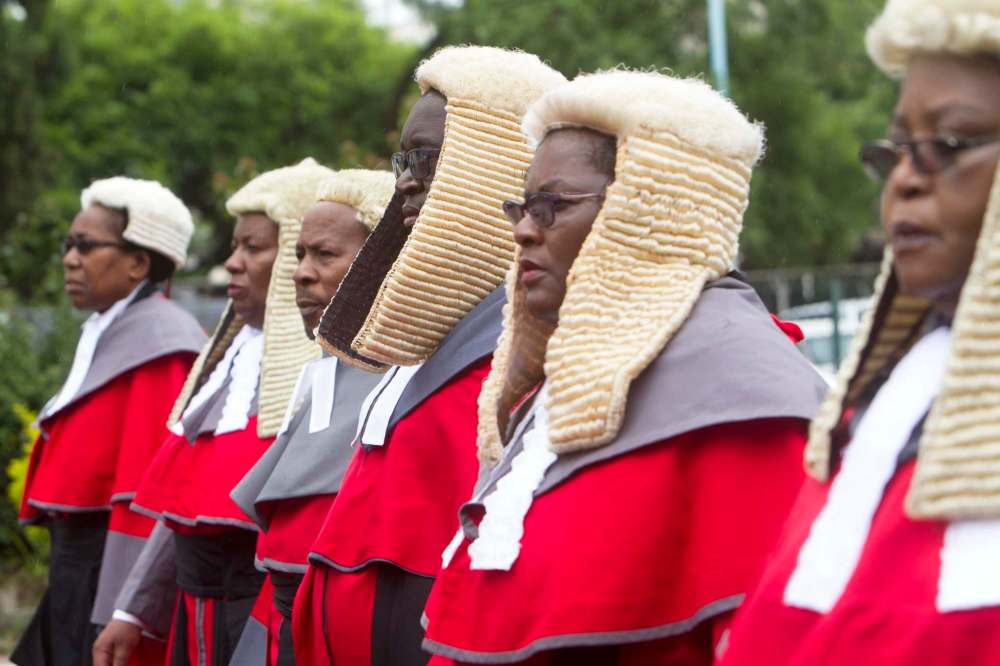
Now, a new generation of African jurists is asking: why are the continent’s most prominent legal minds still wearing the trappings of the colonizers?
It’s not just a question of esthetics. The wigs and robes are perhaps the most glaring symbol of colonial inheritance at a time when that history is being dredged up in all sorts of ways.
This year, Tanzanian President John Magufuli described a proposed free trade agreement with Europe as a “form of colonialism.” In Zimbabwe, President Robert Mugabe still refers to the British as “thieving colonialists.”
In June, the premier of Cape Town was suspended from her party after tweeting that modern health care was a colonial contribution.
The relics of colonialism are scattered across the continent. There are the queen’s namesakes: Victoria Falls north of Zimbabwe, Lake Victoria east of Uganda, Victoria Island in Nigeria. There is the left-lane driving, the cricket, the way public education is organised (not organized).
Most cities and streets have received new names since the Europeans left. In 2013, Mugabe officially rebaptized Victoria Falls “Mosi Oa Tunya,” or “the smoke that thunders” in the Kololo language.
Yet the wig survives, along with other relics of the colonial courtroom: red robes, white bows, references to judges as “my lord” and “my lady.”
In nearly every former British colony, op-eds have been written and speeches made about why the wig ought to be removed. In Uganda, the New Vision newspaper conducted an investigation into the cost of the wigs, reporting that each one cost US$6,500. In Ghana, a prominent lawyer, Augustine Niber, argued that removing wigs would reduce the “intimidation and fear that often characterize our courtrooms.”
One of the editors of the Nigerian Lawyer blog wrote that wigs weren’t made for the sweltering Lagos heat, where lawyers melted under their garb. “The culture that invented wig and gown is different from our own and the weather is different,” Unini Chioma wrote.
Increasingly, though, opponents of the colonial outfit aren’t just arguing against inconvenience but against a tradition that African judiciaries appear to be embracing. Britain’s “colonial courts,” which preceded independence, were sometimes brutal. In response to Kenya’s Mau Mau rebellion in the 1950s, for example, the wigged, white judges sentenced more than 1,000 people to death for conspiring against colonial rule.
“The colonial system used law as instrument of repression, and we’re still maintaining this tradition without questioning it,” said Arnold Tsunga, director of the Africa program at the International Commission of Jurists. “It’s a disgrace to the modern courts of Africa.”
In Kenya, former chief justice Willy Mutunga appealed to remove the wigs from the courtroom, arguing that they were a foreign imposition, not a Kenyan tradition. He swapped the traditional British red robes for “Kenyanized” green and yellow ones.
Isaac Okero, president of the Law Society of Kenya, is a defender of the wig and the robe, and argues they represent more than a British tradition, they distinguish the country’s judges.
In Zimbabwe, still ruled by vehement anti-colonialist Robert Mugabe, the wigs are perhaps most mystifying. Why would a man who stripped white farmers of their land, who railed against the name of Victoria Falls, allow an archaic judicial tradition to remain in place?
Some analysts say that the policy reveals something about Mugabe the closet anglophile, but Tsunga argues the rationale is more insidious.
“We are seeing post-independence African states trying to maintain these symbols of power and authority in the belief that it will help entrench themselves,” he said.
— Washington Post