

Microplastics detected in human feces internationally, study finds
Advertisement
Read this article for free:
or
Already have an account? Log in here »
To continue reading, please subscribe:
Monthly Digital Subscription
$0 for the first 4 weeks*
- Enjoy unlimited reading on winnipegfreepress.com
- Read the E-Edition, our digital replica newspaper
- Access News Break, our award-winning app
- Play interactive puzzles
*No charge for 4 weeks then price increases to the regular rate of $19.95 plus GST every four weeks. Offer available to new and qualified returning subscribers only. Cancel any time.
Monthly Digital Subscription
$4.99/week*
- Enjoy unlimited reading on winnipegfreepress.com
- Read the E-Edition, our digital replica newspaper
- Access News Break, our award-winning app
- Play interactive puzzles
*Billed as $19.95 plus GST every four weeks. Cancel any time.
To continue reading, please subscribe:
Add Free Press access to your Brandon Sun subscription for only an additional
$1 for the first 4 weeks*
*Your next subscription payment will increase by $1.00 and you will be charged $16.99 plus GST for four weeks. After four weeks, your payment will increase to $23.99 plus GST every four weeks.
Read unlimited articles for free today:
or
Already have an account? Log in here »
Hey there, time traveller!
This article was published 28/10/2018 (2628 days ago), so information in it may no longer be current.
There’s plastic in the poop.
A team of scientists say they have found tiny plastic particles in human stools from a global sampling — and every sample tested positive.
“This is the first study of its kind, and confirms what we have long suspected, that plastics ultimately reach the human gut,” said lead researcher Philipp Schwabl, a physician scientist at the Medical University of Vienna.
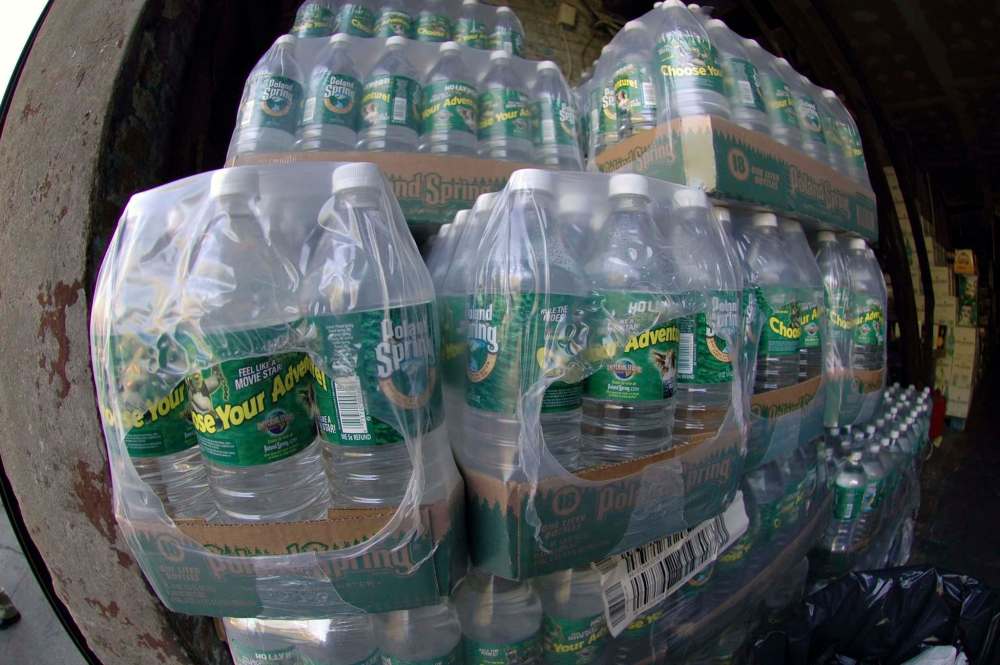
The small study, conducted by the University of Vienna with Environment Agency Austria, was presented Monday at the annual United European Gastroenterology conference.
“Of particular concern is what this means to us, and especially patients with gastrointestinal diseases,” Schwabl said. “While the highest plastic concentrations in animal studies have been found in the gut, the smallest microplastic particles are capable of entering the bloodstream, lymphatic system, and may even reach the liver. Now that we have first evidence for microplastics inside humans, we need further research to understand what this means for human health.”
To conduct the study, researchers monitored the stools of a group of eight participants from Finland, Italy, Japan, the Netherlands, Poland, Russia, the United Kingdom and Austria. They detected particles of polypropylene (PP), polyethylene-terephthalate (PET) and others. In all, nine types of plastic were found in the stool samples. The researchers found an average of 20 microplastic particles per 10 grams of stool.
Though the study was limited, the research suggests plastics could be widespread throughout the human food chain.
Microplastics are defined as tiny particles, less than five millimetres. The particles come from a variety of products, as well as from plastics that break down in the environment and find their way into waterways.
The scientists said microplastics may affect human health, starting in the gastrointestinal tract, and could affect the immune response in the gut, either through an accumulation of the plastics or by transmitting toxins contained in them.
The researchers could not identify precisely where the plastics came from. Each study participant kept a food diary in the week leading up to his or her stool sampling. The diaries showed they were exposed to plastics in various ways: by eating food that had been wrapped in plastic or by drinking from plastic bottles. None were vegetarians. Six had eaten fish.
“This study is brilliant and ingenious,” chemist and microplastics expert Shari Mason of the State University of New York at Fredonia told NPR. Mason was not involved in the study, but she said the scientists confirmed “what so many of us suspected — we’re ingesting these plastics.”
Plastics are increasingly viewed as a global problem. The researchers said plastics production is growing each year, and that two to five per cent of all plastics produced end up in the oceans, where they are eaten by sea animals with potential to enter the human food chain. Microplastics have been detected in tuna, lobster and shrimp.
Earlier this year, a team of scientists working with Orb, a non-profit journalism organization, found that a single bottle of water can contain dozens — or even thousands — of tiny plastic particles. Tests on more than 250 bottles showed almost all had contamination from microplastic particles that included PP, PET and nylon. A few bottles showed no presence of plastics. In all, scientists working with the publication found plastic in 93 per cent of the samples.
— Philadelphia Inquirer