

Ancient site linked to Caesar’s murder to open to public
Advertisement
Read this article for free:
or
Already have an account? Log in here »
To continue reading, please subscribe:
Monthly Digital Subscription
$1 per week for 24 weeks*
- Enjoy unlimited reading on winnipegfreepress.com
- Read the E-Edition, our digital replica newspaper
- Access News Break, our award-winning app
- Play interactive puzzles
*Billed as $4.00 plus GST every four weeks. After 24 weeks, price increases to the regular rate of $19.95 plus GST every four weeks. Offer available to new and qualified returning subscribers only. Cancel any time.
Monthly Digital Subscription
$4.99/week*
- Enjoy unlimited reading on winnipegfreepress.com
- Read the E-Edition, our digital replica newspaper
- Access News Break, our award-winning app
- Play interactive puzzles
*Billed as $19.95 plus GST every four weeks. Cancel any time.
To continue reading, please subscribe:
Add Free Press access to your Brandon Sun subscription for only an additional
$1 for the first 4 weeks*
*Your next subscription payment will increase by $1.00 and you will be charged $16.99 plus GST for four weeks. After four weeks, your payment will increase to $23.99 plus GST every four weeks.
Read unlimited articles for free today:
or
Already have an account? Log in here »
Hey there, time traveller!
This article was published 18/02/2019 (2619 days ago), so information in it may no longer be current.
ROME – A complex of ancient temples in Rome that are linked to the scene of Julius Caesar’s murder will be opened to the public.
The below-street-level temple ruins at Largo Argentina in downtown Rome is visible to pedestrians peering from above but closed to visitors. For decades, access was enjoyed only by a colony of cats, the cadre of volunteers fed them and, occasionally, archaeologists.
But Rome Mayor Virginia Raggi announced Monday that by late 2021, walkways will be built inside the site so tourists can stroll through the ruins. Luxury Bulgari jewelry-maker, which also funded the restoration of Rome’s Spanish Steps, is sponsoring the work.
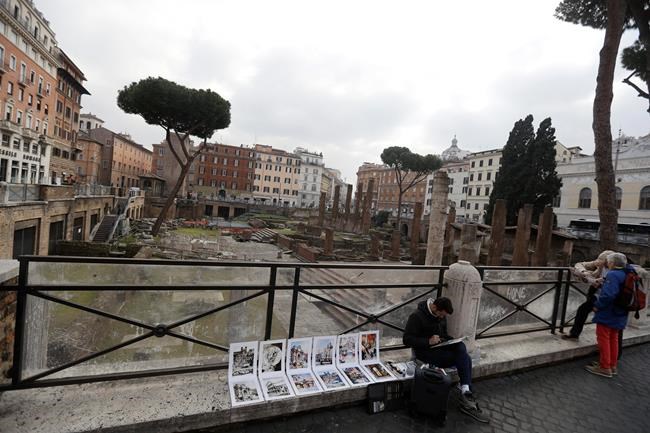
The ruins include a stone pedestal from the Curia of Pompey, the meeting place of senators, where Caesar was slain in 44 B.C.