

Beauty queen, journalist, pioneer. The many faces of Trump accuser E. Jean Carroll.
Advertisement
Read this article for free:
or
Already have an account? Log in here »
To continue reading, please subscribe:

Digital Subscription
One year of digital access for only $205*
- Enjoy unlimited reading on winnipegfreepress.com
- Read the E-Edition, our digital replica newspaper
- Access News Break, our award-winning app
- Play interactive puzzles
*First annual payment billed as $205.00 + GST for one year. This annual subscription will automatically renew at $233.00 + GST every 52 weeks (10% off the regular annual price of $259.35). Offer available to new and qualified returning subscribers only. Cancel any time.
To continue reading, please subscribe:
Add Free Press access to your Brandon Sun subscription for only an additional
$1 for the first 4 weeks*
- Enjoy unlimited reading on winnipegfreepress.com
- Read the E-Edition, our digital replica newspaper
- Access News Break, our award-winning app
- Play interactive puzzles
*Your next Brandon Sun subscription payment will increase by $1.00 and you will be charged $17.95 plus GST for four weeks. After four weeks, your payment will increase to $24.95 plus GST every four weeks.
Read unlimited articles for free today:
or
Already have an account? Log in here »
Hey there, time traveller!
This article was published 06/07/2019 (2650 days ago), so information in it may no longer be current.
In the days since E. Jean Carroll said that she was assaulted over 20 years ago by Donald Trump, she has been questioned and scrutinized for both the story she’s told, and the winding, sometimes colourful way that she has told it.
And yet, Carroll says, this moment is “probably one of the most carefree and happy times of my life.”
“I’ve been in a cocoon of love and support,” Carroll told USA Today in a phone interview, adding that people have been sending her messages, texts and even approaching her on the street. “It’s just been overwhelmingly delightful.”
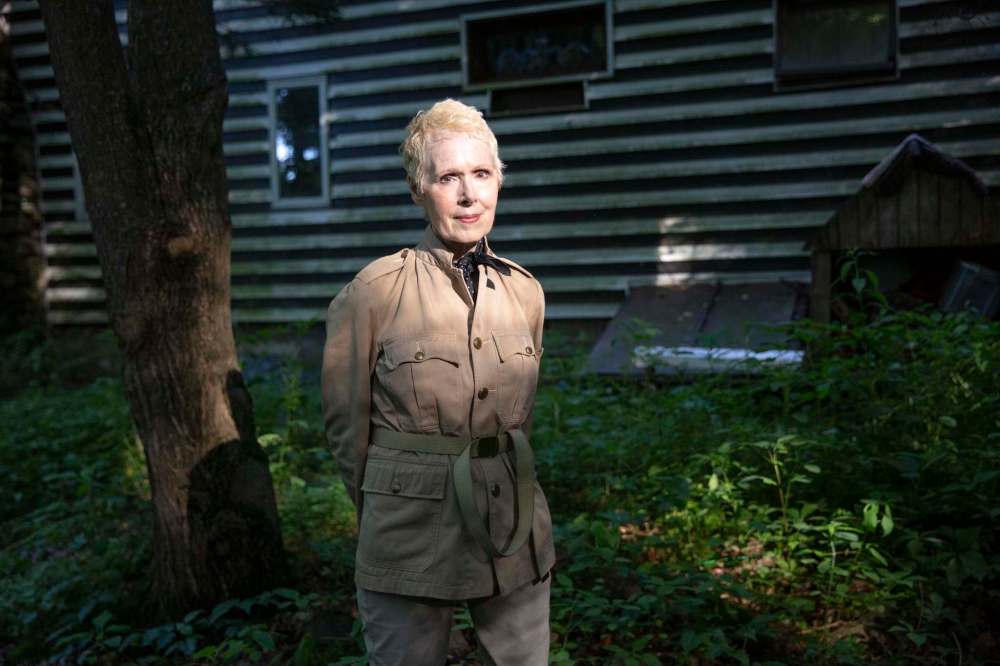
Her response is likely not what some would have imagined, but Carroll has spent a lifetime defying expectations.
A former beauty queen, she became a pioneer in the world of literary journalism. A daughter of the Midwest, she found renown in the elite media circles of New York. And in her 70s, Carroll remains a beacon to millions of readers seeking out her frank talk about sex, success and love.
Lisa Chase remembers the first time she read a piece by Carroll.
“I thought she was hilarious,” says Chase, who first edited Carroll 30 years ago when Chase was an editor with Outside magazine. “When you hire E. Jean, you want a funny story with feeling and empathy.”
But though the two women became friends, Carroll’s account of being sexually assaulted by Donald Trump in a posh Manhattan department store more than 20 years ago was one Carroll never shared.
“I had no idea she had these stories. She kept them to herself,” says Chase, who edited Carroll’s advice column in Elle magazine from 2005 to 2017.
Carroll’s book, What Do We Need Men For? released this past Tuesday, details an allegation first excerpted in New York magazine that Trump assaulted her in a Bergdorf Goodman dressing room in the mid 1990s. Two of Carroll’s friends have confirmed to the New York Times that she told them about the incident shortly after it allegedly occurred. Trump has denied assaulting her.
“Totally lying. I don’t know anything about her,” Trump said. “I know nothing about this woman. I know nothing about her. She is — it’s just a terrible thing that people can make statements like that.”
But long before this fraught moment in the media’s glare, Carroll was a journalistic luminary, known for her Ask E. Jean advice column, and for being a presence amid the glitzy nightlife scene of 1980s and ’90s New York.
“There’s a circuit in New York,” says Chase. “You go out to events. You go to premières… You go to dinner parties. She was on TV. She was writing. She was beautiful and smart and funny… She was in that world,” says Chase.
Carroll carved a niche in television, writing for Saturday Night Live in the 1980s and hosting her own Ask E. Jean show on MSNBC’s predecessor, America’s Talking, from 1994 to 1996.
But it was her writing, featured in publications such as Rolling Stone and Playboy — where Carroll became the first woman to be named a contributing editor — that established Carroll as a trailblazer.
“That was the tabloid era,” says Roger Friedman, editor in chief of the entertainment news website Showbiz411. “People were chasing scoops. You didn’t have cellphones. You didn’t have the internet. You had to get up, put your hat on and get the story.”
Carroll became known for a style of writing and reporting dubbed gonzo journalism. A hallmark of writers such as Hunter S. Thompson, whose biography Carroll wrote, and Tom Wolfe, it was a school of storytelling in which journalists often made themselves part of the tale, offering up humorous, sometimes outrageous, personal experiences.
“There weren’t a lot of women who were being hired by men’s magazines. And she was,” Chase says.
Indiana roots
Elizabeth Jean “Jeannie” Carroll’s journey started out much more conventionally.
Carroll spent her childhood in Fort Wayne, Ind., the oldest of four children in a family that included a younger brother and two sisters. Her writing ambitions bloomed early.
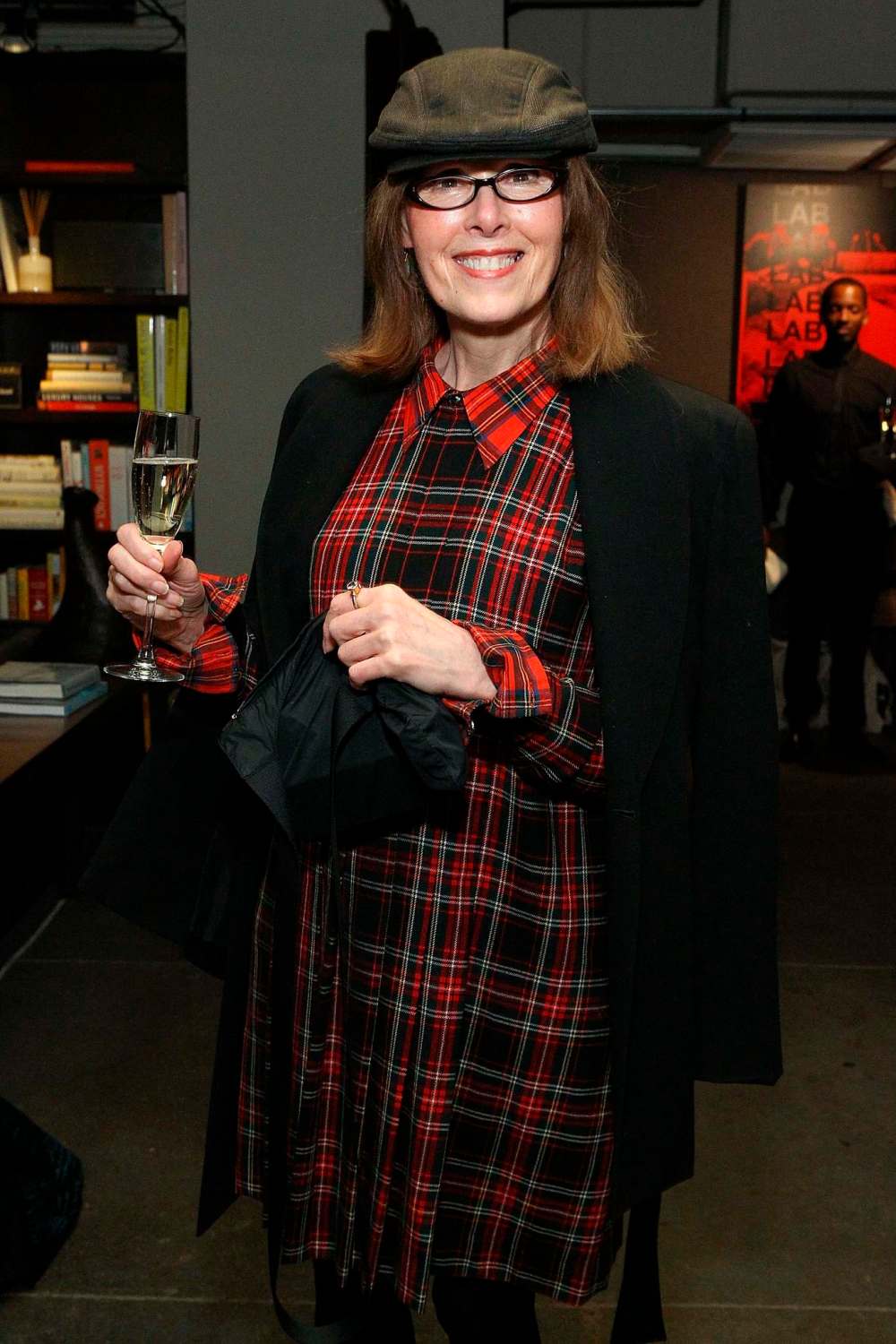
“I was filling the US mail with pitches to magazines… at the age of 12,” she remembers.
A member of the class of 1967, Carroll was named Miss Indiana University, as well as Miss Cheerleader U.S.A., which earned her a scholarship.
The first time Carroll touched down in New York was after college. She then travelled to Africa, lived in Montana with her first husband, Steve Byers, and spent some time in Chicago. But after she landed a piece in Esquire, Carroll’s writing career began to take off.
She returned to New York to interview Fran Lebowitz for the cover of Outside magazine, and she stayed for good.
Bright lights, big city
In her book, Carroll says that she had only met Trump once before the day she says she encountered him at Bergdorf Goodman. Trump, meanwhile, has said that he doesn’t know her.
However, there is a photograph showing that their paths did cross. Dated “around 1987,” it is a shot of Carroll; her then-husband, former New York City anchorman John Johnson; and Trump with his first wife, Ivana.
New York was the capital of media, finance and fashion, and for a glittering set, it was a glamorous, golden era.
Trump was also a fixture on New York’s nightlife scene. The 1980s was the decade when Trump Tower first opened its doors and Trump’s memoir The Art of the Deal was published. Both helped turn him into a celebrity, propelling Trump’s brash, boastful persona beyond the pages of the local tabloids to appearances on national shows such as Late Night with David Letterman and 60 Minutes.
Meanwhile, Carroll’s writing career continued to thrive. In 1993, her Ask E. Jean column debuted in Elle, and for nearly three decades, Carroll has doled out tough love to its millions of readers, cushioning her guidance with humor, irreverence and references that include Saint Teresa and the artist Frida Kahlo.
Still, given the era in which Carroll grew up, Chase says that she is not surprised that a consummate giver of guidance would keep some of her own troubling experiences to herself.
“She’s of a generation of women who were brought up not to do that,” Chase says. “She was beautiful and expected to do and be certain things and she wanted a bigger life… She’s empathic, but she’s also private about things.”
Carroll’s writing style and voice has informed her recounting of Trump’s alleged sexual assault. And some have questioned the way she’s described a traumatic event, as well as her refusal to call what she says happened rape.
“Every woman gets to choose her word,” Carroll said in an interview on the New York Times’ The Daily podcast. “Every woman gets to choose how she describes it… I have not been raped. Something has not been done to me. I fought. That’s the thing.”
— USA Today