

California monolith pops up after finds in Utah, Romania
Advertisement
Read this article for free:
or
Already have an account? Log in here »
To continue reading, please subscribe:

Digital Subscription
One year of digital access for only $205*
- Enjoy unlimited reading on winnipegfreepress.com
- Read the E-Edition, our digital replica newspaper
- Access News Break, our award-winning app
- Play interactive puzzles
*First annual payment billed as $205.00 + GST for one year. This annual subscription will automatically renew at $233.00 + GST every 52 weeks (10% off the regular annual price of $259.35). Offer available to new and qualified returning subscribers only. Cancel any time.
To continue reading, please subscribe:
Add Free Press access to your Brandon Sun subscription for only an additional
$1 for the first 4 weeks*
- Enjoy unlimited reading on winnipegfreepress.com
- Read the E-Edition, our digital replica newspaper
- Access News Break, our award-winning app
- Play interactive puzzles
*Your next Brandon Sun subscription payment will increase by $1.00 and you will be charged $17.95 plus GST for four weeks. After four weeks, your payment will increase to $24.95 plus GST every four weeks.
Read unlimited articles for free today:
or
Already have an account? Log in here »
Hey there, time traveller!
This article was published 03/12/2020 (2133 days ago), so information in it may no longer be current.
LOS ANGELES – Days after the discovery and swift disappearance of two shining metal monoliths half a world apart, another towering structure has popped up, this time at the pinnacle of a trail in Southern California.
Its straight sides and height are similar to one discovered in the Utah desert and another found in Romania. Like those structures, the origin of the California edifice is also mysterious.
It’s at the top of a hill in Atascadero, halfway between San Francisco and Los Angeles, KEYT-TV reported Wednesday. The tall, silver structure drew hikers to the area after photos were posted on social media.
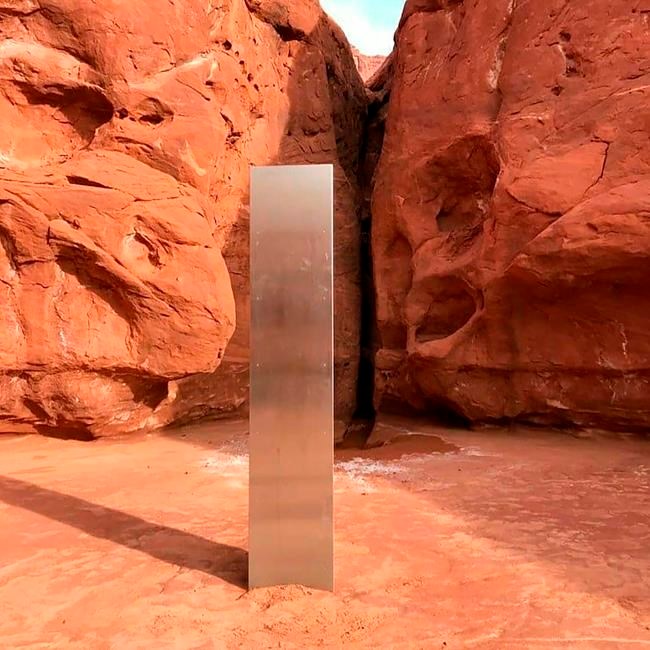
Another monolith spotted two weeks ago in Utah’s otherworldly red-rock country became a beacon of fascination around the world as it evoked the movie “2001: A Space Odyssey” and drew hundreds of people to the remote spot.
Two extreme sports athletes said they were part of a group that tore down the hollow metal structure because they were worried about the damage the droves of visitors were causing to the relatively untouched spot. Officials said the visitors flattened plants with their cars and left behind human waste.
A structure that appeared last week in Romania is also gone.
The Utah creation evoked famous land-art pieces that dot the West. Robert Smithson’s Spiral Jetty is an earthwork along the Great Salt Lake and Nancy Holt’s Sun Tunnels are huge concrete pieces in the desert.
Like those pieces, the monolith was fascinating in part because of its context in the landscape, said Whitney Tassie, a curator of modern and contemporary art at the Utah Museum of Fine Art.
“That’s a big, big part of land art in general is this idea of an experience, of a journey,” she said.
The intense social media reaction to the monolith against the backdrop of the punishing pandemic, along with the quick disappearance of the piece, has become a part of its story, she said. Police have said the dismantling may not be illegal since no one has claimed the structure as their property.
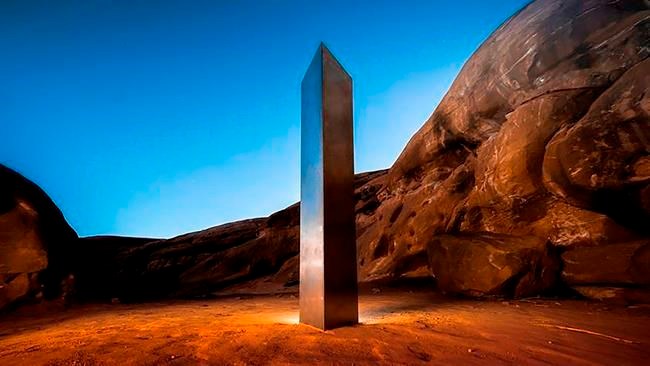
The still-anonymous creator of the Utah monument did not follow steps taken by land artists of the 1970s to secure permission to make their works. Visitation to those remote sites is now managed and overseen to avoid too much stress on the environment. Federal and state officials in Utah had also expressed concern about the area around the monolith being overrun.
“It’s good to think about our relationship with the earth, which is ultimately what these sorts of projects do,” Tassie said. “Man’s impact on the environment front and centre.”
___
Associated Press writer Lindsay Whitehurst in Salt Lake City contributed to this report.
Related Articles
Gleaming monolith pops up in Nevada desert, the latest in a series of quickly vanishing structures
Advertisement Advertise With Us
Advertisement Advertise With Us