Colombia’s highest court legalizes abortion up to 24 weeks
Advertisement
Read this article for free:
or
Already have an account? Log in here »
To continue reading, please subscribe:
Digital Subscription
One year of digital access for only $75*
- Enjoy unlimited reading on winnipegfreepress.com
- Read the E-Edition, our digital replica newspaper
- Access News Break, our award-winning app
- Play interactive puzzles
*Billed as $5.77 plus GST every four weeks. After 52 weeks, price increases to the regular rate of $19.95 plus GST every four weeks. Offer available to new and qualified returning subscribers only. Cancel any time.
Monthly Digital Subscription
$4.99/week*
- Enjoy unlimited reading on winnipegfreepress.com
- Read the E-Edition, our digital replica newspaper
- Access News Break, our award-winning app
- Play interactive puzzles
*Billed as $19.95 plus GST every four weeks. Cancel any time.
To continue reading, please subscribe:
Add Free Press access to your Brandon Sun subscription for only an additional
$1 for the first 4 weeks*
- Enjoy unlimited reading on winnipegfreepress.com
- Read the E-Edition, our digital replica newspaper
- Access News Break, our award-winning app
- Play interactive puzzles
*Your next Brandon Sun subscription payment will increase by $1.00 and you will be charged $17.95 plus GST for four weeks. After four weeks, your payment will increase to $24.95 plus GST every four weeks.
Read unlimited articles for free today:
or
Already have an account? Log in here »
Hey there, time traveller!
This article was published 21/02/2022 (1555 days ago), so information in it may no longer be current.
BOGOTA, Colombia (AP) — Colombia became the latest country in Latin America to expand access to abortion Monday as the nation’s Constitutional Court voted to legalize the procedure until the 24th week of pregnancy.
The decision by the tribunal of nine judges fell short of the expectations of pro-choice groups that had been pushing for abortion to be completely decriminalized in Colombia. But it was nevertheless described as a historic event by women’s rights groups, which estimate 400,000 women get clandestine abortions in the country each year.
Before the ruling, Colombia allowed abortions only when a woman’s life was in danger, a fetus had malformations or a pregnancy resulted from rape.
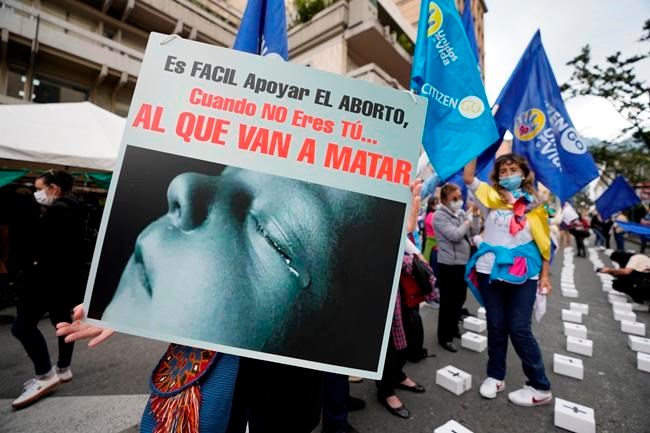
Now women in Colombia will be able to get abortions until the 24th week of their pregnancy without having to provide any justification. After the 24th week of pregnancy, abortion will still be restricted to women whose health is in danger.
“We were trying to get the complete decriminalization of abortion … but this is still a historic step,” said Cristina Rosero, a lawyer for the New York-based Center for Reproductive Rights, an advocacy group that was one of five organizations that filed a lawsuit in 2020 to get the high court to review Colombia’s abortions laws.
The lawsuit argued that restrictions on abortion discriminated against women from low income areas for whom it was harder to get legal abortions, because they had less access to doctors, lawyers or psychologists who could help them to prove that carrying out pregnancies would put their health at risk.
Rosero said the changes made to Colombian law will now make it easier for people of lower income levels to access safe abortions.
“Our challenge now is to ensure that this ruling is implemented” she said.
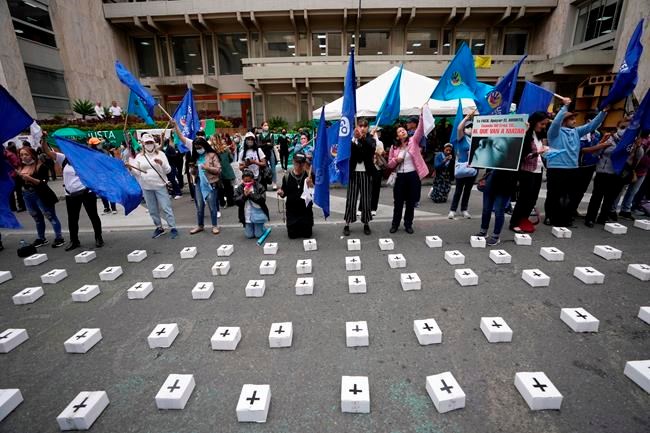
Elsewhere in Latin America, Argentina, Uruguay and Cuba also allow abortions without restrictions until certain stages of pregnancy, while in Mexico a supreme court ruling recently said that women cannot cannot be tried in court for terminating their pregnancies.
Latin America is also a region where some countries prohibit the termination of pregnancy without exception, like in El Salvador, Nicaragua, Honduras and the Dominican Republic.