

NATO to hold nuclear exercise despite Russian warnings
Advertisement
Read this article for free:
or
Already have an account? Log in here »
To continue reading, please subscribe:

Digital Subscription
One year of digital access for only $205*
- Enjoy unlimited reading on winnipegfreepress.com
- Read the E-Edition, our digital replica newspaper
- Access News Break, our award-winning app
- Play interactive puzzles
*First annual payment billed as $205.00 + GST for one year. This annual subscription will automatically renew at $233.00 + GST every 52 weeks (10% off the regular annual price of $259.35). Offer available to new and qualified returning subscribers only. Cancel any time.
To continue reading, please subscribe:
Add Free Press access to your Brandon Sun subscription for only an additional
$1 for the first 4 weeks*
- Enjoy unlimited reading on winnipegfreepress.com
- Read the E-Edition, our digital replica newspaper
- Access News Break, our award-winning app
- Play interactive puzzles
*Your next Brandon Sun subscription payment will increase by $1.00 and you will be charged $17.95 plus GST for four weeks. After four weeks, your payment will increase to $24.95 plus GST every four weeks.
Read unlimited articles for free today:
or
Already have an account? Log in here »
Hey there, time traveller!
This article was published 11/10/2022 (1435 days ago), so information in it may no longer be current.
BRUSSELS (AP) — NATO will push ahead with long-planned nuclear exercises next week despite rising tensions over the war in Ukraine and President Vladimir Putin’s insistence that he is not bluffing about using all available means to defend Russian territory, NATO Secretary-General Jens Stoltenberg said Tuesday.
The exercise, dubbed “Steadfast Noon,” is held annually and usually runs for about one week. It involves fighter jets capable of carrying nuclear warheads but does not involve any live bombs. Conventional jets, and surveillance and refueling aircraft also routinely take part.
Fourteen of the 30 NATO member countries will be involved in the exercise, which was planned before Russia invaded Ukraine in February. The main part of the maneuvers would be held more than 1,000 kilometers (625 miles) from Russia, a NATO official said.
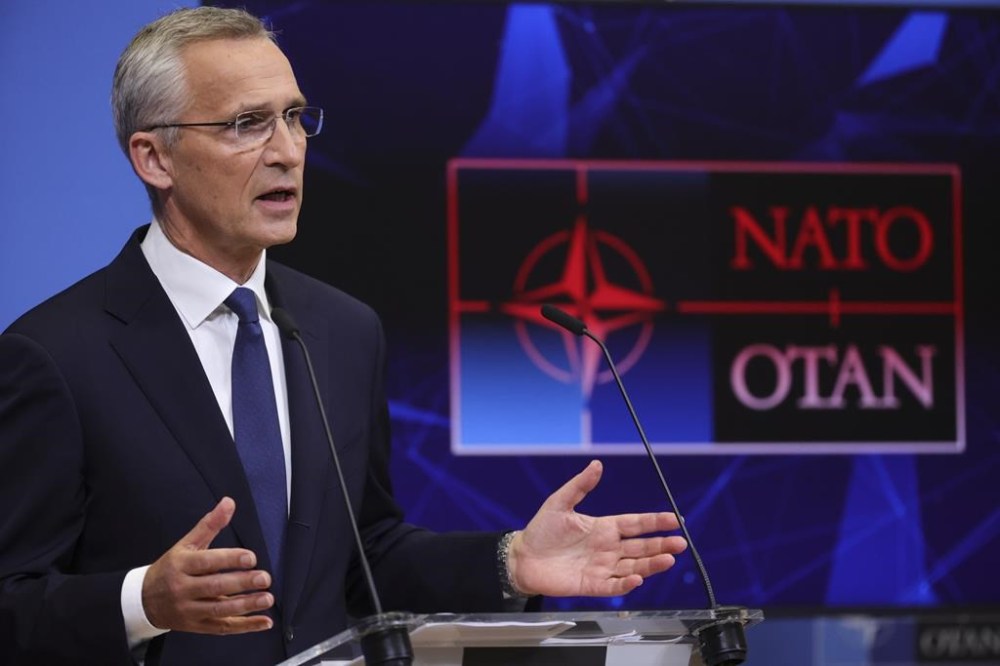
“It would send a very wrong signal if we suddenly now cancelled a routine, long-time planned exercise because of the war in Ukraine. That would be absolutely the wrong signal to send,” Stoltenberg told reporters on the eve of a meeting of NATO defense ministers in Brussels.
“NATO’s firm, predictable behavior, our military strength, is the best way to prevent escalation,” he said. “If we now created the grounds for any misunderstandings, miscalculations in Moscow about our willingness to protect and defend all allies, we would increase the risk of escalation.”
With the Russian army retreating under the blows of Ukrainian forces armed with Western weapons, Putin raised the stakes by annexing four Ukrainian regions and declaring a partial mobilization of up to 300,000 reservists to buttress the crumbling front line.
As his war plans have gone awry, Putin has repeatedly signaled that he could resort to nuclear weapons to protect the Russian gains. The threat is also aimed at deterring NATO nations from sending more sophisticated weapons to Ukraine.
NATO as an organization does not possess any weapons. The nuclear weapons nominally linked to NATO remain under the firm control of three member countries — the U.S., U.K. and France. The alliance’s secretive Nuclear Planning Group will meet on Thursday among defense ministers.
Stoltenberg described Putin’s spiraling nuclear rhetoric as “dangerous and reckless,” and underlined that the allies “have also conveyed clearly to Russia that it will have severe consequences if they use nuclear weapons in any way.”
“We are closely monitoring Russia’s nuclear forces,” Stoltenberg said. “We have not seen any changes in Russia’s posture, but we remain vigilant.”
___
Follow the AP’s coverage of the war at https://apnews.com/hub/russia-ukraine