

Vermont advances nonresident medically assisted suicide bill
Advertisement
Read this article for free:
or
Already have an account? Log in here »
To continue reading, please subscribe:

Digital Subscription
One year of digital access for only $205*
- Enjoy unlimited reading on winnipegfreepress.com
- Read the E-Edition, our digital replica newspaper
- Access News Break, our award-winning app
- Play interactive puzzles
*First annual payment billed as $205.00 + GST for one year. This annual subscription will automatically renew at $233.00 + GST every 52 weeks (10% off the regular annual price of $259.35). Offer available to new and qualified returning subscribers only. Cancel any time.
To continue reading, please subscribe:
Add Free Press access to your Brandon Sun subscription for only an additional
$1 for the first 4 weeks*
- Enjoy unlimited reading on winnipegfreepress.com
- Read the E-Edition, our digital replica newspaper
- Access News Break, our award-winning app
- Play interactive puzzles
*Your next Brandon Sun subscription payment will increase by $1.00 and you will be charged $17.95 plus GST for four weeks. After four weeks, your payment will increase to $24.95 plus GST every four weeks.
Read unlimited articles for free today:
or
Already have an account? Log in here »
Hey there, time traveller!
This article was published 14/02/2023 (1327 days ago), so information in it may no longer be current.
MONTPELIER, Vt. (AP) — A bill that would make Vermont the second state in the country to allow terminally ill nonresidents to seek medically assisted suicide was approved by a state legislative committee on Tuesday.
The House Human Services Committee unanimously approved removing the residency requirement. A similar bill is in committee in the Senate.
The full Legislature must consider the proposal, and then, if it is passed, it would need to be signed by Republican Gov. Phil Scott to become law.
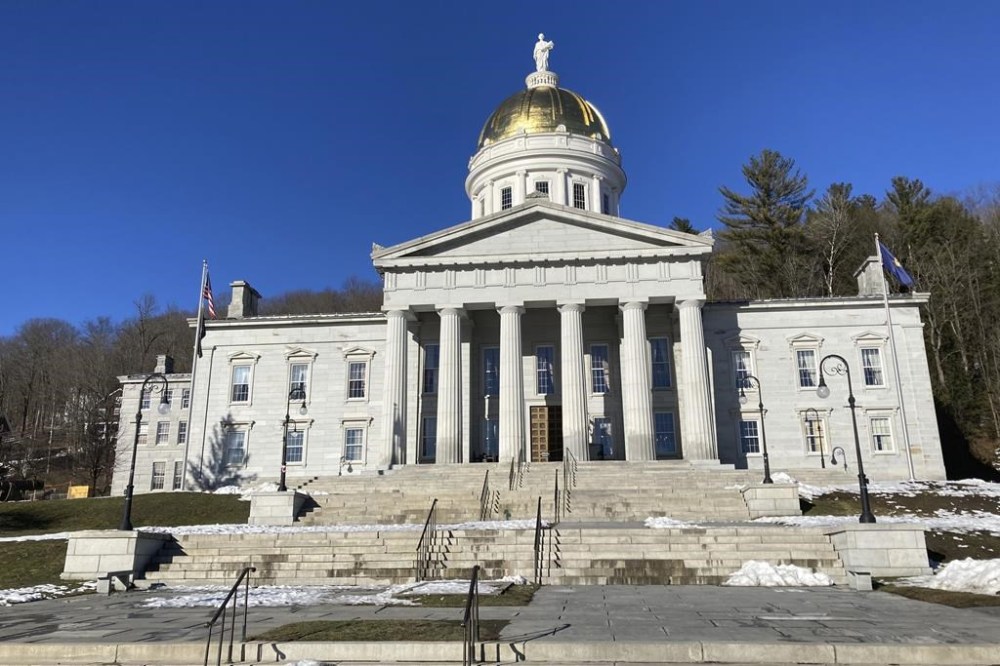
Eight states, including California, Colorado, Hawaii, Maine and New Jersey, and Washington, D.C., also have medically assisted suicide laws. In Montana, the state Supreme Court ruled that state law does not prohibit medical aid in dying.
If removal of the residency requirement is approved, Vermont would join Oregon, which no longer requires people to be residents of the state to use its law allowing terminally ill people to receive lethal medication.
Democratic Rep. Jessica Brumsted, vice chair of the Vermont committee, said she was pleased that the panel took this step, so that if her parents who live out of state, or children, became terminally ill she might be able to offer them that option.
“If someone was that sick in my family … living out of state, I’d like to think that they could come back and be in my home and go through this process with someone in my family,” Brumsted said.
Before the vote, the committee heard additional testimony.
Mary Hahn Beerworth, executive director of the Vermont Right to Life Committee, said assisted suicide “was and remains a matter of contention.”
“To be clear, Vermont Right to Life opposed the underlying concept behind assisted suicide and opposes the move to remove the residency requirement as there are still no safeguards that protect vulnerable terminally ill people in Vermont from coercion,” she said.
David Englander, the state Health Department’s senior policy and legal advisor, said no complaints have been reported to the department or the attorney general’s office regarding the use of medically assisted suicide.
“It’s important that we move to normalize this kind of care because it is both exceptional but also everyday,” he said.
In a settlement filed in federal court last year, the Oregon Health Authority and the Oregon Medical Board agreed to stop enforcing the residency requirement and to ask the Legislature to remove it from the law.
At the time, advocates said they would use the settlement to press the other states and Washington, D.C. that have medically assisted suicide laws, to drop their residency requirements as well.
In August of last year, a Connecticut woman with cancer sued Vermont for allowing only its own residents to take advantage of a state’s assisted suicide law.
____
AP reporter Kathy McCormack contributed to this report from Concord, N.H.