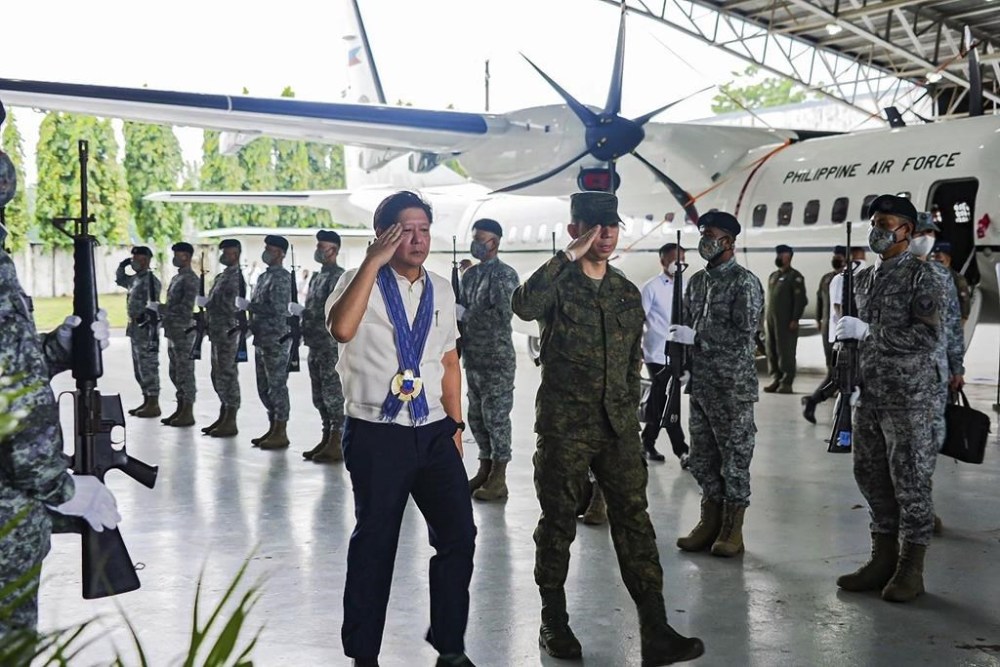
Philippine leader urges military to focus on South China Sea
Advertisement
Read this article for free:
or
Already have an account? Log in here »
To continue reading, please subscribe:

Digital Subscription
One year of digital access for only $205*
- Enjoy unlimited reading on winnipegfreepress.com
- Read the E-Edition, our digital replica newspaper
- Access News Break, our award-winning app
- Play interactive puzzles
*First annual payment billed as $205.00 + GST for one year. This annual subscription will automatically renew at $233.00 + GST every 52 weeks (10% off the regular annual price of $259.35). Offer available to new and qualified returning subscribers only. Cancel any time.
To continue reading, please subscribe:
Add Free Press access to your Brandon Sun subscription for only an additional
$1 for the first 4 weeks*
- Enjoy unlimited reading on winnipegfreepress.com
- Read the E-Edition, our digital replica newspaper
- Access News Break, our award-winning app
- Play interactive puzzles
*Your next Brandon Sun subscription payment will increase by $1.00 and you will be charged $17.95 plus GST for four weeks. After four weeks, your payment will increase to $24.95 plus GST every four weeks.
Read unlimited articles for free today:
or
Already have an account? Log in here »
Hey there, time traveller!
This article was published 27/02/2023 (1299 days ago), so information in it may no longer be current.
MANILA, Philippines (AP) — The Philippine president said the main mission of his country’s military has changed to ensure the protection of its territory as disputes with China and U.S.-China rivalry intensify.
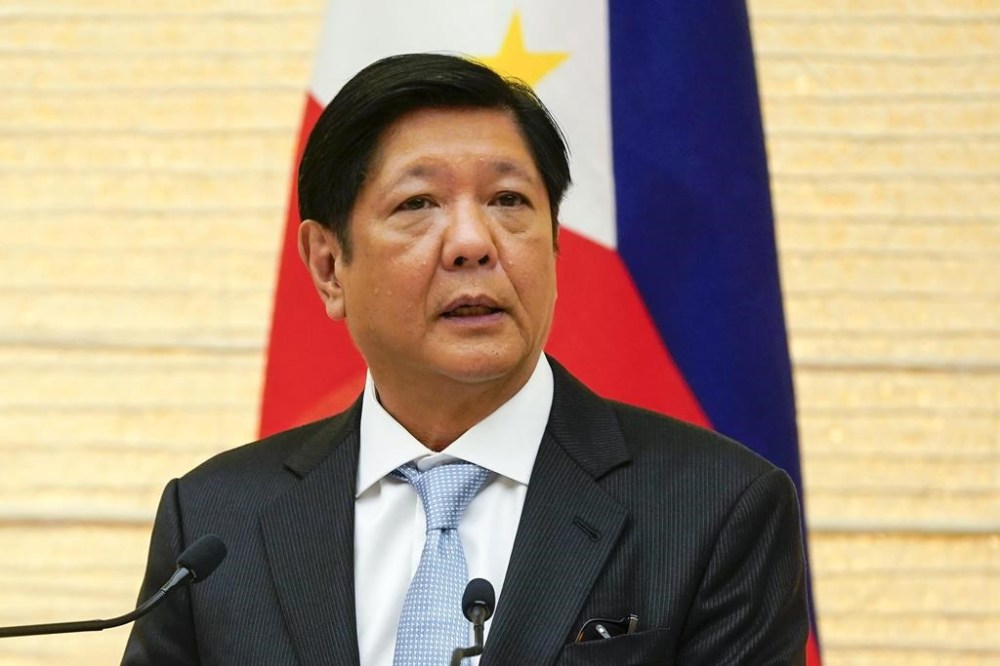
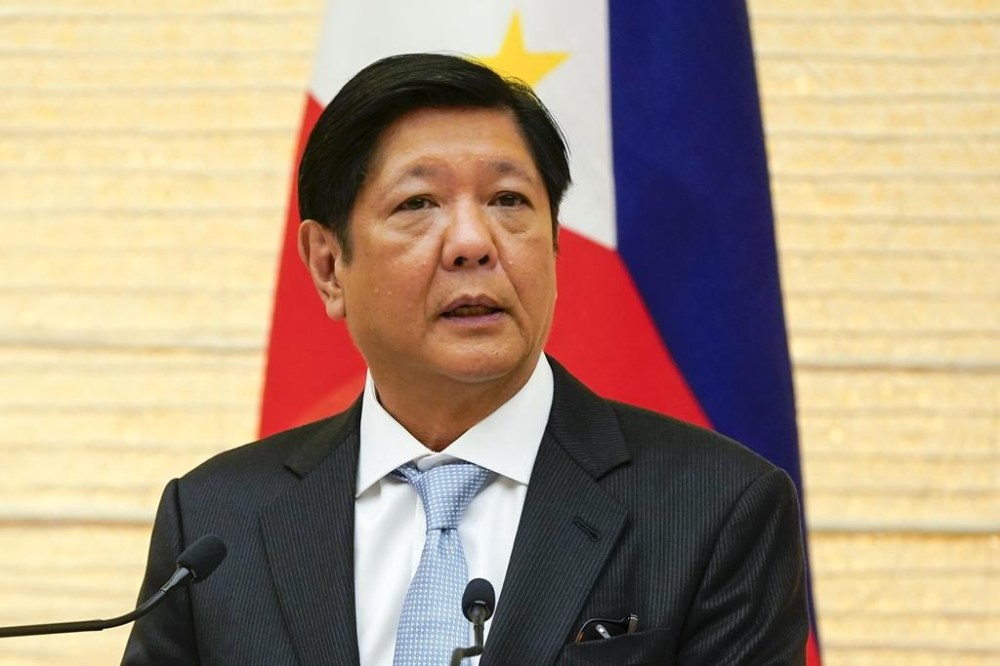
President Ferdinand Marcos Jr. stressed the urgency of shifting the military’s focus to external defense in a speech before troops Monday afternoon. He spoke two weeks after summoning China’s ambassador to protest the use of a military-grade laser by the Chinese coast guard that briefly blinded some of the crew of a Philippine patrol vessel in the South China Sea.
The Philippines condemned the Feb. 6. incident in one of the more than 200 diplomatic protests it has filed against Beijing’s increasingly aggressive actions in the disputed waterway since last year.
China has accused the Philippines of intruding into its territory and said its coast guard used a harmless laser to track the Philippine vessel. China claims the South China Sea virtually in its entirety.
“I’m saying that your mission in the AFP has changed,” Marcos told the troops, referring to the Armed Forces of the Philippines. “For many, many years, we were able to maintain that peace and maintain that understanding with all of our neighbors. Now things have begun to change and we must adjust accordingly.”
He said that the country’s boundaries were being put into question, “and there are many things that are happening so the air force has a very big mission to fully secure the Philippines.” He also cited “the intensification of the competition between the superpowers.”
Marcos did not offer specifics nor mentioned China in his speech in central Cebu province, but underscored that Philippine foreign policy remains committed to peace.
Despite being a relatively small country, “we still have to fight for the rights of every Filipino because the Philippines is a sovereign nation and the Philippines has a functioning government,” he said.
After decades of combating Muslim and communist insurgencies, the military has begun to focus on defending the country’s sea borders. It has launched efforts to modernize in a program that has faced delays and financial constraints.
Many of the weapons and equipment have been aimed to improve its air and sea patrols to guard the archipelago’s vast coastline and build a minimal deterrence.
Under a 2014 defense pact with the United States, Marcos recently approved a wider U.S. military presence in the Philippines by allowing rotating batches of American forces to stay in four more Philippine military camps. That’s a sharp turnaround from his predecessor Rodrigo Duterte, who feared that American military footprint could offend Beijing.
China, the Philippines, Vietnam, Malaysia, Taiwan and Brunei have been locked in an increasingly tense territorial standoff in the South China Sea, where U.S. Navy ships and fighter jets have carried out patrols to promote freedom of movement, challenge Beijing’s expansive claims and reassure allies like the Philippines.
The disputes have intensified after China turned seven disputed reefs into missile-protected island bases to bolster its claims. The disputed waters have been regarded as a possible Asian flashpoint and a delicate front in the U.S.-China rivalry in the region.