

Pentagon Papers leaker Ellsberg says he has terminal cancer
Advertisement
Read this article for free:
or
Already have an account? Log in here »
To continue reading, please subscribe:

Digital Subscription
One year of digital access for only $205*
- Enjoy unlimited reading on winnipegfreepress.com
- Read the E-Edition, our digital replica newspaper
- Access News Break, our award-winning app
- Play interactive puzzles
*First annual payment billed as $205.00 + GST for one year. This annual subscription will automatically renew at $233.00 + GST every 52 weeks (10% off the regular annual price of $259.35). Offer available to new and qualified returning subscribers only. Cancel any time.
To continue reading, please subscribe:
Add Free Press access to your Brandon Sun subscription for only an additional
$1 for the first 4 weeks*
- Enjoy unlimited reading on winnipegfreepress.com
- Read the E-Edition, our digital replica newspaper
- Access News Break, our award-winning app
- Play interactive puzzles
*Your next Brandon Sun subscription payment will increase by $1.00 and you will be charged $17.95 plus GST for four weeks. After four weeks, your payment will increase to $24.95 plus GST every four weeks.
Read unlimited articles for free today:
or
Already have an account? Log in here »
Hey there, time traveller!
This article was published 03/03/2023 (1296 days ago), so information in it may no longer be current.
WASHINGTON (AP) — Daniel Ellsberg, who copied and leaked documents that revealed secret details of U.S. strategy in the Vietnam War and became known as the Pentagon Papers, said he has terminal cancer and months to live.
Ellsberg posted on his Facebook page Thursday that doctors diagnosed the 91-year-old with inoperable pancreatic cancer on Feb. 17 following medical scans.
Doctors have given him between three and six months to live, he said.
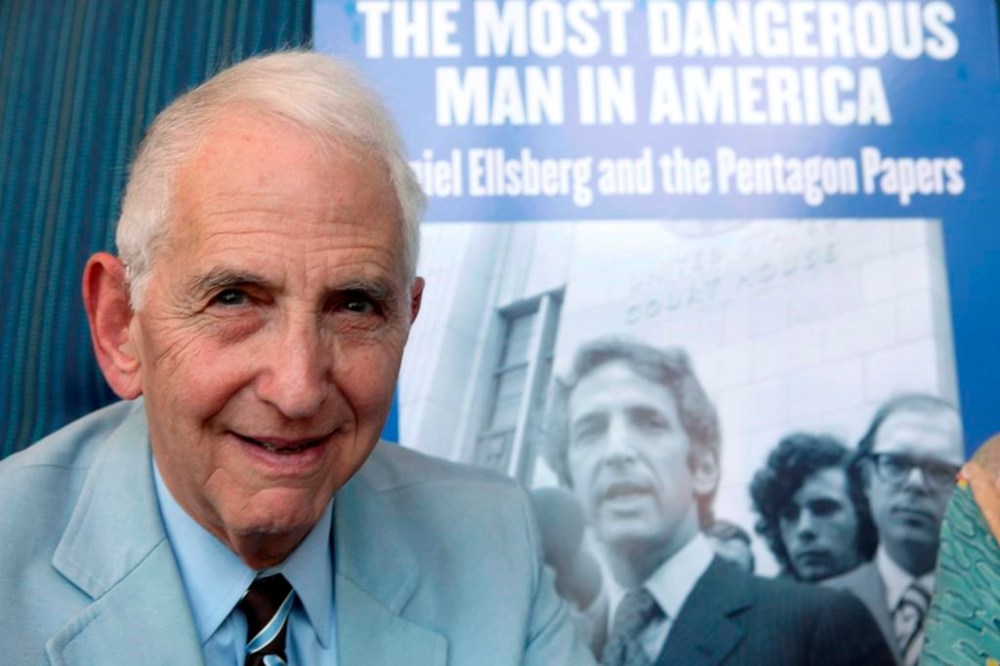
Ellsberg said he has opted not to undergo chemotherapy and plans to accept hospice care when needed.
The documents in the Pentagon Papers looked in excruciating detail at the decisions and strategies of the Vietnam War. They told how U.S. involvement was built up steadily by political leaders and top military brass who were overconfident about U.S. prospects and deceptive about the accomplishments against the North Vietnamese.
Ellsberg, a former consultant to the Defense Department, provided the Pentagon Papers to Neil Sheehan, a reporter who broke the story for The New York Times in June 1971. Sheehan died in 2021.
Sheehan smuggled the documents out of the Massachusetts apartment where Ellsberg had stashed them, and illicitly copied thousands of pages and took them to the Times.
The administration of President Richard Nixon got a court injunction arguing national security was at stake and publication was stopped. The action started a heated debate about the First Amendment that quickly moved up to the Supreme Court. On June 30, 1971, the court ruled 6-3 in favor of allowing publication, and the Times and The Washington Post resumed publishing stories. The coverage won the Times the Pulitzer Prize for public service.
The Nixon administration tried to discredit Ellsberg after the documents’ release. Some of Nixon’s aides orchestrated a break-in at the Beverly Hills office of Ellsberg’s psychiatrist to find information to discredit him.
Ellsberg was charged with theft, conspiracy and violations of the Espionage Act, but his case ended in a mistrial when evidence surfaced about government-ordered wiretappings and break-ins.
Ellsberg said in his Facebook post that he feels “lucky and grateful” for his life.
“When I copied the Pentagon Papers in 1969, I had every reason to think I would be spending the rest of my life behind bars. It was a fate I would gladly have accepted if it meant hastening the end of the Vietnam War, unlikely as that seemed (and was),” he wrote.
“Yet in the end that action — in ways I could not have foreseen, due to Nixon’s illegal responses — did have an impact on shortening the war,” he wrote.