

Mexican government puts grammatical ‘errors’ into textbooks
Advertisement
Read this article for free:
or
Already have an account? Log in here »
To continue reading, please subscribe:

Digital Subscription
One year of digital access for only $205*
- Enjoy unlimited reading on winnipegfreepress.com
- Read the E-Edition, our digital replica newspaper
- Access News Break, our award-winning app
- Play interactive puzzles
*First annual payment billed as $205.00 + GST for one year. This annual subscription will automatically renew at $233.00 + GST every 52 weeks (10% off the regular annual price of $259.35). Offer available to new and qualified returning subscribers only. Cancel any time.
To continue reading, please subscribe:
Add Free Press access to your Brandon Sun subscription for only an additional
$1 for the first 4 weeks*
- Enjoy unlimited reading on winnipegfreepress.com
- Read the E-Edition, our digital replica newspaper
- Access News Break, our award-winning app
- Play interactive puzzles
*Your next Brandon Sun subscription payment will increase by $1.00 and you will be charged $17.95 plus GST for four weeks. After four weeks, your payment will increase to $24.95 plus GST every four weeks.
Read unlimited articles for free today:
or
Already have an account? Log in here »
Hey there, time traveller!
This article was published 27/03/2023 (1285 days ago), so information in it may no longer be current.
MEXICO CITY (AP) — Mexico’s president on Monday defended the apparent insertion of what teachers have long considered grammatical errors into school textbooks.
Copies of the new textbooks posted on social media show them using words like “dijistes,” long considered an incorrect or uneducated way of saying “dijiste,” meaning “you said.” The same goes for “hicistes,” in which the final “s” is also considered not correct. The forms are almost never used in writing, but pop up in speech.
“It is important to make students conscious of the fact that there are different ways of speaking, in order to avoid judgements based on ways of speaking,” according to an insert instruction to teachers in what appears to be an early grade-school textbook.
Despite decades of censure by teachers and grammarians, the verb forms persist in Mexico, generally in poorer and less-educated neighborhoods. The verb forms are not tied to any particular region or ethnic group.
One textbook seen in images posted on social media also features terms long considered pleonasms — like “súbate para arriba” — phrases that repeat themselves, somewhat like “come up, up here.”
The Public Education Department did not immediately respond to a request for comment.
Some parents’ groups expressed concern about the changes, despite the fact the new textbooks are not widely available yet.
“The fact that the formal education system recognizes, legitimizes, promotes things that are learned informally on the street or at home is worrisome,” said José Antonio Cabello, of the activist group “Suma Por la Educación.”
“It is not that what people learn on the street or at home is bad, but rather that school is there to perfect and polish it,” said Cabello. “Spelling, syntax, writing, are learned in school, and that is the type of vales the Education Department should be promoting.”
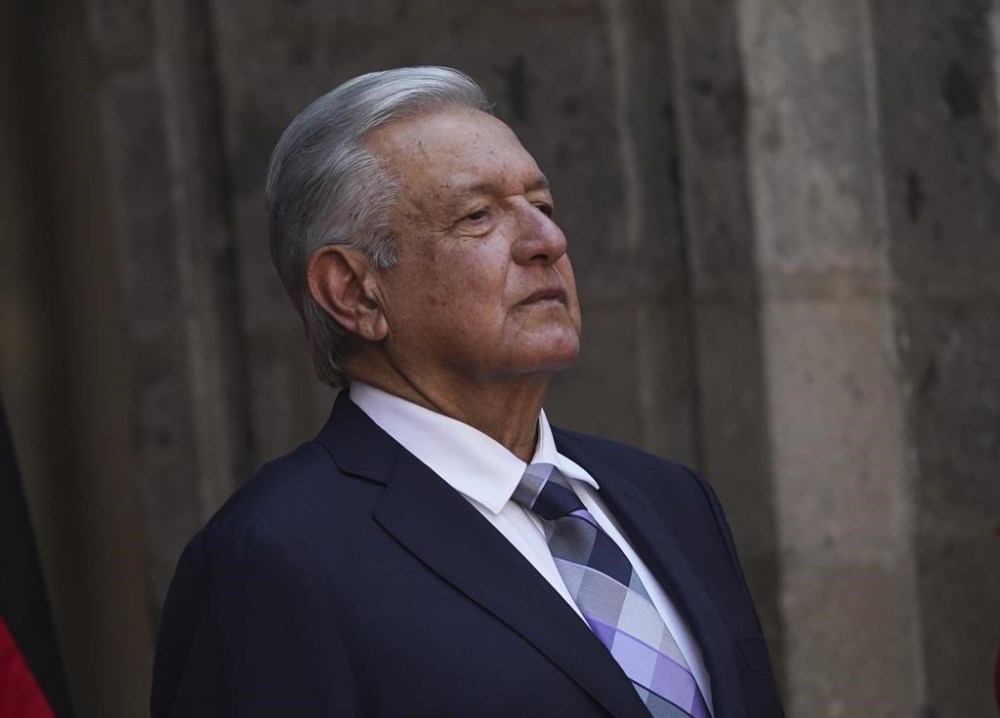
President Andrés Manuel López Obrador, who frequently accuses his critics of being “racist” or “classist,” confirmed that the changes have caused an uproar.
“Now there are even polemics over the new school textbooks, because they do not want to include the way the people speak, they want us all to talk like physicists, with technicalities,” López Obrador said at his daily press briefing. “Mexico is a cultural mosaic and language has to do with the roots of ancient cultures.”