

UN hears Africa, its Sahel region, are new terrorism targets
Advertisement
Read this article for free:
or
Already have an account? Log in here »
To continue reading, please subscribe:

Digital Subscription
One year of digital access for only $205*
- Enjoy unlimited reading on winnipegfreepress.com
- Read the E-Edition, our digital replica newspaper
- Access News Break, our award-winning app
- Play interactive puzzles
*First annual payment billed as $205.00 + GST for one year. This annual subscription will automatically renew at $233.00 + GST every 52 weeks (10% off the regular annual price of $259.35). Offer available to new and qualified returning subscribers only. Cancel any time.
To continue reading, please subscribe:
Add Free Press access to your Brandon Sun subscription for only an additional
$1 for the first 4 weeks*
- Enjoy unlimited reading on winnipegfreepress.com
- Read the E-Edition, our digital replica newspaper
- Access News Break, our award-winning app
- Play interactive puzzles
*Your next Brandon Sun subscription payment will increase by $1.00 and you will be charged $17.95 plus GST for four weeks. After four weeks, your payment will increase to $24.95 plus GST every four weeks.
Read unlimited articles for free today:
or
Already have an account? Log in here »
Hey there, time traveller!
This article was published 28/03/2023 (1292 days ago), so information in it may no longer be current.
UNITED NATIONS (AP) — African nations called on the world Tuesday to pay attention to how terrorism targeted their continent, particularly its Sahel region, telling the United Nations Security Council that Africans made up nearly half the world’s terror attack victims.
Using his country’s bully pulpit as Security Council chair for March, Mozambique President Filipe Nyusi told the council that “though terrorism is a global threat, the situation in Africa remains more critical.”
His words were echoed by a series of ambassadors from African countries who discussed terror groups’ threats to their nations.
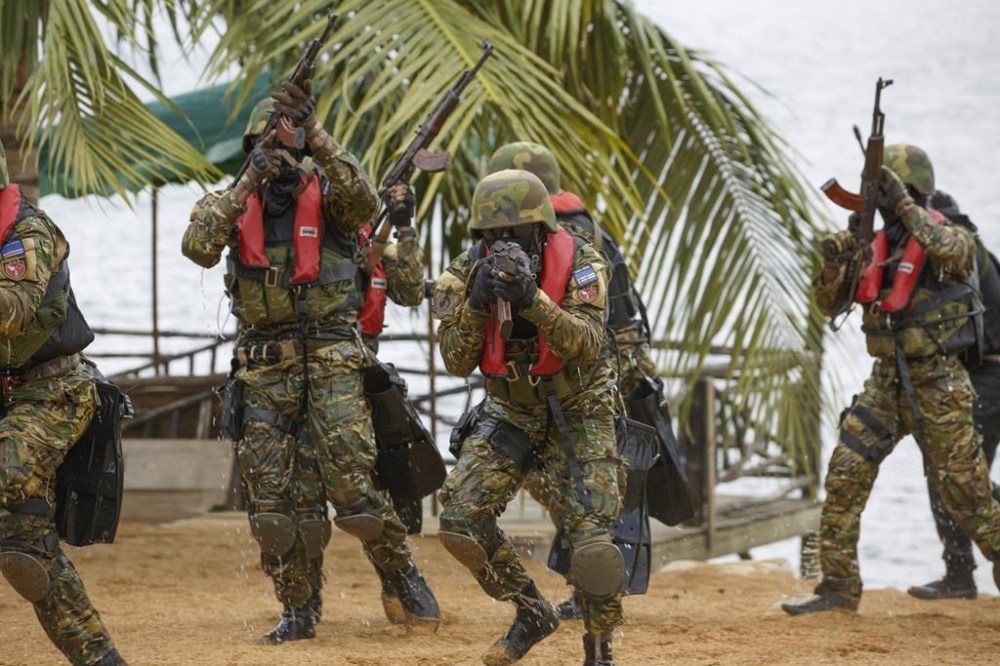
One global terrorism index shows that 48% of terror victims last year were African, Nyusi said, “and the Sahel region is the new epicenter of terrorist attacks.” Many speakers said they were deeply concerned by terror groups’ operations in the vast, semi-arid expanse below the Sahara Desert.
“The situation in Africa is especially concerning,” Secretary-General Antonio Guterres told the council. “Despair, poverty, hunger, lack of basic services, unemployment and unconstitutional changes in government continue to lay fertile ground … I am deeply concerned by the gains terrorist groups are making in the Sahel and elsewhere.”
Mozambique’s Islamist extremist insurgency, which started in October 2017, is blamed for the deaths of more than 3,000 people and for displacing an estimated 900,000 people. In March 2021 the rebel violence forced the France-based firm TotalEnergies to put on hold its $20 billion liquified natural gas project in the northeast. TotalEnergies invoked force majeure after the insurgents attacked the town of Palma, very near the gas project.
Palma was later recaptured by Mozambican and Rwandan forces, and the government has urged TotalEnergies to resume work on the gas project.
While gains have been made by Mozambique’s armed forces and its regional allies, the rebels are still capable of carrying out lethal attacks — including on the main north-south road that links the city of Pemba with the gas project in Palma.
“Mozambique has been engaged in countering terrorism with some success,” Nyusi said, “thanks to a combination of internal efforts and the support from partners.”
The U.N. is undergoing a regular review of its counterterror strategies. U.S. Ambassador Linda Thomas-Greenfield told the council that when she visited Mozambique in January, among the issues she discussed with officials there was how “we faced a host of challenges, especially when it comes to the dramatic rise in terrorism in Africa.”
U.S. Vice President Kamala Harris, meanwhile, is on a weeklong visit to Africa, intended to deepen U.S. ties with the continent.