

Q&A: Prosecutors open up about prisoner’s fatal beating
Advertisement
Read this article for free:
or
Already have an account? Log in here »
To continue reading, please subscribe:

Digital Subscription
One year of digital access for only $205*
- Enjoy unlimited reading on winnipegfreepress.com
- Read the E-Edition, our digital replica newspaper
- Access News Break, our award-winning app
- Play interactive puzzles
*First annual payment billed as $205.00 + GST for one year. This annual subscription will automatically renew at $233.00 + GST every 52 weeks (10% off the regular annual price of $259.35). Offer available to new and qualified returning subscribers only. Cancel any time.
To continue reading, please subscribe:
Add Free Press access to your Brandon Sun subscription for only an additional
$1 for the first 4 weeks*
- Enjoy unlimited reading on winnipegfreepress.com
- Read the E-Edition, our digital replica newspaper
- Access News Break, our award-winning app
- Play interactive puzzles
*Your next Brandon Sun subscription payment will increase by $1.00 and you will be charged $17.95 plus GST for four weeks. After four weeks, your payment will increase to $24.95 plus GST every four weeks.
Read unlimited articles for free today:
or
Already have an account? Log in here »
Hey there, time traveller!
This article was published 30/03/2023 (1280 days ago), so information in it may no longer be current.
SPRINGFIELD, Ill. (AP) — Three former Illinois prison guards will spend years behind bars for fatally punching, kicking and stomping a 65-year-old inmate after dragging him out of sight of security cameras.
Larry Earvin was just four months from the end of his six-year sentence for theft when he disobeyed an order to return to his cell in 2018. Handcuffed, the mentally ill Black man suffered 15 broken ribs and abdominal injuries so severe a portion of his bowel was surgically removed. He died a month later.
A judge this month handed down 20-year sentences for two of the ex-guards — Officer Alex Banta and Lt. Todd Sheffler — after prosecutors had sought life in prison. Sgt. Willie Hedden, who pleaded guilty and cooperated in the investigation, got six years instead of the 10 prosecutors requested.
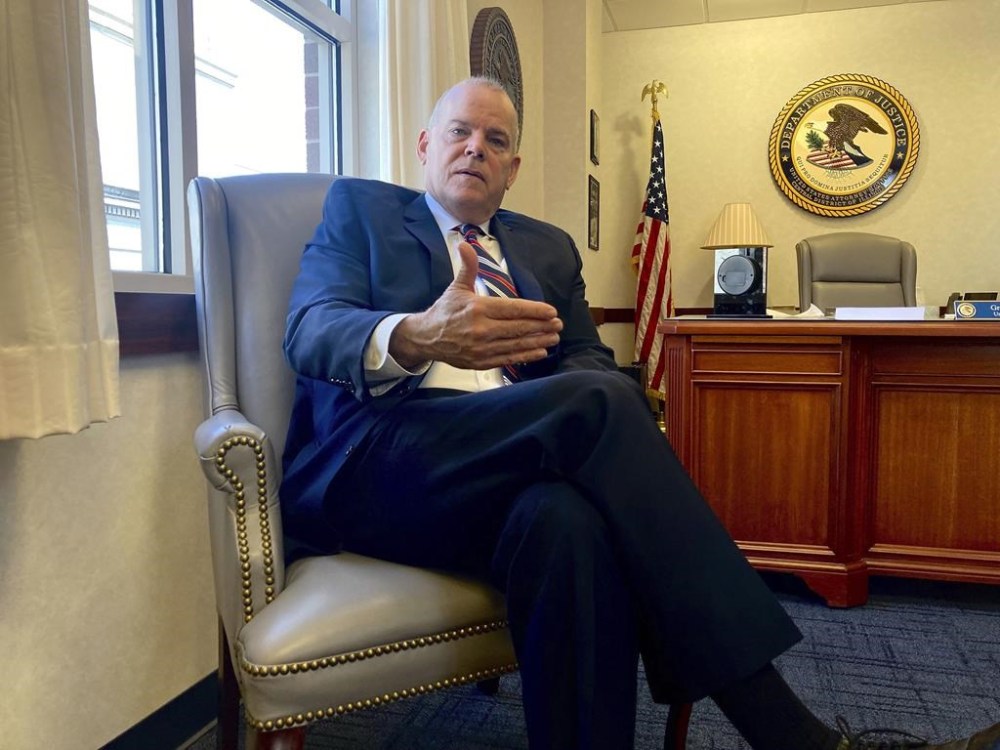
The convictions send an important message to state penal institutions, said lead prosecutor Gregory Harris, the U.S. attorney for the Central District of Illinois, and assistant U.S. Attorney Timothy Bass.
They spoke with The Associated Press recently to discuss the government’s reasoning behind key decisions in the case.
The interview has been edited for length and clarity.
Q: What’s your reaction to the outcome?
HARRIS: It’s one of our most serious cases that we’ve handled in a number of years and it’s unfortunate, the outcome of Larry Earvin dying, but we had our best prosecutors involved and the FBI was superb in the investigation.
Q: This office has prosecuted state government corruption but this case had added complexities. Are there more cases out there like this that you’d like to prosecute were it not for those difficulties?
HARRIS: I’m not sure that there’s more of it out there. It’s difficult because it’s against law enforcement officials. In terms of dealing with correctional officials, it’s within an institution so you don’t have that spotlight by the public of what’s going on within the institution.
Q: Why seek life sentences for Banta and Sheffler? Both expressed remorse at their sentencing and had significant community support.
BASS: The offense was so serious because it first involved a homicide, which was second-degree murder. It involved correctional officers acting under color of law, a victim that was restrained and vulnerable and it also involved obstruction of justice. (Each of those factors is tied to a score on a federal sentencing scale that tops out at 43 with an advisory life sentence.) Their offense level was 50.
HARRIS: They’re off the charts, you might say.
Q: Mr. Bass, you said in court that none of the defendants intended to send Mr. Earvin to the hospital, let alone kill him. This wasn’t first-degree murder.
BASS: I said in court that short of first-degree murder, this was the most serious offense, they didn’t intend to kill. They didn’t want him to go to the hospital because that would expose them. But the jury found that they intended to inflict harm on Mr. Earvin and they did so with a depraved indifference to loss of life.
Q: The cases rested largely on the testimony of fellow Corrections officers who witnessed the events, but who lied initially about what they saw to the Illinois State Police, the FBI, or both. Why not prosecute those individuals and work your way up to the main defendants, maybe get to them without Hedden’s cooperation and end up with close to a dozen convictions?
BASS: The three officers that participated in not only the beating of Mr. Earvin but the violation of federal law, the infliction of cruel and unusual punishment that caused Mr. Earvin’s death were charged and convicted and held accountable.
Q: Given the those officers’ testimony, did you need Hedden’s cooperation and testimony and subsequently need to offer him a reduced sentence?
BASS: I’ll just repeat what Judge Myerscough stated — she found him credible. His testimony was important because he was one of only a few, five or six that were present in segregation and witnessed the assault.
Q: Many times, a cooperating defendant will get a sentence that’s a reduction of 20% or 30% from what co-defendants received. You recommended a 50% break for Hedden.
HARRIS: The recommendation fit the circumstances for this particular defendant. I hope we reach that when we make any recommendation, whether it’s 20% or 50%. It fit the benefit that the government received from this defendant in this particular case.
Q: What message do you hope the case sends?
BASS: Correctional officers and police officers who violate people’s constitutional rights, you’re going to be held accountable in the Central District of Illinois. But the further message beyond that to the Department of Corrections is we hope that those blind spots (out of view of surveillance cameras) which enable this type of offense to occur — one of the easiest things to do to prevent future Larry Earvins is to eliminate those blind spots. So we hope that’s being done.
___
Follow Political Writer John O’Connor at https://twitter.com/apoconnor