

14 dead in 3 days of tribal violence in Sudan’s West Darfur
Advertisement
Read this article for free:
or
Already have an account? Log in here »
To continue reading, please subscribe:

Digital Subscription
One year of digital access for only $205*
- Enjoy unlimited reading on winnipegfreepress.com
- Read the E-Edition, our digital replica newspaper
- Access News Break, our award-winning app
- Play interactive puzzles
*First annual payment billed as $205.00 + GST for one year. This annual subscription will automatically renew at $233.00 + GST every 52 weeks (10% off the regular annual price of $259.35). Offer available to new and qualified returning subscribers only. Cancel any time.
To continue reading, please subscribe:
Add Free Press access to your Brandon Sun subscription for only an additional
$1 for the first 4 weeks*
- Enjoy unlimited reading on winnipegfreepress.com
- Read the E-Edition, our digital replica newspaper
- Access News Break, our award-winning app
- Play interactive puzzles
*Your next Brandon Sun subscription payment will increase by $1.00 and you will be charged $17.95 plus GST for four weeks. After four weeks, your payment will increase to $24.95 plus GST every four weeks.
Read unlimited articles for free today:
or
Already have an account? Log in here »
Hey there, time traveller!
This article was published 11/04/2023 (1264 days ago), so information in it may no longer be current.
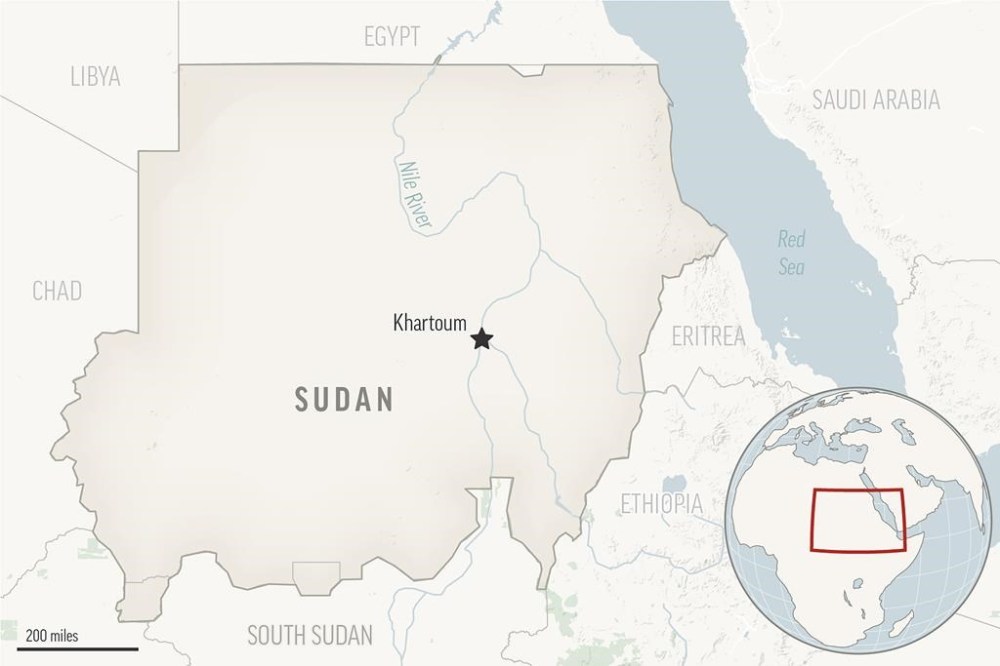
CAIRO (AP) — Bloodshed in Sudan’s long-troubled Darfur region has left at least 14 people dead over the last three days, two activists said Tuesday.
Adam Haroun, a local activist, said clashes erupted Sunday in West Darfur province after Arab gunmen on motorcycles shot and killed a trader in the remote town of Fur Baranga.
The killing sparked a series of reprisal attacks between Arabic and African tribal groups and looting, said Adam Regal, spokesman for a local organization that helps run refugee camps in Darfur.
The violence continued Tuesday and the death toll was likely to rise, Haroun said.
On Monday, the governor of West Darfur declared a two-week state of emergency and introduced a night-time curfew across the state.
Analysts see an uptick in violence in recent months between different tribal groups across Sudan’s far-flung regions as a product of a power vacuum and tensions caused by political turmoil.
In late March, at least five people were killed in clashes in West Darfur. Last October, over 170 people were killed in clashes in Blue Nile province, situated in the remote southeast corner of the African country.
Sudan has been steeped in chaos since a military coup, led by the country’s leading Gen. Abdel-Fattah Burhan, removed a Western-backed government in October 2021, upending its short-lived transition to democracy.
Also Tuesday, the United Nations said it was “deeply concerned” after a video surfaced on social media showing a man calling for the U.N. special representative in Sudan to be assassinated.
“I request a fatwa,” said the man, who identified himself in the video as Abdelmoneim. “I volunteer myself to assassinate Volker (Perthes).”
The remarks were made during what appeared to be a small conference held by an umbrella group consisting of Islamist factions affiliated with Sudan’s ousted president, Omar al-Bashir.
“The language of the incitement and the violence will only deepen divisions on the ground,” Stephane Dujarri, the U.N. spokesman, said during Tuesday’s briefing.
Under intense international pressure, Sudan’s ruling military and various pro-democracy forces signed a preliminary agreement in December pledging to reinstate the transition to democracy. But after months of wrangling, cross-party talks brokered by the U.N. and other international actors, Sudan’s political factions have yet to agree to a final deal.
Sudan’s Islamists have remained staunchly opposed to the deal.
The conflict in Darfur first broke out in 2003 when rebels — mostly from the region’s ethnic central and sub-Saharan African community — launched an insurgency, complaining of oppression by the Arab-dominated government in Khartoum.
The then-government, headed by al-Bashir, responded with a campaign of aerial bombings and scorched earth raids by janjaweed militias. Up to 300,000 people were killed and 2.7 million were driven from their homes in Darfur over the years.
——
Associated Press writer Edith Lederer at the United Nations contributed to this report.