Opposition figure’s sentence underlines Russian intolerance
Advertisement
Read this article for free:
or
Already have an account? Log in here »
To continue reading, please subscribe:
Monthly Digital Subscription
$1 per week for 24 weeks*
- Enjoy unlimited reading on winnipegfreepress.com
- Read the E-Edition, our digital replica newspaper
- Access News Break, our award-winning app
- Play interactive puzzles
*Billed as $4.00 plus GST every four weeks. After 24 weeks, price increases to the regular rate of $19.95 plus GST every four weeks. Offer available to new and qualified returning subscribers only. Cancel any time.
Monthly Digital Subscription
$4.99/week*
- Enjoy unlimited reading on winnipegfreepress.com
- Read the E-Edition, our digital replica newspaper
- Access News Break, our award-winning app
- Play interactive puzzles
*Billed as $19.95 plus GST every four weeks. Cancel any time.
To continue reading, please subscribe:
Add Free Press access to your Brandon Sun subscription for only an additional
$1 for the first 4 weeks*
*Your next subscription payment will increase by $1.00 and you will be charged $16.99 plus GST for four weeks. After four weeks, your payment will increase to $23.99 plus GST every four weeks.
Read unlimited articles for free today:
or
Already have an account? Log in here »
Hey there, time traveller!
This article was published 17/04/2023 (1083 days ago), so information in it may no longer be current.
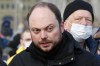
The 25-year treason sentence imposed on prominent Russian opposition figure Vladimir Kara-Murza on Monday was a particularly severe show of Russian authorities’ intensifying intolerance for criticism of the war in Ukraine and other dissenting opinions.
Under President Vladimir Putin, Russia for years has been closing in on those who challenge the Kremlin, arresting countless protesters, cracking down on independent news media and adding inconvenient organizations to its register of “foreign agents.”
The hostility to opposition increased within days of Russia’s February 2022 invasion of Ukraine, when it adopted a law criminalizing the spreading of “false information” about its military.
The charges against Kara-Murza, who has been behind bars since his arrest a year ago, stem from his March 2022 speech to the Arizona House of Representatives in which he denounced Russia’s invasion of Ukraine.
Here is a look at other notable cases of imprisoned opposition figures:
ALEXEI NAVALNY
The most persistent and inventive critic of Vladimir Putin’s Kremlin, Navalny has been in prison for more than two years but gained new visibility this spring when a documentary about him won an Academy Award.
A lawyer by training, he first came to note by publishing investigations of Russian companies’ corruption, and the work expanded into a broad opposition portfolio. He repeatedly served jail terms for organizing protest demonstrations that reached scores of cities across the country. He also was twice convicted of embezzlement, but those sentences were suspended.
In 2020, Navalny became severely ill and fell into a coma while visiting a Siberian city. He was airlifted to Germany in critical condition and found to have been poisoned with a nerve agent. During his months of recovery, he released the recording of a call he said he made to an alleged member of a group of officers of the Federal Security Service who purportedly carried out the poisoning
After that, authorities said his recuperation in Germany violated the terms of his suspended sentence. Nonetheless, Navalny returned to Moscow in January 2021, where he was arrested at the airport. He was sentenced to 2 1/2 years in prison, and last year was convicted of other charges and given another nine-year term.
Last week, a U.S.-based spokeswoman for his anticorruption foundation said Navalny is seriously ill in prison and that poisoning is suspected.
ILYA YASHIN
One of the few well-known Kremlin critics to have stayed in Russia after the start of the Ukraine war, Yashin was arrested in June while walking in a Moscow park and was sentenced to 8 1/2 years in prison on a conviction of spreading false information about Russian soldiers.
The charge stemmed from a livestream on YouTube in which he talked about civilians killed in the Kyiv suburb of Bucha. After Russian forces withdrew from the area in March 2022, hundreds of corpses were found in the town, including some with their hands bound behind their backs and apparently executed.
ALEXEI MOSKALYOV
Moskalyov was not a well-known figure, just a 54-year-old single father of a 13-year-old daughter in a provincial town. But after his daughter refused to participate in a patriotic class at school and made a drawing reading “Glory to Ukraine,” Moskalyov was investigated by police and found to have made social media posts critical of the war.
He was sentenced to two years in prison, but fled house arrest hours before the sentence was handed down. He was arrested in neighboring Belarus and extradited to Russia.
ALEXEI GORINOV
Gorinov, a member of a Moscow municipal council, was the first person to be sentenced to prison under the law penalizing the spread of “false information” about Russian troops. He was arrested a year ago after criticizing Russia’s military actions in Ukraine at a municipal council meeting.
A video available on YouTube shows him voicing skepticism about holding a planned children’s art competition in his constituency while “every day children are dying” in Ukraine.
He was sentenced to seven years.
ANDREI PIVOVAROV
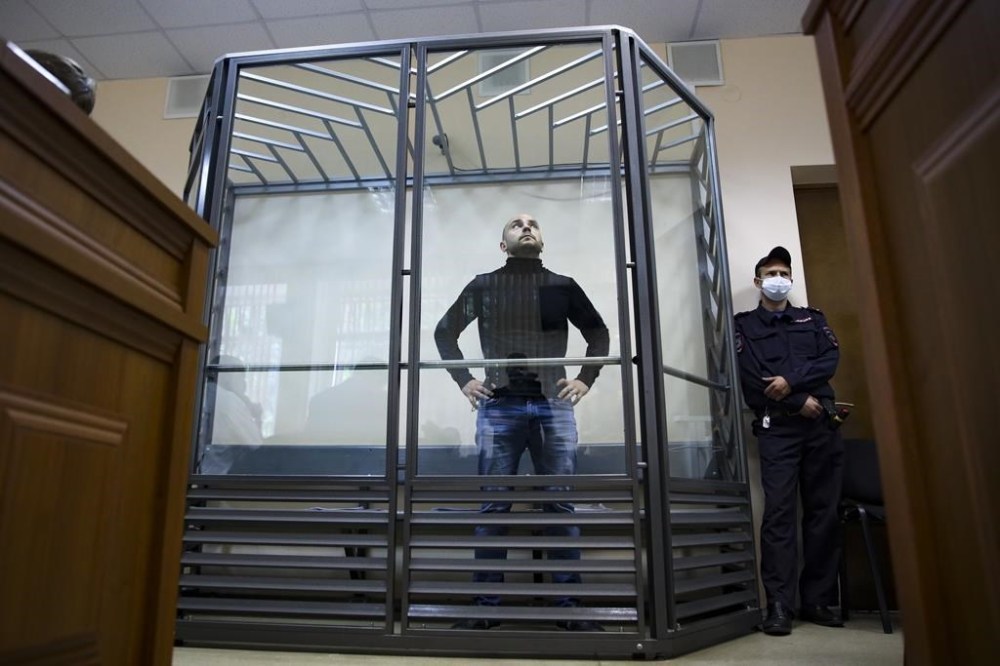
Just days after the Open Russia opposition group that he headed disbanded in 2021 when authorities declared it an “undesirable” organization, Pivovarov was pulled off a Warsaw-bound airliner that was about to leave St. Petersburg. He was convicted last year of sponsoring a local candidate on behalf of an undesirable organization and sentenced to four years.