

Ants march, whales swoop in Museum of Natural History update
Advertisement
Read this article for free:
or
Already have an account? Log in here »
To continue reading, please subscribe:

Digital Subscription
One year of digital access for only $205*
- Enjoy unlimited reading on winnipegfreepress.com
- Read the E-Edition, our digital replica newspaper
- Access News Break, our award-winning app
- Play interactive puzzles
*First annual payment billed as $205.00 + GST for one year. This annual subscription will automatically renew at $233.00 + GST every 52 weeks (10% off the regular annual price of $259.35). Offer available to new and qualified returning subscribers only. Cancel any time.
To continue reading, please subscribe:
Add Free Press access to your Brandon Sun subscription for only an additional
$1 for the first 4 weeks*
- Enjoy unlimited reading on winnipegfreepress.com
- Read the E-Edition, our digital replica newspaper
- Access News Break, our award-winning app
- Play interactive puzzles
*Your next Brandon Sun subscription payment will increase by $1.00 and you will be charged $17.95 plus GST for four weeks. After four weeks, your payment will increase to $24.95 plus GST every four weeks.
Read unlimited articles for free today:
or
Already have an account? Log in here »
Hey there, time traveller!
This article was published 26/04/2023 (1240 days ago), so information in it may no longer be current.
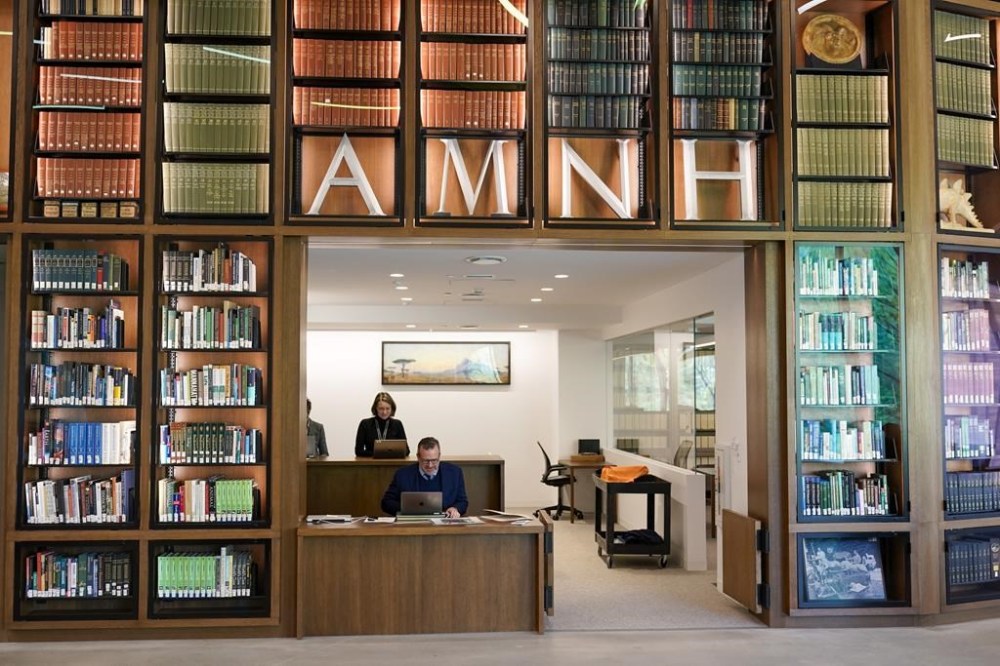
NEW YORK (AP) — The American Museum of Natural History in New York is set to open its new building, a sweeping piece of architecture designed to connect visitors with their place in the natural world.
Tiny ants march along a glass bridge overhead in the new museum wing, The Richard Gilder Center for Science, Education and Innovation. Giant whales swoop along the walls in an immersive video display. And the building’s natural curves — inspired by canyons in the Southwest — are meant to highlight how all of it is intertwined.
The $465 million center, nearly a decade in the making, is set to open to the public next Thursday, adding a new wow factor to one of the world’s most visited museums.
Architect Jeanne Gang said at a media preview Wednesday that she asked herself how the space could contribute to peoples’ natural desire to learn. “This led us to look at geological landscapes, where one can see how the natural forces actually shape the material, shape our world,” she said.
The Gilder Center is already home to more than a half million tiny inhabitants, residents of an insect exhibition with 18 species of live critters, and an indoor garden where visitors can mingle with hundreds of moths and butterflies.
The goal is to get people “up close and personal” with the bugs and highlight their importance to the natural world, said museum entomologist David Grimaldi.
“Insects get a very bad rap because of this tiny, tiny fraction of biting or disease-transmitting insects,” Grimaldi said. But most insect species pose no danger to humans and are an essential part of their bigger ecosystems, he said.
Brightly colored butterflies flap around a garden — which is kept hot and humid to mimic their tropical homes — while giant beetles munch on decaying fruit.
And then there are the ants: The museum shipped in around 500,000 leafcutter ants to build a massive colony in the insectarium. The tiny workers collect their leaves from one glass enclosure, then march across a skybridge to cultivate their fungal feasts in big glass bulbs along the wall.
The ants needed some help adjusting to the space: scientists had to hold “training sessions” to show them where to go, said Cheryl Hayashi, the museum’s provost of science. They’ve since settled into their new home.
A new interactive show highlights the ways our lives are intertwined with others. “Invisible Worlds” immerses visitors in different interactive scenes, alternately zooming in to show the proteins in human DNA and neural connections in the brain, or zooming out to a vantage point above the New York City skyline or a rainforest canopy.
“Through DNA, you are related to all life on Earth,” the narration declares.
The Gilder Center is also designed to bring the scientific process to the forefront, said museum president Sean Decatur.
More than 4 million specimens from the museum’s collections are now being housed in the Gilder Center, some on display through big glass windows.
This “Collections Core” shows off a wide range of items, from megalodon teeth to Mayan bricks to spools of spider silk, and gives visitors a peek at the stuff the science is based on: “We literally show our evidence,” Hayashi said.
Building trust in the scientific process is more important than ever, said Ellen Futter, the museum’s former president who oversaw most of the Gilder Center’s creation before retiring in March.
“That is the vision: To help visitors see and understand our world more deeply,” Futter said. “To appreciate that all life is interdependent. To trust science and to be inspired to protect our precious planet.”
___
The Associated Press Health and Science Department receives support from the Howard Hughes Medical Institute’s Science and Educational Media Group. The AP is solely responsible for all content.