

After Arlington National Cemetery horse deaths, Army makes changes to improve their care
Advertisement
Read this article for free:
or
Already have an account? Log in here »
To continue reading, please subscribe:
Digital Subscription
One year of digital access for only $1.44 a week*
- Enjoy unlimited reading on winnipegfreepress.com
- Read the E-Edition, our digital replica newspaper
- Access News Break, our award-winning app
- Play interactive puzzles
*Billed as $5.77 plus GST every four weeks. After 52 weeks, price increases to the regular rate of $19.95 plus GST every four weeks. Offer available to new and qualified returning subscribers only. Cancel any time.
To continue reading, please subscribe:
Add Free Press access to your Brandon Sun subscription for only an additional
$1 for the first 4 weeks*
- Enjoy unlimited reading on winnipegfreepress.com
- Read the E-Edition, our digital replica newspaper
- Access News Break, our award-winning app
- Play interactive puzzles
*Your next Brandon Sun subscription payment will increase by $1.00 and you will be charged $17.95 plus GST for four weeks. After four weeks, your payment will increase to $24.95 plus GST every four weeks.
Read unlimited articles for free today:
or
Already have an account? Log in here »
Hey there, time traveller!
This article was published 10/05/2023 (1257 days ago), so information in it may no longer be current.
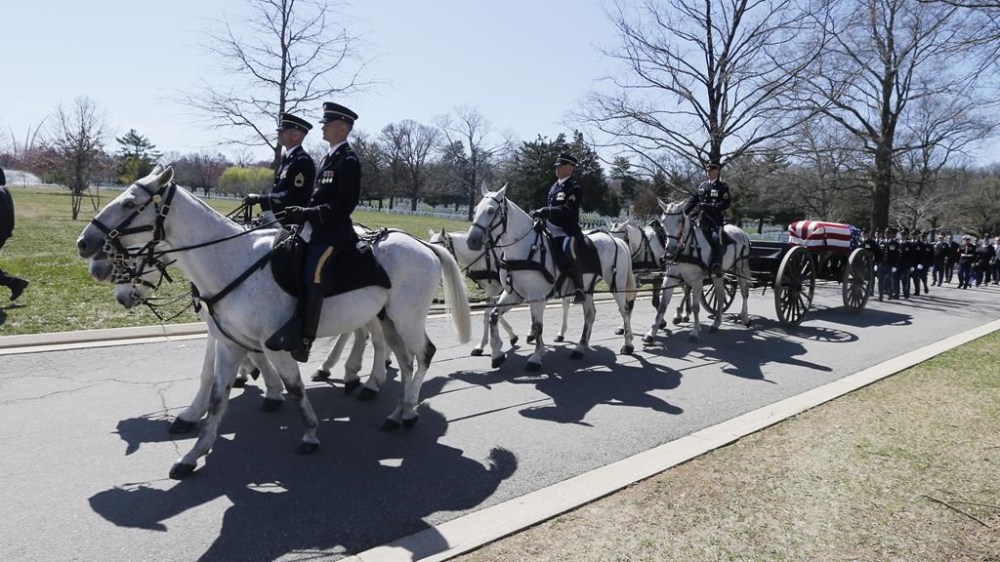
WASHINGTON (AP) — The Army announced changes Wednesday to the way it will care for the gray and black horses that carry service members’ flag-draped caskets to their final resting places in Arlington National Cemetery after the deaths of horses in the ceremonial unit exposed their poor living conditions.
The horses are part of the caisson platoon of the 3rd Infantry Regiment, known as the Old Guard, which is best known for guarding the Tomb of the Unknown Soldier at the cemetery, located just across the river from Washington.
Two Old Guard platoon horses, Mickey and Tony, had to be euthanized within days of each other in February 2022. Both died from colon impaction, a “dry, firm mass of feed, or foreign material, such as dirt or sand,” and in Tony’s case, he had to be euthanized because the sand and gravel impaction was so extensive it could not be surgically removed, according to an Army investigation.
After the deaths of the two horses, both in their 20s, veterinarians found sediment in the manure of other horses, likely because they had so little grass in their turnout fields and consumed sand and gravel from the ground as they ate hay, the investigation found.
Compounding the problem, the hay was so low quality that it could not be easily digested by older horses like Tony as they nosed it around on the ground looking for edible feed. Army veterinarians noted the issue six months before the horses’ deaths but did not raise their concerns past the platoon leadership. And the platoon had no way to force the hay supplier to provide higher-quality hay because the Army contract did not specify the nutritional value required.
When the horses did get to graze outdoors, those small turnout fields were also littered with construction debris and manure, and even if they had been in proper condition, would only have been large enough to support six or seven horses, the investigation found. At the time of the horse deaths, the field was used for a herd of 64.
The commanding general of the Military District of Washington, Army Maj. Gen. Allan Pepin, said the conditions were a result of mismanagement, not soldier abuse. Pepin said the conditions reflected a lack of full understanding by Army managers of the horses’ needs and the training needed for the soldiers to care for them, and also a lack of resources.
“The platoon took it personal because nobody wanted this outcome,” Pepin told reporters on Wednesday. “Every time you went by and saw the missions, we never saw a horse that looked like it was lame. We never saw a horse that looked like it was having issues. What we saw was expert soldiers and horses that looked great. So it kind of masked the underlying problem.”
In the months since, the Army has retired older horses, some as old as 20 that were still part of the group pulling the more than 2,500-pound caissons, which date back to 1918. It has also begun the process of buying new horses, and will no longer purchase gray horses, because they are likelier to develop skin cancer. The unit has also leased additional pasture land and received funding from Congress to improve the stables.
The Army is also working on obtaining a lighter caisson to put less strain on the horses and developing new saddles and other tack to better prevent horse injuries, Pepin said.
Since the euthanizations, the Army has brought on a full-time herd manager and been able to improve the horses’ diets, Pepin said, and regular veterinary bloodwork shows they are making progress. However, two additional horses have had to be euthanized since, one due to a leg fracture and one due to intestinal issues.
Last week. the Army decided caisson operations would be suspended for 45 days to give the horses time to recover from any injuries.