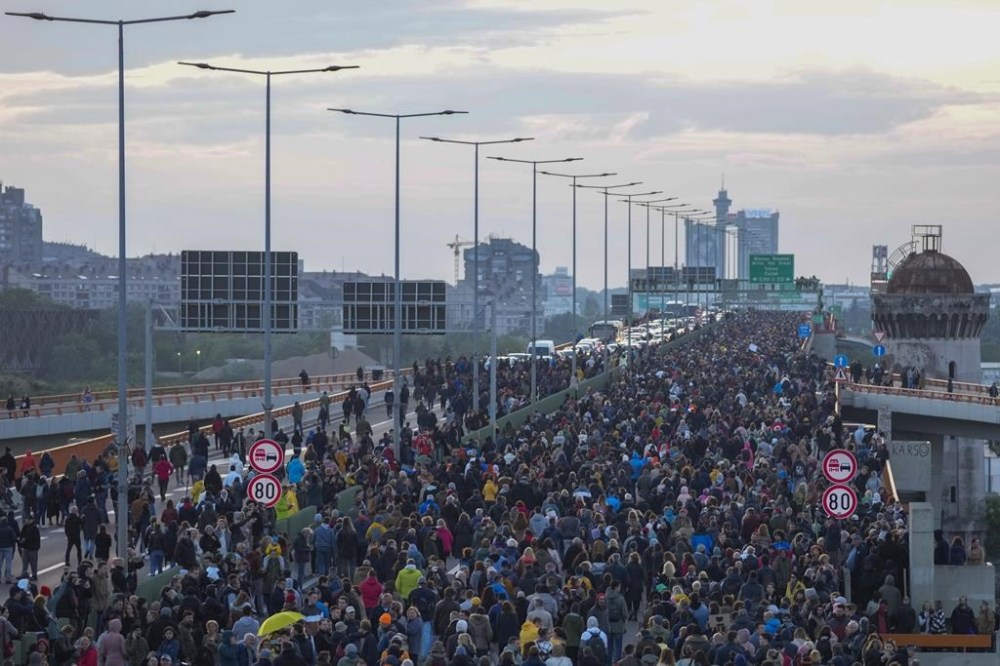
Tens of thousands march against Serbia’s populist leadership following mass shootings
Advertisement
Read this article for free:
or
Already have an account? Log in here »
To continue reading, please subscribe:

Digital Subscription
One year of digital access for only $205*
- Enjoy unlimited reading on winnipegfreepress.com
- Read the E-Edition, our digital replica newspaper
- Access News Break, our award-winning app
- Play interactive puzzles
*First annual payment billed as $205.00 + GST for one year. This annual subscription will automatically renew at $233.00 + GST every 52 weeks (10% off the regular annual price of $259.35). Offer available to new and qualified returning subscribers only. Cancel any time.
To continue reading, please subscribe:
Add Free Press access to your Brandon Sun subscription for only an additional
$1 for the first 4 weeks*
- Enjoy unlimited reading on winnipegfreepress.com
- Read the E-Edition, our digital replica newspaper
- Access News Break, our award-winning app
- Play interactive puzzles
*Your next Brandon Sun subscription payment will increase by $1.00 and you will be charged $17.95 plus GST for four weeks. After four weeks, your payment will increase to $24.95 plus GST every four weeks.
Read unlimited articles for free today:
or
Already have an account? Log in here »
Hey there, time traveller!
This article was published 12/05/2023 (1230 days ago), so information in it may no longer be current.
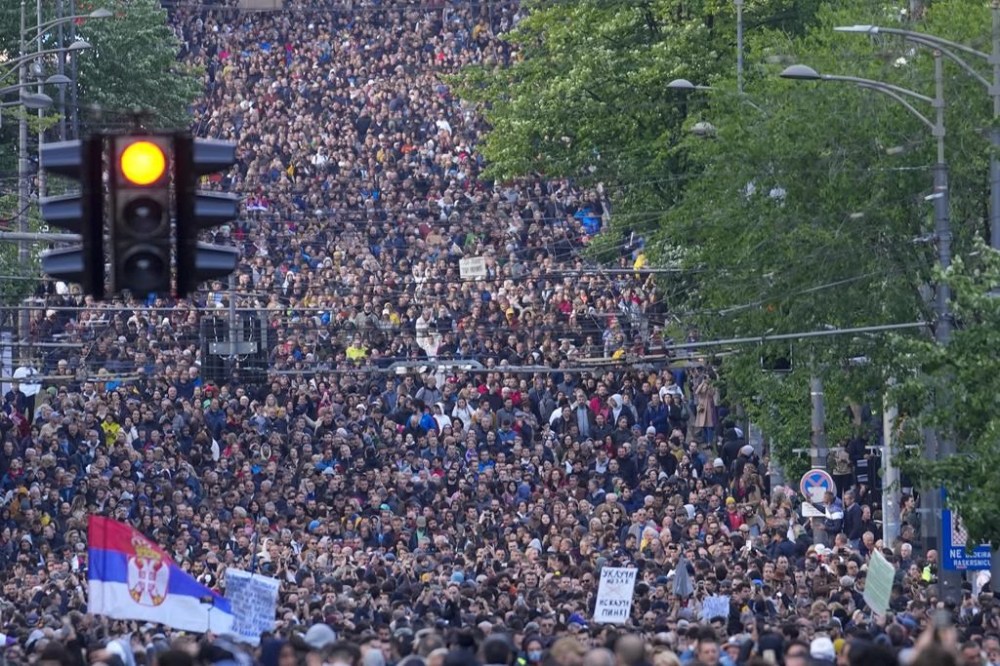
BELGRADE, Serbia (AP) — Tens of thousands of people marched through the Serbian capital, Belgrade, and blocked a key bridge Friday in the second large protest since two mass shootings that rattled the Balkan country and killed 17 people, including many children.
Protesters gathered in front of the Parliament building before filing by the government’s headquarters and onto a highway bridge spanning the Sava River, where evening commuters had to turn their vehicles around to avoid getting stuck. At the head of the column was a black banner reading “Serbia Against Violence.”
As the demonstrators passed the government buildings, many chanted slogans decrying Serbia’s populist president, Aleksandar Vucic, whom they blame for creating an atmosphere of hopelessness and division in the country that they say indirectly led to the mass shootings.
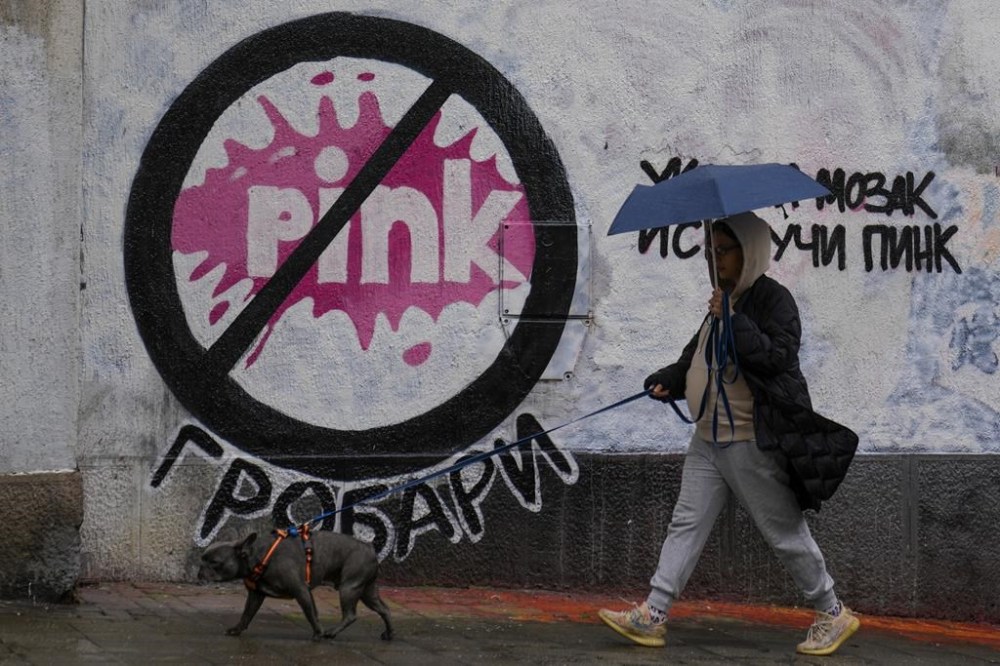
“We’re here to express a certain kind of rebellion against everything that currently surrounds us, but primarily the violence that occurred in the last … days, and that is all around us in the past years,” Belgrade resident Nevena Matic said.
Pro-government media criticized the bridge blockade, with the Novosti daily newspaper reporting that “harassment has begun, hooligans have blocked the bridge.”
But opposition politician Srdjan Milivojevic told television station N1 that “this is a battle for survival.” He said, “If the president does not understand his people, it’s time he resigned.”
Police did not intervene. As night fell and the crowd started to disperse, organizers promised to hold more protests unless their demands are met.
Ahead of the protest, Vucic, who holds nearly all the levers of power, said it amounted to “violence in politics” and the “harassment” of citizens. But he said police wouldn’t get involved “unless people’s lives are in danger.”
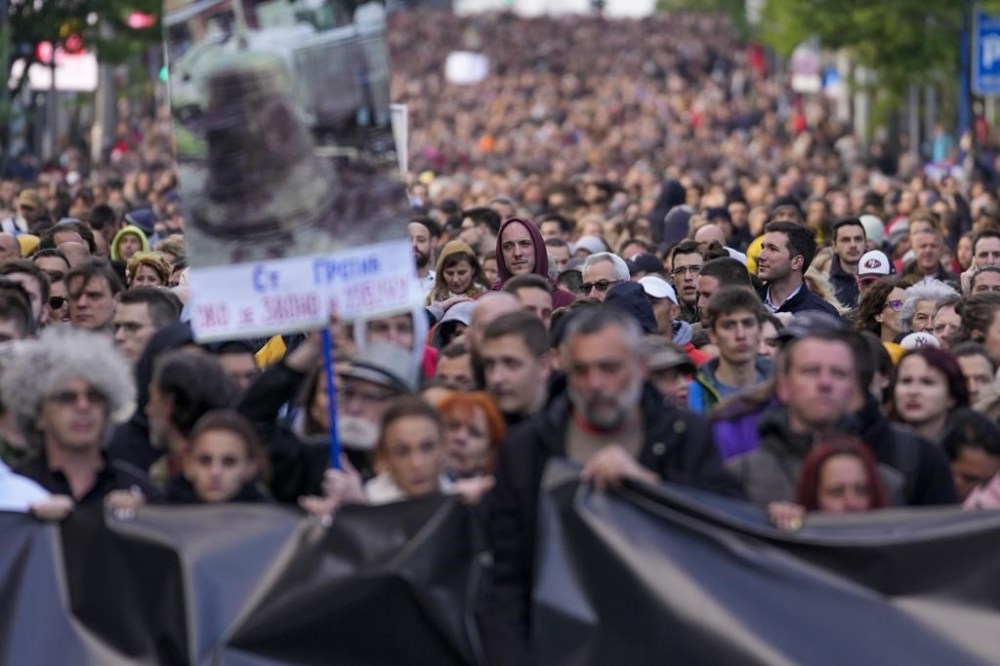
“What gives them the right to block other people’s normal lives?” said Vucic, who accused opposition leaders of “abusing the tragedy” following the shootings that deeply rattled the nation and triggered calls for change.
“They are harassing citizens and not allowing them to travel,” Vucic insisted. “But we don’t like to beat protesters, like France and Germany do.”
The rally came nearly a week after an earlier protest in Belgrade that also drew thousands and demonstrations in smaller towns and cities around the country. At that protest, demonstrators demanded the resignations of government ministers and the withdrawal of broadcast licenses for two private TV stations which are close to the state and promote violence. They often host convicted war criminals and crime figures on their programs.
The two shootings happened within two days of each other and left 17 people dead and 21 wounded. On May 3, a 13-year-old boy used his father’s gun to open fire at his school in central Belgrade. The next day, a 20-year-old man randomly fired at people in a rural area south of the capital.
Opposition parties have accused Vucic’s populist government of fueling intolerance and hate speech while taking hold of all institutions. Vucic has denied this. He has called his own rally for May 26 in Belgrade that he said would be the “biggest ever.”
“We do not organize spontaneous rallies in order to play with people’s emotions,” Vucic insisted. “Ours will be a rally of unity, when we will announce important political decisions.”
Vucic also told reporters that citizens had handed in more than 9,000 weapons since police announced a one-month amnesty for people to surrender unregistered guns and ammunition or face possible prison sentences after that period.
Serbia is estimated to be among the top countries in Europe when it comes to the number of guns per capita, many of them left over from the wars in the 1990s. Other anti-gun measures after the shootings include a ban on new gun licenses, stricter controls on gun owners and shooting ranges, and tougher punishments for the illegal possession of weapons.