

Bolivian EV startup hopes tiny car will make it big in lithium-rich country
Advertisement
Read this article for free:
or
Already have an account? Log in here »
To continue reading, please subscribe:

Digital Subscription
One year of digital access for only $205*
- Enjoy unlimited reading on winnipegfreepress.com
- Read the E-Edition, our digital replica newspaper
- Access News Break, our award-winning app
- Play interactive puzzles
*First annual payment billed as $205.00 + GST for one year. This annual subscription will automatically renew at $233.00 + GST every 52 weeks (10% off the regular annual price of $259.35). Offer available to new and qualified returning subscribers only. Cancel any time.
To continue reading, please subscribe:
Add Free Press access to your Brandon Sun subscription for only an additional
$1 for the first 4 weeks*
- Enjoy unlimited reading on winnipegfreepress.com
- Read the E-Edition, our digital replica newspaper
- Access News Break, our award-winning app
- Play interactive puzzles
*Your next Brandon Sun subscription payment will increase by $1.00 and you will be charged $17.95 plus GST for four weeks. After four weeks, your payment will increase to $24.95 plus GST every four weeks.
Read unlimited articles for free today:
or
Already have an account? Log in here »
Hey there, time traveller!
This article was published 14/05/2023 (1212 days ago), so information in it may no longer be current.
LA PAZ, Bolivia (AP) — On a recent, cold morning, Dr. Carlos Ortuño hopped into a tiny electric car to go check on a patient in the outskirts of Bolivia’s capital of La Paz, unsure if the vehicle would be able to handle the steep, winding streets of the high-altitude city.
“I thought that because of the city’s topography it was going to struggle, but it’s a great climber,” said Ortuño about his experience driving a Quantum, the first EV to have ever been made in Bolivia. “The difference from a gasoline-powered vehicle is huge.”
Ortuño’s home visit aboard a car the size of a golf cart was part of a government-sponsored program that brings doctors to patients living in neighborhoods far from the city center. The “Doctor in your house” program was launched last month by the municipality of La Paz using a fleet of six EV’s manufactured by Quantum Motors, the country’s sole producer of electric cars.
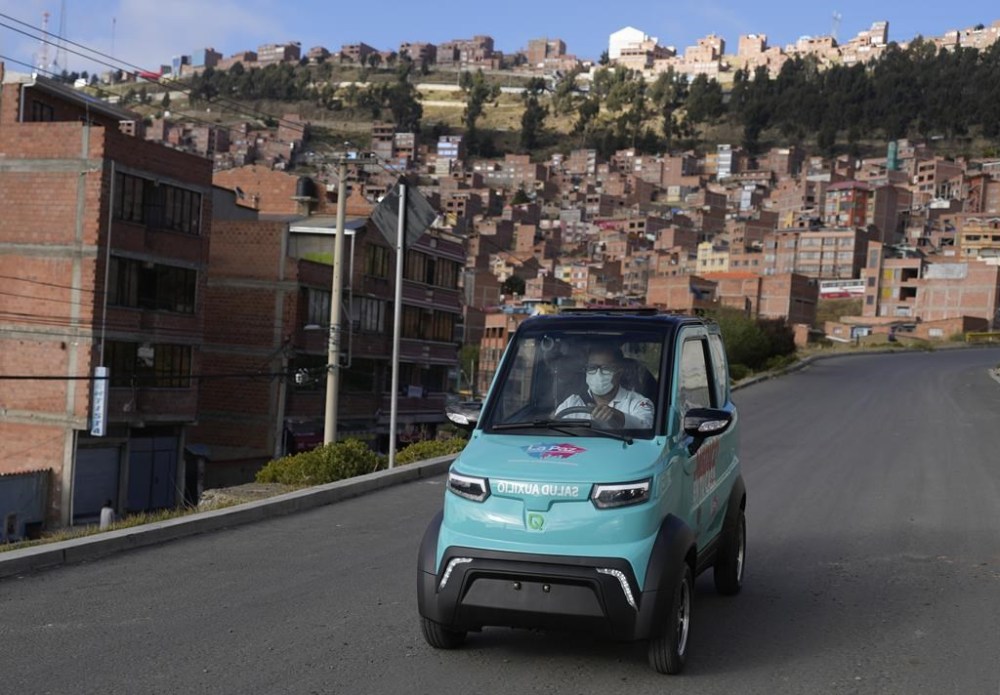
“It is a pioneering idea. It helps protect the health of those in need, while protecting the environment and supporting local production,” La Paz Mayor Iván Arias said.
The program could also help boost Quantum Motors, a company launched four years ago by a group of entrepreneurs who believe EVs will transform the auto industry in Bolivia, a lithium-rich country, where cheap, subsidized imported gasoline is still the norm.
Built like a box, the Quantum moves at no more than 35 mph (56 kph), can be recharged from a household outlet and can travel 50 miles (80 kilometers) before a recharge. Its creators hope the $7,600 car will help revive dreams of a lithium-powered economy and make electric cars something the masses will embrace.
“E-mobility will prevail worldwide in the next few years, but it will be different in different countries,” says José Carlos Márquez, general manager of Quantum Motors. “Tesla will be a dominant player in the U.S., with its speedy, autonomous cars. But in Latin America, cars will be more compact, because our streets are more similar to those of Bombay and New Delhi than to those of California.”
But the company’s quest to boost e-mobility in the South American country has been challenging. In the four years since it released its first EVs, Quantum Motors has sold barely 350 cars in Bolivia and an undisclosed number of units in Peru and Paraguay. The company is also set to open a factory in Mexico later this year, although no further details have been provided on the scope of production there.
Still, Quantum Motors’ bet on battery-powered cars makes sense when it comes to Bolivia’s resources. With an estimated 21 million tons, Bolivia has the world’s largest reserve of lithium, a key component in electric batteries, but it has yet to extract — and industrialize — its vast resources of the metal.
In the meantime, the large majority of vehicles in circulation are still powered by fossil fuels and the government continues to pour millions of dollars subsidizing imported fuel than then sells at half the price to the domestic market.
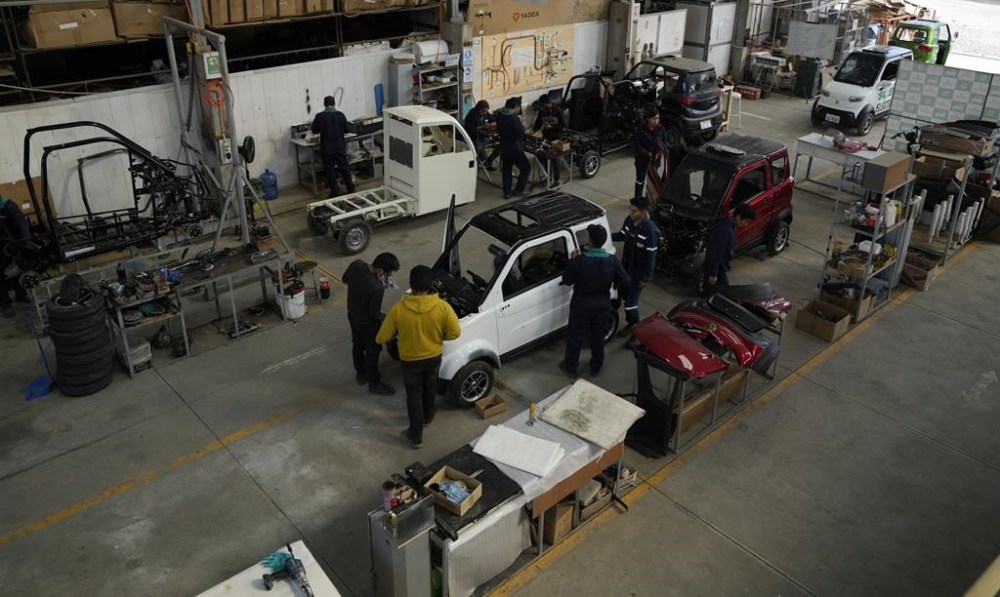
“The Quantum (car) might be cheap, but I don’t think it has the capacity of a gasoline-powered car,” says Marco Antonio Rodriguez, a car mechanic in La Paz, although he acknowledges people might change their mind once the government puts an end to gasoline subsidies.
Despite the challenges ahead, the makers of the Quantum car are hopeful that programs like “Médico en tu casa,” which is scheduled to double in size and extend to other neighborhoods next year, will help boost production and churn out more EV’s across the region.
“We are ready to grow,” said Márquez. “Our inventory has been sold out through July.”