

Aid agencies back UN’s $7 billion appeal for Horn of Africa crisis
Advertisement
Read this article for free:
or
Already have an account? Log in here »
To continue reading, please subscribe:

Digital Subscription
One year of digital access for only $205*
- Enjoy unlimited reading on winnipegfreepress.com
- Read the E-Edition, our digital replica newspaper
- Access News Break, our award-winning app
- Play interactive puzzles
*First annual payment billed as $205.00 + GST for one year. This annual subscription will automatically renew at $233.00 + GST every 52 weeks (10% off the regular annual price of $259.35). Offer available to new and qualified returning subscribers only. Cancel any time.
To continue reading, please subscribe:
Add Free Press access to your Brandon Sun subscription for only an additional
$1 for the first 4 weeks*
- Enjoy unlimited reading on winnipegfreepress.com
- Read the E-Edition, our digital replica newspaper
- Access News Break, our award-winning app
- Play interactive puzzles
*Your next Brandon Sun subscription payment will increase by $1.00 and you will be charged $17.95 plus GST for four weeks. After four weeks, your payment will increase to $24.95 plus GST every four weeks.
Read unlimited articles for free today:
or
Already have an account? Log in here »
Hey there, time traveller!
This article was published 23/05/2023 (1236 days ago), so information in it may no longer be current.
NAIROBI, Kenya (AP) — Humanitarian agencies are calling for full funding of the U.N.’s $7 billion appeal for the Horn of Africa during a pledging conference this week, citing a growing crisis and the need for urgent lifesaving intervention.
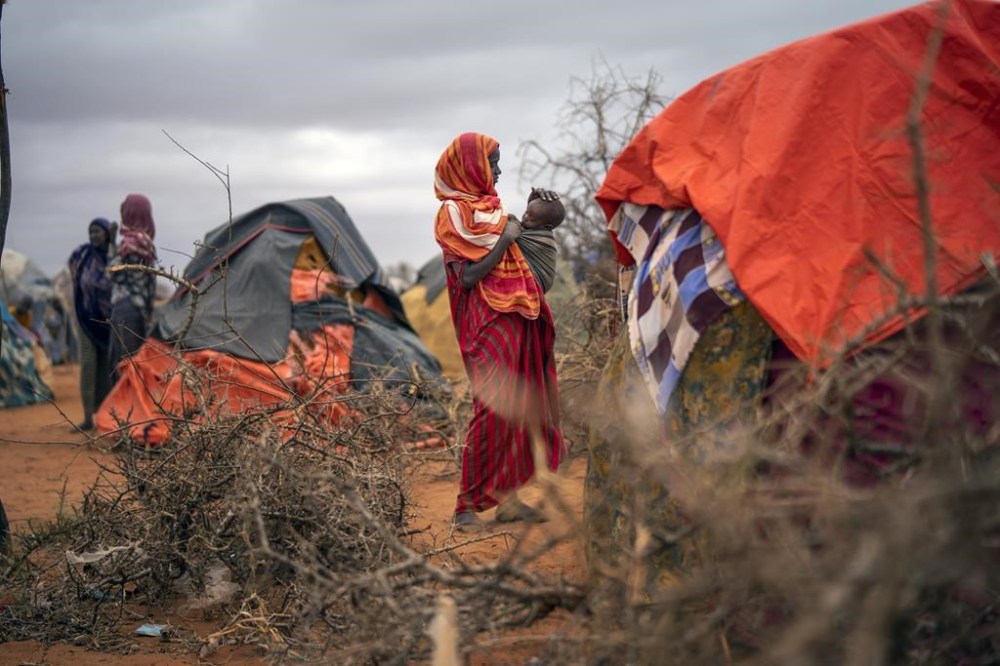
The U.N. says the region is facing the worst drought in 40 years, with more than 43.3 million people in need of assistance in Somalia, Ethiopia and Kenya, and more than half of those lacking access to sufficient food, according to the U.N.
The International Rescue Committee said that until now the appeals have received less than a quarter of the donations they need.
“Efforts to combat food insecurity need to be urgently scaled up across a wider group of governments, international financial institutions and climate actors,” said the IRC’s chief executive, David Miliband.
The U.N on Wednesday is convening a high-level pledging event at its headquarters in New York, where member states and partners will be encouraged to commit financial support to the Horn of Africa crisis.
Humanitarian organizations say time is running out as affected communities have gone for months with little or no food.
“It’s beyond urgent. … We have averted famine before, and we can do it again. … People are already dying and there’s no time for declarations,” Deepmala Mahla, CARE International’s vice president for humanitarian affairs. told The Associated Press.
A famine is yet to be declared in Somalia, where more than 6 million people are going hungry, but some humanitarian and climate officials have warned that trends are worse than in the 2011 famine in Somalia in which a quarter-million people died.
Formal famine declarations are rare because data to meet the benchmarks often cannot be obtained because of conflict, poor infrastructure or politics. Governments can be wary of being associated with a term of such grim magnitude.
Local nongovernmental organizations like Somalia’s Hormuud Salaam Foundation say there’s need for sustained funding.
“For lasting change, we must equip local organizations and local people with the tools to face the inevitable climate shocks of tomorrow,” the foundation’s CEO, Abdullahi Nur Osman, told the AP.
Persistent conflict in some of the affected areas, combined with climate change effects, have contributed to the growing crisis.
Parts of Somalia and Ethiopia are currently experiencing flooding during the ongoing rainy season and millions of people have been displaced.
The affected areas, mostly occupied by herders, had seen prolonged dry seasons that left livestock, which are a source of livelihoods, dead.
Parts of Somalia are grappling with insecurity due to the al-Shabab extremist group that has carried out numerous large-scale attacks.
Northern Ethiopia experienced conflict for more than two years as regional forces clashed with national forces. Hundreds of thousands of people died and the situation remains fragile, seven months after a peace deal was signed.