Iran unveils what it calls a hypersonic missile able to beat air defenses amid tensions with US
Advertisement
Read this article for free:
or
Already have an account? Log in here »
To continue reading, please subscribe:

Digital Subscription
One year of digital access for only $205*
- Enjoy unlimited reading on winnipegfreepress.com
- Read the E-Edition, our digital replica newspaper
- Access News Break, our award-winning app
- Play interactive puzzles
*First annual payment billed as $205.00 + GST for one year. This annual subscription will automatically renew at $233.00 + GST every 52 weeks (10% off the regular annual price of $259.35). Offer available to new and qualified returning subscribers only. Cancel any time.
To continue reading, please subscribe:
Add Free Press access to your Brandon Sun subscription for only an additional
$1 for the first 4 weeks*
- Enjoy unlimited reading on winnipegfreepress.com
- Read the E-Edition, our digital replica newspaper
- Access News Break, our award-winning app
- Play interactive puzzles
*Your next Brandon Sun subscription payment will increase by $1.00 and you will be charged $17.95 plus GST for four weeks. After four weeks, your payment will increase to $24.95 plus GST every four weeks.
Read unlimited articles for free today:
or
Already have an account? Log in here »
Hey there, time traveller!
This article was published 06/06/2023 (1224 days ago), so information in it may no longer be current.
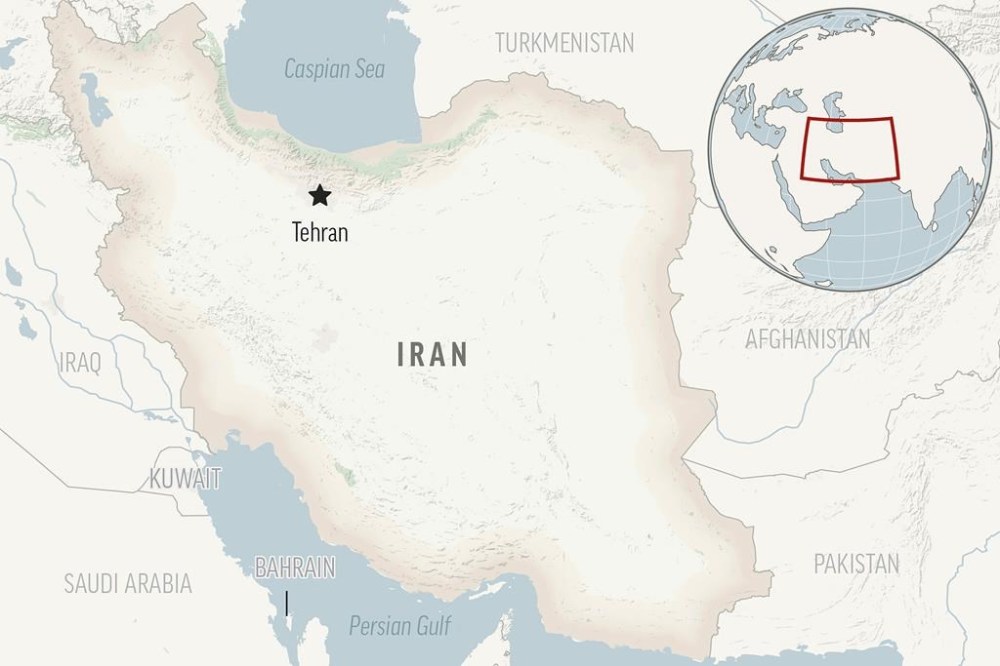
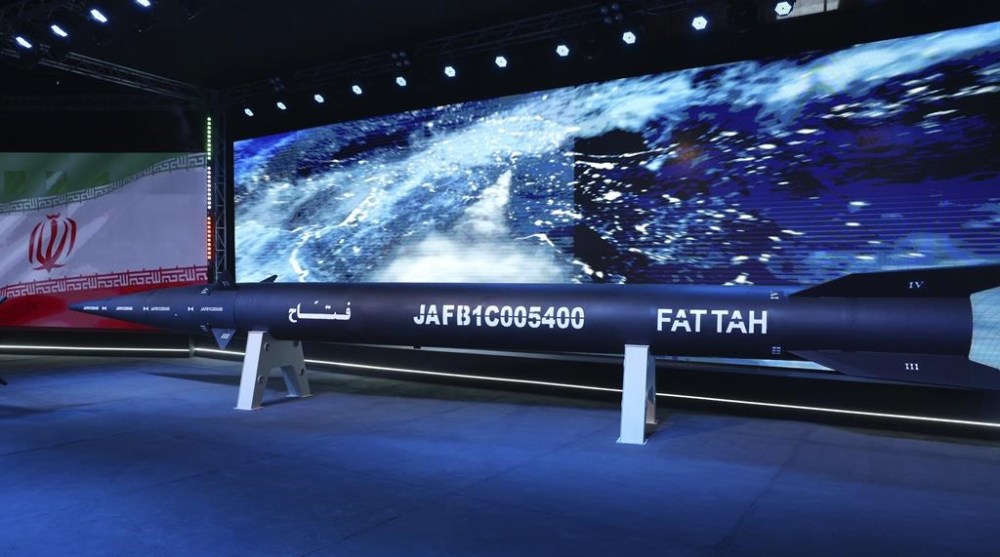
DUBAI, United Arab Emirates (AP) — Iran claimed on Tuesday that it had created a hypersonic missile capable of traveling at 15 times the speed of sound, adding a new weapon to its arsenal as tensions remain high with the United States over Tehran’s nuclear program.
The new missile — called Fattah, or “Conqueror” in Farsi — was unveiled even as Iran said it would reopen its diplomatic posts on Tuesday in Saudi Arabia after reaching a détente with Riyadh following years of conflict.
The tightly choreographed segment on Iranian state television apparently sought to show that Tehran’s hard-line government can still deploy arms against its enemies across much of the Middle East.
“Today we feel that the deterrent power has been formed,” Iranian President Ebrahim Raisi said at the event. “This power is an anchor of lasting security and peace for the regional countries.”
Gen. Amir Ali Hajizadeh, the head of the paramilitary Revolutionary Guard’s aerospace program, unveiled what appeared to be a model of the missile. Hajizadeh claimed the missile had a range of up to 1,400 kilometers (870 miles).
That’s about mid-range for Iran’s expansive ballistic missile arsenal, which the Guard has built up over the years as Western sanctions largely prevent it from accessing advanced weaponry.
“There exists no system that can rival or counter this missile,” Hajizadeh claimed.
That claim, however, depends on how maneuverable the missile is. Ballistic missiles fly on a trajectory in which anti-missile systems like the Patriot can anticipate their path and intercept them. Tuesday’s event showed what appeared to be a moveable nozzle for the Fattah, which could allow it to change trajectories in flight. The more irregular the missile’s flight path, the more difficult it becomes to intercept.
Iranian officials did not release footage of a Fattah successfully launching and then striking a target. Hajizadeh later said that there had been a ground test of the missile’s engine.
A ground test involves a rocket motor being put on a stand and fired to check its abilities while launching a missile with that rocket motor is much more complex.
Hypersonic weapons, which fly at speeds in excess of Mach 5, or five times the speed of sound, could pose crucial challenges to missile defense systems because of their speed and maneuverability. Iran described the Fattah as being able to reach Mach 15 — which is 15 times the speed of sound.
China is believed to be pursuing the weapons, as is America. Russia claims to already be fielding the weapons and has said it used them on the battlefield in Ukraine. However, speed and maneuverability isn’t a guarantee the missile will successfully strike a target. Ukraine’s air force in May said it shot down a Russian hypersonic Kinzhal missile with a Patriot battery.
Gulf Arab countries allied with the U.S. widely use the Patriot missile system in the region. Israel, Iran’s main rival in the Mideast, also has its own robust air defenses.
In November, Hajizadeh initially claimed that Iran had created a hypersonic missile, without offering evidence to support it. That claim came during the nationwide protests that followed the September death of 22-year-old Mahsa Amini after her arrest by the country’s morality police.
Tuesday’s announcement came as U.S. Secretary of State Antony Blinken is to begin a visit to Saudi Arabia.
___
Follow Jon Gambrell on Twitter at www.twitter.com/jongambrellAP.