

Costa Rica-US immigration agreement aims to manage region’s flows
Advertisement
Read this article for free:
or
Already have an account? Log in here »
To continue reading, please subscribe:

Digital Subscription
One year of digital access for only $205*
- Enjoy unlimited reading on winnipegfreepress.com
- Read the E-Edition, our digital replica newspaper
- Access News Break, our award-winning app
- Play interactive puzzles
*First annual payment billed as $205.00 + GST for one year. This annual subscription will automatically renew at $233.00 + GST every 52 weeks (10% off the regular annual price of $259.35). Offer available to new and qualified returning subscribers only. Cancel any time.
To continue reading, please subscribe:
Add Free Press access to your Brandon Sun subscription for only an additional
$1 for the first 4 weeks*
- Enjoy unlimited reading on winnipegfreepress.com
- Read the E-Edition, our digital replica newspaper
- Access News Break, our award-winning app
- Play interactive puzzles
*Your next Brandon Sun subscription payment will increase by $1.00 and you will be charged $17.95 plus GST for four weeks. After four weeks, your payment will increase to $24.95 plus GST every four weeks.
Read unlimited articles for free today:
or
Already have an account? Log in here »
Hey there, time traveller!
This article was published 13/06/2023 (1144 days ago), so information in it may no longer be current.
SAN JOSE, Costa Rica (AP) — Costa Rica and the U.S. government have agreed to open potential legal pathways to the United States for some of the Nicaraguan and Venezuelan migrants among the 240,000 asylum seekers already awaiting asylum in the Central American country.
The agreement – announced by Costa Rica Tuesday and the United States late Monday – appears aimed at reducing the pressure on Costa Rica’s overwhelmed asylum system and heading off asylum seekers who could give up on the slow Costa Rica process and instead set off for the U.S. border.
In recent years, Costa Rica with a population of only 5 million has become one of the world’s leading receptors of asylum requests. In part, applying for asylum was a way for migrants to legalize their status and be allowed to seek work.
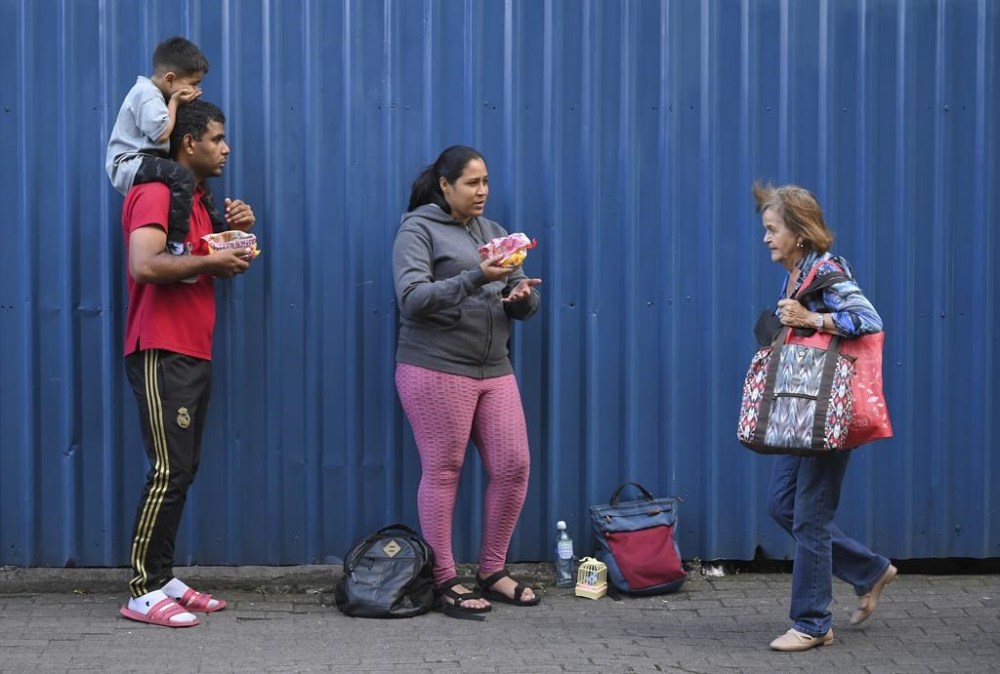
However, a soaring number of applications, largely from migrants fleeing neighboring Nicaragua, created a massive backlog. Last year, Nicaraguans accounted for nine out of 10 applicants.
On Tuesday, Public Security Minister Mario Zamora did not say how many of the 240,000 people awaiting asylum would be eligible to apply for one of the U.S. pathways. He and Costa Rica’s migration director Marta Vinda emphasized that only Nicaraguans and Venezuelans with pending asylum applications would be considered.
Neither the U.S. nor Costa Rican governments provided details about what the legal pathways could be.
Zamora said the United Nations immigration and refugee agencies would compose a list of those who would be eligible. Migrants applying for asylum after June 12 would not qualify. The officials estimated that they would process about 1,000 cases per month.
On Monday, the U.S. State Department said in a statement the six-month pilot program could expedite refugee processing, as well as other humanitarian and labor options for those interested in entering the U.S.
“In the first two months of the exploratory phase, only eligible individuals will be contacted to schedule a screening appointment at a Movilidad Segura office in Costa Rica to assess whether they are a qualified candidate for lawful pathways to the United States or other countries,” the statement said. After the first two months, eligible migrants will have make an appointment through the MovilidadSegura.org website.
“I suspect that it’s an effort to convince Nicaraguans and Venezuelans in the country to stay there temporarily, keeping numbers down in the short term as they get other things in place at the border,” Aaron Reichlin-Melnick, policy director at the American Immigration Council, said in an email when asked about the Costa Rica agreement. “But who knows how it’ll really work in practice.”
In 2012, Costa Rica received barely 900 asylum applications. In 2018, that number reached nearly 28,000. Last year, the country received more than 67,000 applications between just January and September.
Costa Rica President Rodrigo Chaves said in December the system was being abused by economic migrants and its generous policies would be tightened. As an alternative, it offered a two-year work permit for Nicaraguans, Venezuelans and Cubans in exchange for dropping their asylum cases.
The U.S. government has been seeking ways to manage the flow of migrants toward its southern border. It has increasingly sought the cooperation of governments farther south on the migratory route.
On Monday, a website began working that allows Guatemalans, Hondurans, Salvadorans and Nicaraguans who are still in their countries to apply through a website for appointments to assess their eligibility for various legal pathways offered by the United States.
Nicaraguans and Venezuelans have become major sources of migration to the U.S .during Biden’s presidency. In January, the U.S. began offering parole to up to 30,000 Cubans, Haitians, Nicaraguans and Venezuelans a month who apply online with a financial sponsor and arrive by air.
__
AP writer Elliot Spagat in San Diego contributed to this report.