

Germany marks 70th anniversary of uprising against Communist dictatorship in east
Advertisement
Read this article for free:
or
Already have an account? Log in here »
To continue reading, please subscribe:

Digital Subscription
One year of digital access for only $205*
- Enjoy unlimited reading on winnipegfreepress.com
- Read the E-Edition, our digital replica newspaper
- Access News Break, our award-winning app
- Play interactive puzzles
*First annual payment billed as $205.00 + GST for one year. This annual subscription will automatically renew at $233.00 + GST every 52 weeks (10% off the regular annual price of $259.35). Offer available to new and qualified returning subscribers only. Cancel any time.
To continue reading, please subscribe:
Add Free Press access to your Brandon Sun subscription for only an additional
$1 for the first 4 weeks*
- Enjoy unlimited reading on winnipegfreepress.com
- Read the E-Edition, our digital replica newspaper
- Access News Break, our award-winning app
- Play interactive puzzles
*Your next Brandon Sun subscription payment will increase by $1.00 and you will be charged $17.95 plus GST for four weeks. After four weeks, your payment will increase to $24.95 plus GST every four weeks.
Read unlimited articles for free today:
or
Already have an account? Log in here »
Hey there, time traveller!
This article was published 16/06/2023 (1196 days ago), so information in it may no longer be current.
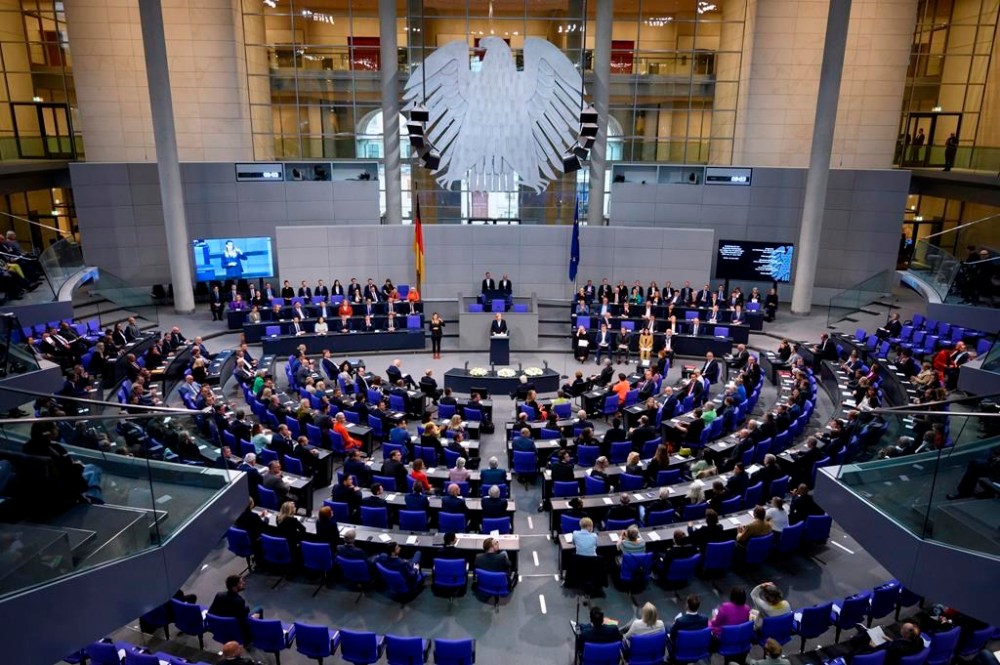
BERLIN (AP) — Germany’s parliament on Friday commemorated the 70th anniversary of a popular uprising in the Communist east that was brutally crushed by its Soviet-backed dictatorship.
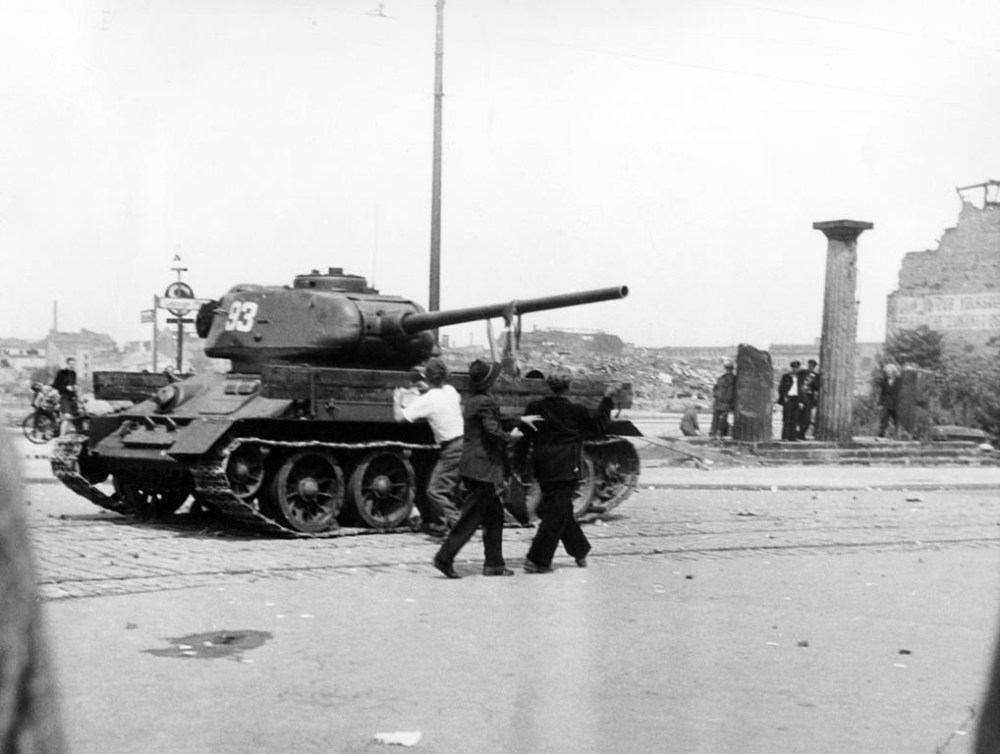
Worsening economic conditions and political repression in East Germany had prompted months of protests, starting in rural areas, that culminated in a call on June 16, 1953, for a general strike.
The following day more than half a million people took to the streets across East Germany, including the capital, Berlin. About 50 people were killed and thousands were arrested by Communist secret police with the help of Soviet troops. Dozens of Soviet soldiers who refused to shoot protesters were executed.
The East German regime branded the uprising a “fascist putsch” instigated by the West, a claim for which there was no evidence.
It was the first revolt against Soviet rule in eastern Europe. Others would follow in Hungary and what was then Czechoslovakia.
“The uprising of June 17 was not only directed against the increasing demand on workers, against low wages, high prices, empty shelves,” German President Frank-Walter Steinmeier said in a speech to lawmakers. “It was directed against the standardization of an entire society, against planned rule and forced collectivization, against state surveillance, propaganda and censorship, against the suppression of Christians, opposition members and non-conformists, against the dictatorship of a single party, which claimed that it was always right.”
Following the crackdown, hundreds of thousands of people fled to West Germany until the so-called Iron Curtain was cemented by the Communist regime with a vast border fence and the Berlin Wall.
Steinmeier noted that the striving for freedom eventually prevailed, when protesters took to the streets again in 1989, eventually toppling the dictatorship and leading to German reunification a year later.
He also drew a parallel to the situation in Ukraine, saying the country was defending itself against a Russian attack driven by Moscow’s efforts to restore former imperial glory.
“(Ukrainians) are also defending what brave people in Europe have stood up for time and again since 1953, achieved in 1989 and never want to lose again,” Steinmeier said.
“On this anniversary of June 17 we’re also thinking of the Ukrainian men and women who are fighting against unfreedom and repression today,” he said.