

Arkansas city honors enslaved man who fled to Canada and was later extradited
Advertisement
Read this article for free:
or
Already have an account? Log in here »
To continue reading, please subscribe:

Digital Subscription
One year of digital access for only $205*
- Enjoy unlimited reading on winnipegfreepress.com
- Read the E-Edition, our digital replica newspaper
- Access News Break, our award-winning app
- Play interactive puzzles
*First annual payment billed as $205.00 + GST for one year. This annual subscription will automatically renew at $233.00 + GST every 52 weeks (10% off the regular annual price of $259.35). Offer available to new and qualified returning subscribers only. Cancel any time.
To continue reading, please subscribe:
Add Free Press access to your Brandon Sun subscription for only an additional
$1 for the first 4 weeks*
- Enjoy unlimited reading on winnipegfreepress.com
- Read the E-Edition, our digital replica newspaper
- Access News Break, our award-winning app
- Play interactive puzzles
*Your next Brandon Sun subscription payment will increase by $1.00 and you will be charged $17.95 plus GST for four weeks. After four weeks, your payment will increase to $24.95 plus GST every four weeks.
Read unlimited articles for free today:
or
Already have an account? Log in here »
Hey there, time traveller!
This article was published 17/06/2023 (1212 days ago), so information in it may no longer be current.
FAYETTEVILLE, Ark. (AP) — An enslaved man who fled Arkansas in 1841 seeking freedom in Canada, only to be forcibly returned to the U.S., has been honored with a historical marker and a new street sign in the city where he once labored.
The unprecedented 1842 extradition of Nelson Hackett from Canada on a theft charge sparked an uproar in the British colony, which had long been viewed as a safe haven for escaped slaves. Months later, the British government enacted policies that “made similar extraditions extremely difficult,” according to the Nelson Hackett Project, a digital work of public scholarship helmed by the University of Arkansas Humanities Center.
Canada never sent another fugitive from slavery back to the U.S., researchers said.
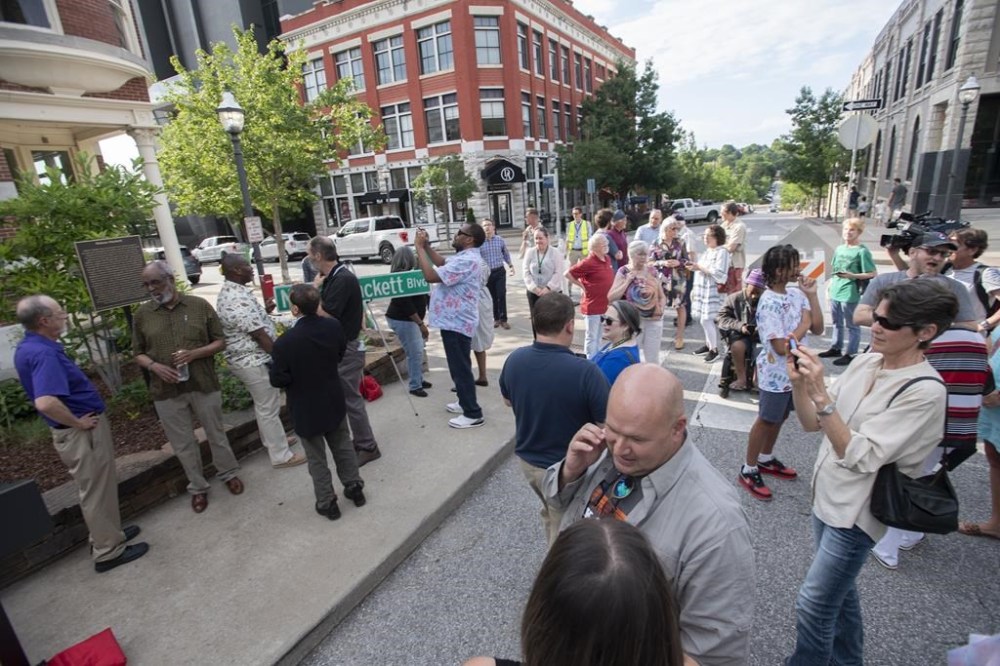
A marker honoring Hackett and his impact was installed Friday in Fayetteville’s downtown square, the Northwest Arkansas Democrat-Gazette reported.
Archibald Yell Boulevard is being renamed Nelson Hackett Boulevard, the newspaper reported, an especially symbolic action given the role that Yell, who served as Arkansas governor at the time, held in securing Hackett’s extradition. The new street signs, also unveiled Friday, are scheduled to be installed Monday on Juneteenth.
Hackett fled Arkansas in July 1841, prompting the man who claimed to own him to demand his extradition on charges of theft, according to Michael Pierce, associate history professor at the University of Arkansas at Fayetteville. Yell wrote a letter to the colonial governor of Canada requesting Hackett be returned. The request was granted.
Hackett was brought back to Fayetteville in the summer of 1842. He was publicly whipped several times, tortured and sold back into slavery in Texas, according to researchers. He escaped again, and his fate remains unknown.
Hackett labored near where the marker is displayed on the square. The marker and the renamed street serve as a way to remember Hackett’s experiences, Mayor Lioneld Jordan said.
J.L. Jennings is chairman of the city’s Black Heritage Preservation Commission, which recommended the City Council change the name of the street and place the marker at the square. He said the commission has been working to highlight the city’s untold history and to increase feelings of belonging for all residents.
“We believe honoring Nelson Hackett is an important first step in this goal,” Jennings said. “It’s remarkable to think an enslaved Mr. Hackett could have actually stood here, where his marker is installed today, unknowing of the impact that his life would have on the world. While we do not know how Mr. Hackett’s story ended, what we do know is his impact was felt by thousands.”