

Plane that flew over DC crashed almost straight down at high speed, report says
Advertisement
Read this article for free:
or
Already have an account? Log in here »
To continue reading, please subscribe:

Digital Subscription
One year of digital access for only $205*
- Enjoy unlimited reading on winnipegfreepress.com
- Read the E-Edition, our digital replica newspaper
- Access News Break, our award-winning app
- Play interactive puzzles
*First annual payment billed as $205.00 + GST for one year. This annual subscription will automatically renew at $233.00 + GST every 52 weeks (10% off the regular annual price of $259.35). Offer available to new and qualified returning subscribers only. Cancel any time.
To continue reading, please subscribe:
Add Free Press access to your Brandon Sun subscription for only an additional
$1 for the first 4 weeks*
- Enjoy unlimited reading on winnipegfreepress.com
- Read the E-Edition, our digital replica newspaper
- Access News Break, our award-winning app
- Play interactive puzzles
*Your next Brandon Sun subscription payment will increase by $1.00 and you will be charged $17.95 plus GST for four weeks. After four weeks, your payment will increase to $24.95 plus GST every four weeks.
Read unlimited articles for free today:
or
Already have an account? Log in here »
Hey there, time traveller!
This article was published 21/06/2023 (1197 days ago), so information in it may no longer be current.
An unresponsive business jet that flew off course over the nation’s capital plunged in a “near-vertical descent” into a Virginia mountain at a “high velocity” before bursting into flames, according to a federal report released Wednesday.
The preliminary findings shed little light on what might have caused the June 4 crash, which killed four people. However, outside observers and the plane’s owner have theorized that a lack of oxygen may have led to the crash. Federal investigators found no cockpit voice recorder or flight data recorder at the crash site, the National Transportation Safety Board report said.
The plane took an erratic flight path — turning around over New York’s Long Island to fly directly over Washington, DC, some of the most heavily restricted airspace in the nation. That alarmed the U.S. military and prompted the Pentagon to scramble six F-16 fighter jets to intercept, causing a loud sonic boom over the region. Pilots of the fighter jets reported that the small plane’s pilot appeared slumped over.
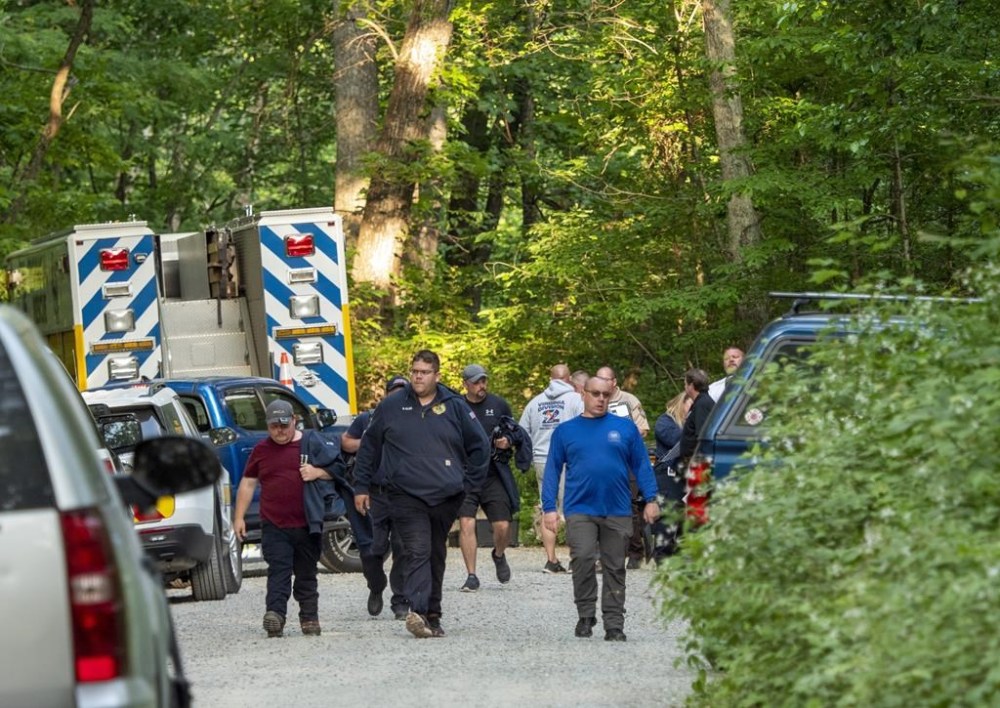
The plane’s cockpit was destroyed by the crash’s impact, while the wreckage was fragmented and scattered around a main crater, the NTSB said. Maintenance inspection records indicated that the plane was equipped with a cockpit voice recorder, the report stated, although the aircraft was not required to have a flight data recorder, which monitors things like altitude, airspeed and heading.
Air traffic controllers were initially in normal communication with the pilot. He was cleared for higher and higher altitudes as the plane began its ascent from Elizabethton, Tennessee.
But after about 15 minutes, the pilot stopped responding, the NTSB report stated.
An air traffic controller instructed the pilot to stop his climb at 33,000 feet (10,000 meters) because of crossing air traffic, the report said. The pilot did not respond and continued to climb to 34,000 feet and leveled off. The plane kept flying past its intended destination on Long Island, then reversed course, traveling directly over Washington before crashing.
Family and friends identified two of the victims as an entrepreneur known in New York real estate circles and her 2-year-old daughter.
John Rumpel, the owner of the plane, said his daughter, Adina Azarian, granddaughter, Aria, and the girl’s nanny were the victims, along with the pilot. He said they were returning to their home on Long Island, after visiting his house in North Carolina.
Rumpel told The Associated Press earlier this month he believes the pilot, who he identified as Jeff Hefner, probably lost consciousness from a lack of oxygen. Rumpel said Hefner had recently had a physical and he was not aware of any concerning medical conditions.
“He was top shelf, absolutely top shelf. I wouldn’t have had my daughter and my grandbaby fly with him if he wasn’t,” Rumpel said Tuesday.
Outside aviation experts speculated earlier this month that the pilot likely lost consciousness from a lack of oxygen inside the jet when it climbed above 10,000 feet (3,000 meters), the altitude that typically requires cabin pressurization.
“The most likely scenario right now is a pressurization failure or a mis-setting of the pressurization system,” said Alan Diehl, an aviation psychologist who previously worked for the Federal Aviation Administration, the National Transportation Safety Board and the U.S. Air Force. In the late 1960s, Diehl also helped design the original model of the plane that crashed, a Cessna Citation.