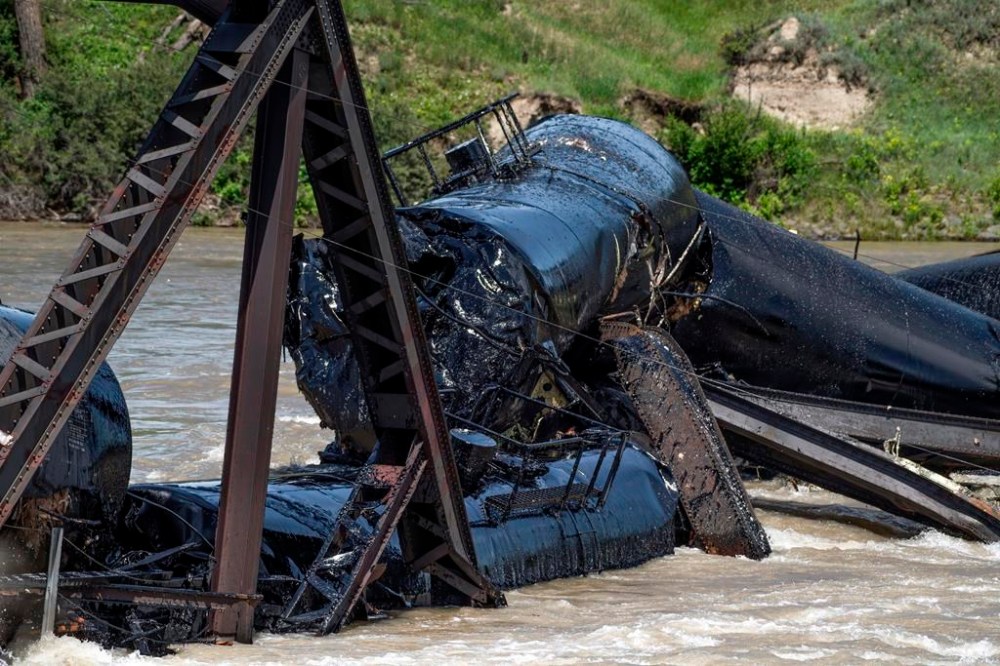
No sign of threat from the hazardous train that plunged into Yellowstone River, regulators say
Advertisement
Read this article for free:
or
Already have an account? Log in here »
To continue reading, please subscribe:

Digital Subscription
One year of digital access for only $205*
- Enjoy unlimited reading on winnipegfreepress.com
- Read the E-Edition, our digital replica newspaper
- Access News Break, our award-winning app
- Play interactive puzzles
*First annual payment billed as $205.00 + GST for one year. This annual subscription will automatically renew at $233.00 + GST every 52 weeks (10% off the regular annual price of $259.35). Offer available to new and qualified returning subscribers only. Cancel any time.
To continue reading, please subscribe:
Add Free Press access to your Brandon Sun subscription for only an additional
$1 for the first 4 weeks*
- Enjoy unlimited reading on winnipegfreepress.com
- Read the E-Edition, our digital replica newspaper
- Access News Break, our award-winning app
- Play interactive puzzles
*Your next Brandon Sun subscription payment will increase by $1.00 and you will be charged $17.95 plus GST for four weeks. After four weeks, your payment will increase to $24.95 plus GST every four weeks.
Read unlimited articles for free today:
or
Already have an account? Log in here »
Hey there, time traveller!
This article was published 25/06/2023 (1182 days ago), so information in it may no longer be current.
COLUMBUS, Mont. (AP) — Preliminary testing of water and air quality along a stretch of the Yellowstone River where train cars carrying hazardous materials fell into the waterway following a bridge collapse did not indicate any threat to the public, state and federal officials said Sunday.
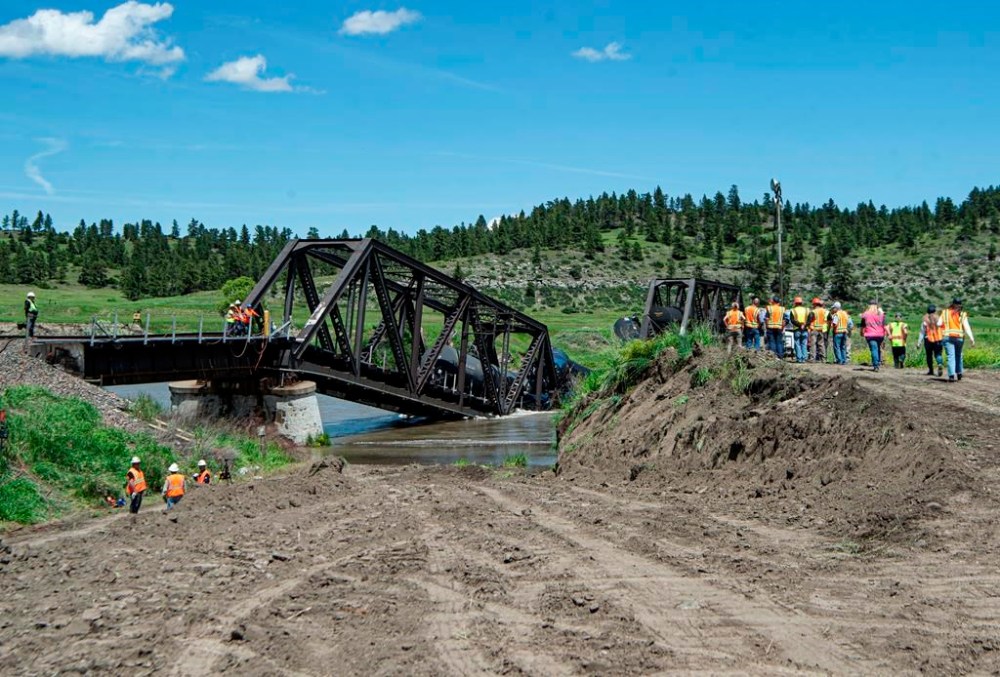
The seven mangled cars that carried hot asphalt and molten sulfur remained in the rushing river a day after the bridge gave way near the town of Columbus, about 40 miles (about 64 kilometers) west of Billings, Montana. The area is in a sparsely populated section of the Yellowstone River Valley, surrounded by ranch and farmland.
Preliminary results of water quality sampling did not show petroleum hydrocarbons, which would have come from the asphalt, or sulfur, Kevin Stone, a spokesperson for the Montana Department of Environmental Quality, said. Both do not dissolve when they enter water, he explained.
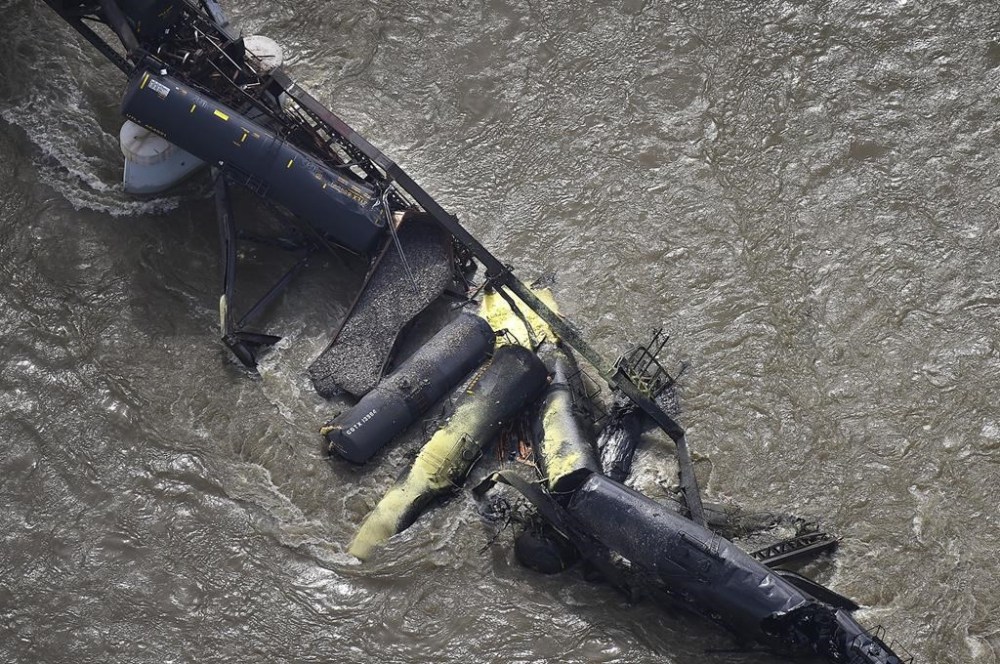
“Water quality testing will continue until the cleanup is complete and at this time there are no known risks to the public drinking water,” he said.
The water testing is being done by contractors working for the train’s operator, Montana Rail Link, while the Montana Department of Environmental Quality and the federal Environmental Protection Agency are overseeing it, Stone said.
Meanwhile, contractors monitoring the air downwind of the derailment for the EPA have not detected any toxic gases, said Rich Mylott, a spokesperson for the agency’s regional office.
Water testing began Saturday and will continue throughout the cleanup of the derailment site, Montana Rail Link spokesperson Andy Garland said in a statement.
“Montana Rail Link remains committed to addressing any potential impacts to the area as a result of this incident,” he said.
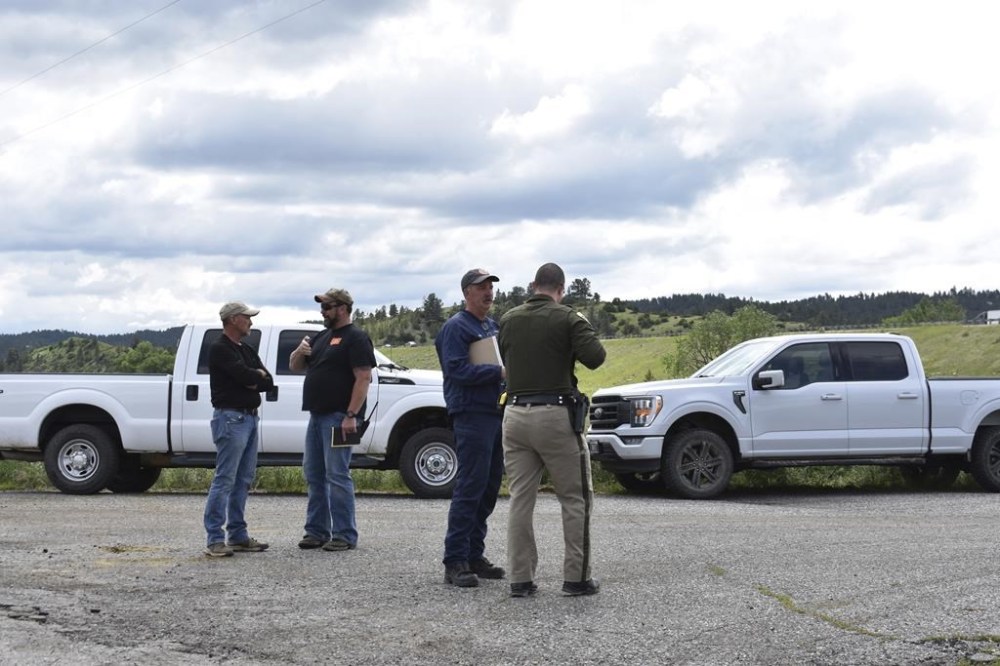
The amount of cargo that spilled from the cars in the river is still not known, said David Stamey, the head of Stillwater County Disaster and Emergency Services.
Garland said both hot asphalt and molten sulfur harden and solidify quickly when mixed with water and modeling suggests that the substances are not likely to move very far downstream.
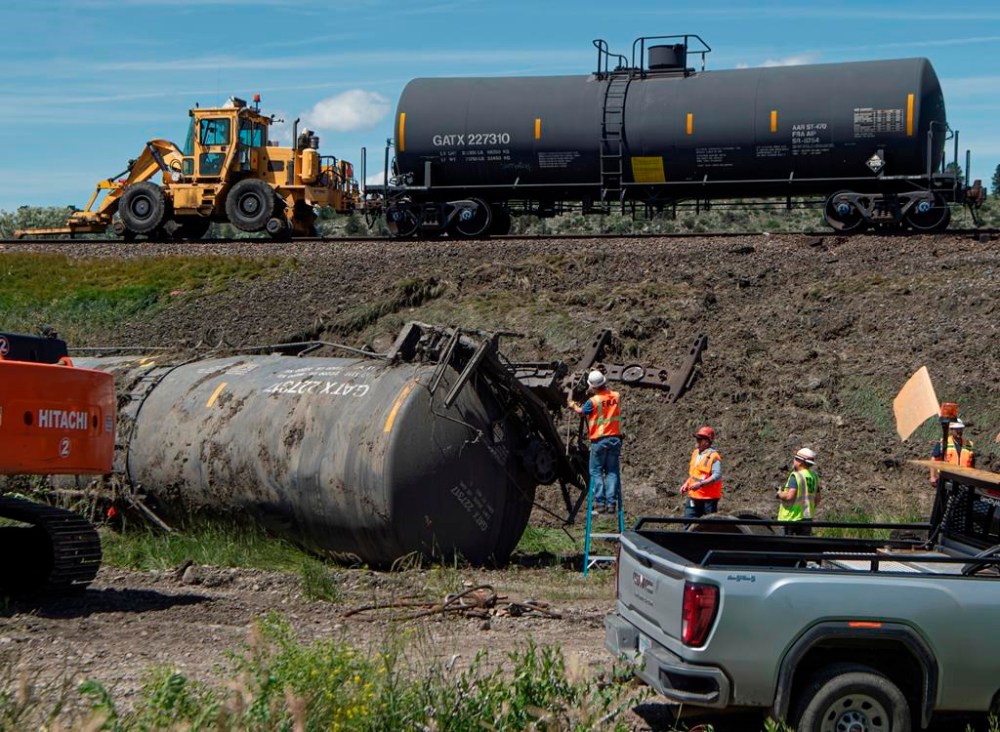
Crews were still trying to figure out the best way to remove the cars since the crash was so extensive and there was a lot of damage to them, Stamey said.
The Federal Railroad Administration was leading the investigation into the cause of the derailment but did not have any preliminary information about the probe to share, spokesperson Daniel Griffin said.
The bridge collapse also took out a fiber-optic cable providing internet service to many customers in the state, the high-speed provider Global Net said. It was still providing service on a back-up route but some users do not have service or were experiencing very slow connections on Sunday, the company said in a recorded update on its phone line.
The Yellowstone saw record flooding in 2022 that caused extensive damage to Yellowstone National Park and adjacent towns in Montana. The river where the bridge collapsed flows away from Yellowstone National Park, which is about 110 miles (177 kilometers) southwest.
Robert Bea, a retired engineering professor at the University of California Berkeley who has analyzed the causes of hundreds of major disasters, said repeated years of heavy river flows provided a clue to the possible cause.
“The high water flow translates to high forces acting directly on the pier and, importantly, on the river bottom,” Bea said Saturday. “You can have erosion or scour that removes support from the foundation. High forces translate to a high likelihood of a structural or foundation failure that could act as a trigger to initiate the accident.”
An old highway bridge that paralleled the railroad bridge — together, they were called the Twin Bridges — was removed in 2021 after the Montana Department of Transportation determined it was in imminent danger of falling. The railroad bridge is inspected twice a year and the most recent inspection was performed in May, Garland said.
The Federal Railroad Administration will review the inspection reports to see if they complied with federal safety standards, Griffin said.
____
This story has been updated to correct the spelling to David Stamey, not David Samey.