

US deploys nuclear-armed submarine to South Korea in show of force against North Korea
Advertisement
Read this article for free:
or
Already have an account? Log in here »
To continue reading, please subscribe:

Digital Subscription
One year of digital access for only $205*
- Enjoy unlimited reading on winnipegfreepress.com
- Read the E-Edition, our digital replica newspaper
- Access News Break, our award-winning app
- Play interactive puzzles
*First annual payment billed as $205.00 + GST for one year. This annual subscription will automatically renew at $233.00 + GST every 52 weeks (10% off the regular annual price of $259.35). Offer available to new and qualified returning subscribers only. Cancel any time.
To continue reading, please subscribe:
Add Free Press access to your Brandon Sun subscription for only an additional
$1 for the first 4 weeks*
- Enjoy unlimited reading on winnipegfreepress.com
- Read the E-Edition, our digital replica newspaper
- Access News Break, our award-winning app
- Play interactive puzzles
*Your next Brandon Sun subscription payment will increase by $1.00 and you will be charged $17.95 plus GST for four weeks. After four weeks, your payment will increase to $24.95 plus GST every four weeks.
Read unlimited articles for free today:
or
Already have an account? Log in here »
Hey there, time traveller!
This article was published 17/07/2023 (1164 days ago), so information in it may no longer be current.
SEOUL, South Korea (AP) — The United States deployed a nuclear-armed submarine to South Korea on Tuesday for the first time in four decades, as the allies warned North Korea that any use of the North’s nuclear weapons in combat would result in the end of its regime.
Periodic visits by U.S. nuclear ballistic missile-capable submarines to South Korea were one of several agreements reached by the two countries’ presidents in April in response to North Korea’s expanding nuclear threat. They also agreed to establish a bilateral Nuclear Consultative Group and expand military exercises.
The USS Kentucky, an Ohio-class submarine, arrived at the South Korean port of Busan on Tuesday afternoon, South Korea’s Defense Ministry said. It is the first visit by a U.S. nuclear-armed submarine to South Korea since the 1980s, it said.
Defense Minister Lee Jong-Sup called the submarine’s visit a demonstration of U.S. resolve in implementing its “extended deterrence” commitment, a pledge by the U.S. to use its full military capabilities, including nuclear weapons, to protect its allies, the ministry said in a statement.
He said the submarine’s visit “shows the allies’ overwhelming capability and posture against North Korea.”
During the Cold War in the late 1970s, U.S. nuclear-armed ballistic missile submarines made frequent visits to South Korea, sometimes two or three times per month, according to the Federation of American Scientists. It was a period when the U.S. had hundreds of nuclear warheads located in South Korea. But in 1991, the United States withdrew all of its nuclear weapons from the Korean Peninsula.
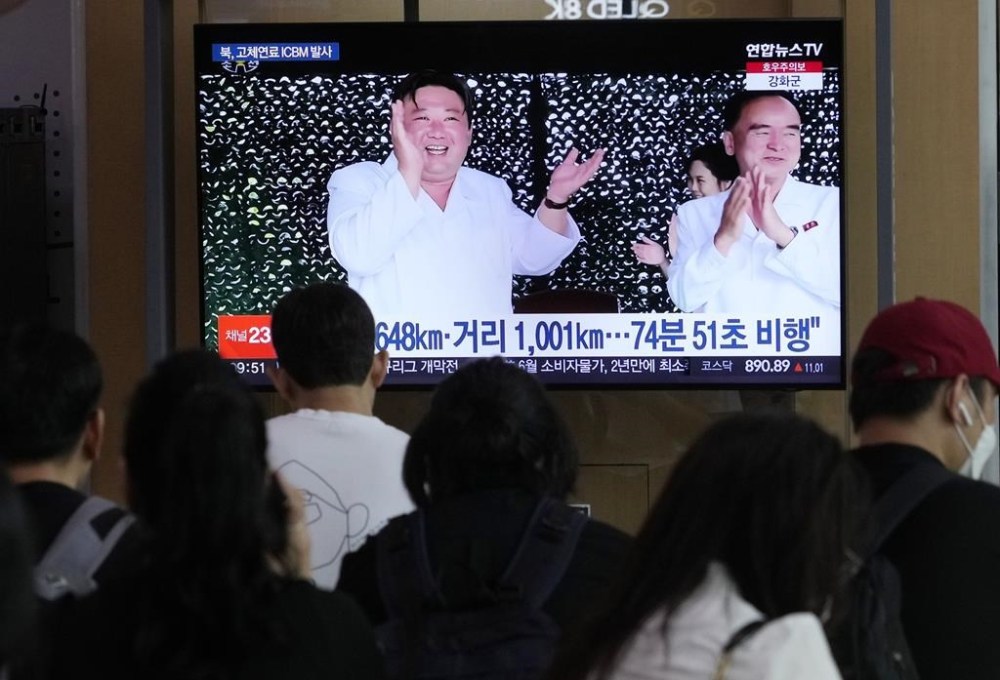
North Korea’s nuclear ambitions have taken on a new urgency after it threatened to use nuclear weapons in conflicts with its rivals and conducted about 100 missile tests since the start of last year. Last week, North Korea conducted a second test of a more mobile and powerful intercontinental ballistic missile designed to strike the mainland United States. After observing that launch, North Korean leader Kim Jong Un vowed to further strengthen his country’s nuclear combat capabilities.
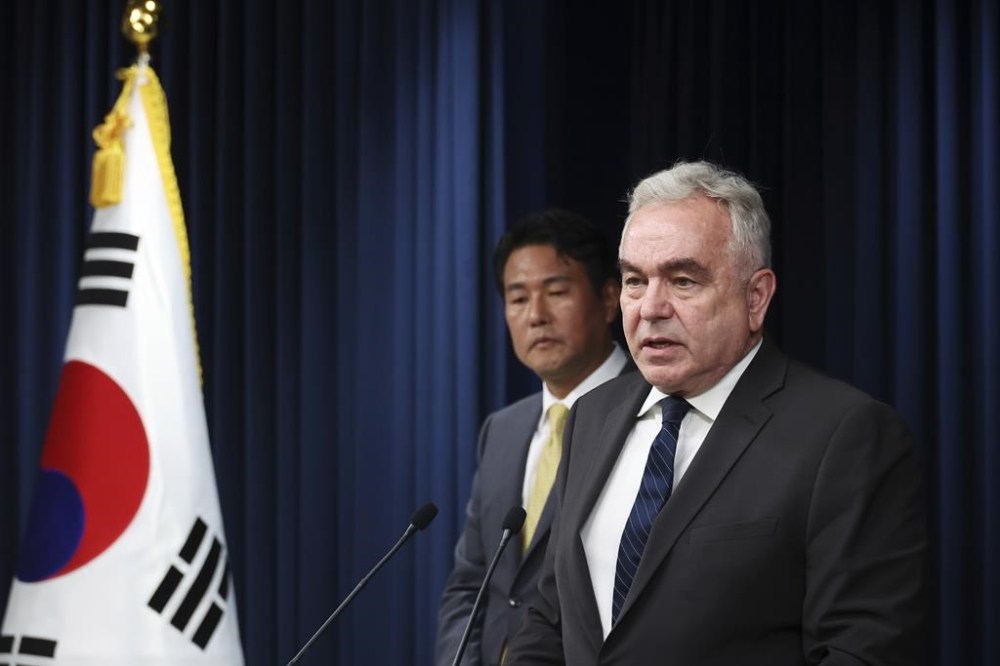
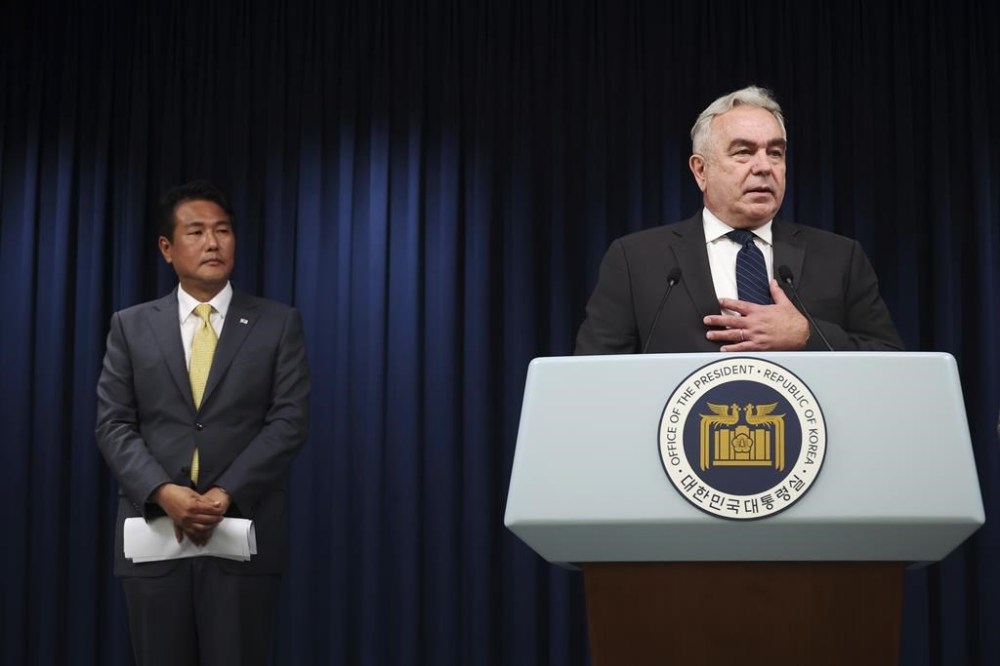
Also on Tuesday, South Korean and U.S. officials held the inaugural meeting of the Nuclear Consultative Group in Seoul to discuss ways to strengthen deterrence against North Korea’s nuclear threats.
“Any nuclear attack by North Korea against the United States or its allies is unacceptable and will result in the end of that regime,” the two countries said in a joint statement after the meeting.
President Joe Biden issued a similar warning after his summit in Washington with South Korean President Yoon Suk Yeol in April.
“Both sides affirmed that the NCG will play an integral role in discussing and advancing bilateral approaches, including guidelines, to nuclear and strategic planning and responses to (North Korean) aggression,” the statement said.
The consultative body is tasked with sharing information on nuclear and strategic weapons operation plans and joint operations. The U.S. will retain operational control of its nuclear weapons. U.S. officials say the group’s establishment and other steps announced in April were meant to ease South Korean worries about North Korean provocations while keeping Seoul from pursuing its own nuclear program.
Earlier Tuesday, Yoon told a Cabinet meeting that the launching of the consultative group “will serve as an important starting point to establish a powerful, effective (South) Korea-U.S. extended deterrence,” and that their alliance has been “upgraded with a new, nuclear-based paradigm.”
The meeting was co-chaired by U.S. National Security Coordinator for Indo-Pacific Affairs Kurt Campbell and South Korean Deputy National Security Director Kim Tae-hyo.
North Korea condemned the Biden-Yoon agreements in April, saying they proved the allies’ extreme hostility toward the North. It threatened to further escalate its nuclear use doctrine in protest.
In a statement Monday, Kim’s powerful sister and senior adviser, Kim Yo Jong, warned that U.S. moves to reinforce its extended deterrence commitment to South Korea will make North Korea “go farther away from the negotiating table desired by (the U.S.)” and beef up its own military capability.
“(North Korea) is ready for resolutely countering any acts of violating its sovereignty and territorial integrity,” Kim Yo Jong said. “The U.S. should stop its foolish act of provoking (North Korea) even by imperiling its security.”