

Bill apparently aimed at halting criticism of Pakistani intelligence figures expected to become law
Advertisement
Read this article for free:
or
Already have an account? Log in here »
To continue reading, please subscribe:

Digital Subscription
One year of digital access for only $205*
- Enjoy unlimited reading on winnipegfreepress.com
- Read the E-Edition, our digital replica newspaper
- Access News Break, our award-winning app
- Play interactive puzzles
*First annual payment billed as $205.00 + GST for one year. This annual subscription will automatically renew at $233.00 + GST every 52 weeks (10% off the regular annual price of $259.35). Offer available to new and qualified returning subscribers only. Cancel any time.
To continue reading, please subscribe:
Add Free Press access to your Brandon Sun subscription for only an additional
$1 for the first 4 weeks*
- Enjoy unlimited reading on winnipegfreepress.com
- Read the E-Edition, our digital replica newspaper
- Access News Break, our award-winning app
- Play interactive puzzles
*Your next Brandon Sun subscription payment will increase by $1.00 and you will be charged $17.95 plus GST for four weeks. After four weeks, your payment will increase to $24.95 plus GST every four weeks.
Read unlimited articles for free today:
or
Already have an account? Log in here »
Hey there, time traveller!
This article was published 01/08/2023 (1150 days ago), so information in it may no longer be current.
ISLAMABAD (AP) — Pakistan’s lower house Tuesday passed a bill that recommends a three-year prison term for anyone found guilty of disclosing the identity of an intelligence official, a move apparently aimed at stifling criticism of military-backed spy chiefs and agents.
The legislation comes amid growing criticism of military and intelligence officers by former Prime Minister Imran Khan and his deputies. It is expected to pass the Senate this week and then go to President Arif Alvi for signing into law, a formality.
It was “necessary to amend the official secret act law to make it more effective,” said Parliamentary Affairs minister Murtaza Abbasi, who introduced the legislation in the National Assembly.
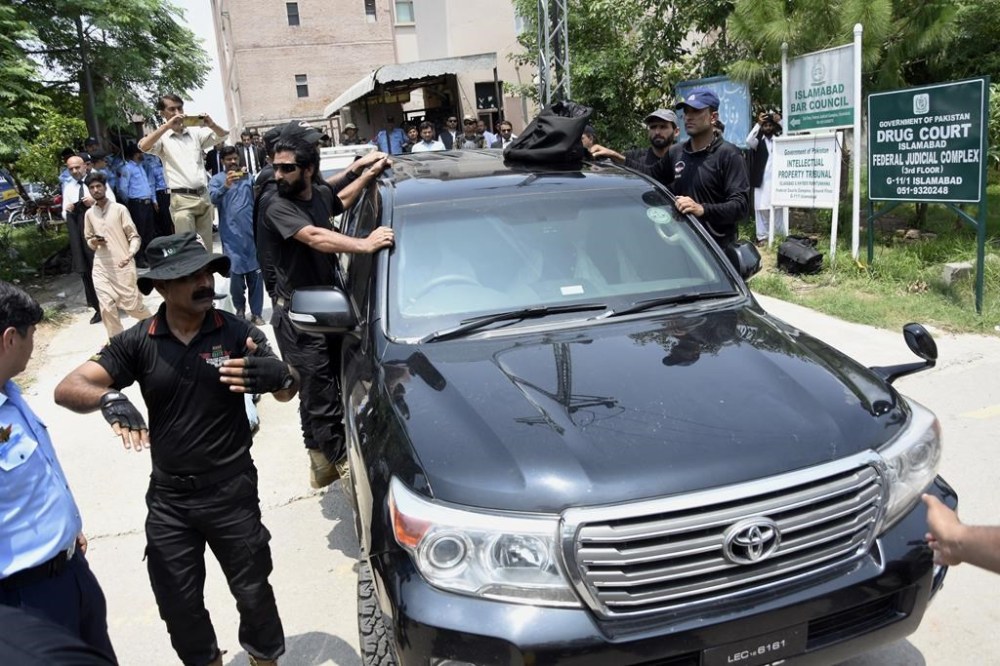
Khan was the first politician to publicly disclose the names of some of Pakistan’s senior intelligence officers, saying they were conspiring against him.
He even claimed that Maj. Gen. Faisal Naseer, who works at Inter-Services Intelligence, or ISI, was behind the Nov. 3 gun attack that wounded Khan when he led a protest march to pressure the government to agree to early elections.
One of Khan’s supporters was killed in the shooting. The gunman was immediately arrested, and police later released a video of him in custody confessing to the shooting and saying he acted alone.
Since then, Khan has alleged that Pakistan’s Prime Minister Shehbaz Sharif, Interior Minister Rana Sanaullah and Naseer conspired to attack him. Sharif and the military have denied the charges.
Khan was replaced by Sharif in April 2022 in a no-confidence vote in parliament.
On Tuesday, lawmakers from Sharif’s government sent the new legislation to the National Assembly and amended the Secret Act, proposing that anyone who discloses the names of intelligence officers, informers or sources would face three years in prison.
The legislation comes days after the National Assembly and Senate passed another bill recommending up to five years in prison for both currently serving and retired officers found guilty of taking part in politics or disclosing sensitive information.
Sharif is making new laws only two weeks before the current parliament completes its five-year term, paving the way for parliamentary elections in October or November.
According to analysts, the legislation done in recent weeks is primarily aimed at taking action against some of those retired officers who have been “maligning” the military since the ouster of Khan, who claims his removal was part of a U.S. plot.
Currently, Khan is facing more than 150 legal cases, including several on charges of corruption, “terrorism” and inciting people to violence over deadly protests in May that saw his followers attack government and military property across the country.
The violence subsided only after Khan was released on an order from Pakistan’s Supreme Court.