

US imposes sanctions on 2 Turkey-backed Syrian militias and the groups’ leaders
Advertisement
Read this article for free:
or
Already have an account? Log in here »
To continue reading, please subscribe:

Digital Subscription
One year of digital access for only $205*
- Enjoy unlimited reading on winnipegfreepress.com
- Read the E-Edition, our digital replica newspaper
- Access News Break, our award-winning app
- Play interactive puzzles
*First annual payment billed as $205.00 + GST for one year. This annual subscription will automatically renew at $233.00 + GST every 52 weeks (10% off the regular annual price of $259.35). Offer available to new and qualified returning subscribers only. Cancel any time.
To continue reading, please subscribe:
Add Free Press access to your Brandon Sun subscription for only an additional
$1 for the first 4 weeks*
- Enjoy unlimited reading on winnipegfreepress.com
- Read the E-Edition, our digital replica newspaper
- Access News Break, our award-winning app
- Play interactive puzzles
*Your next Brandon Sun subscription payment will increase by $1.00 and you will be charged $17.95 plus GST for four weeks. After four weeks, your payment will increase to $24.95 plus GST every four weeks.
Read unlimited articles for free today:
or
Already have an account? Log in here »
Hey there, time traveller!
This article was published 17/08/2023 (1139 days ago), so information in it may no longer be current.
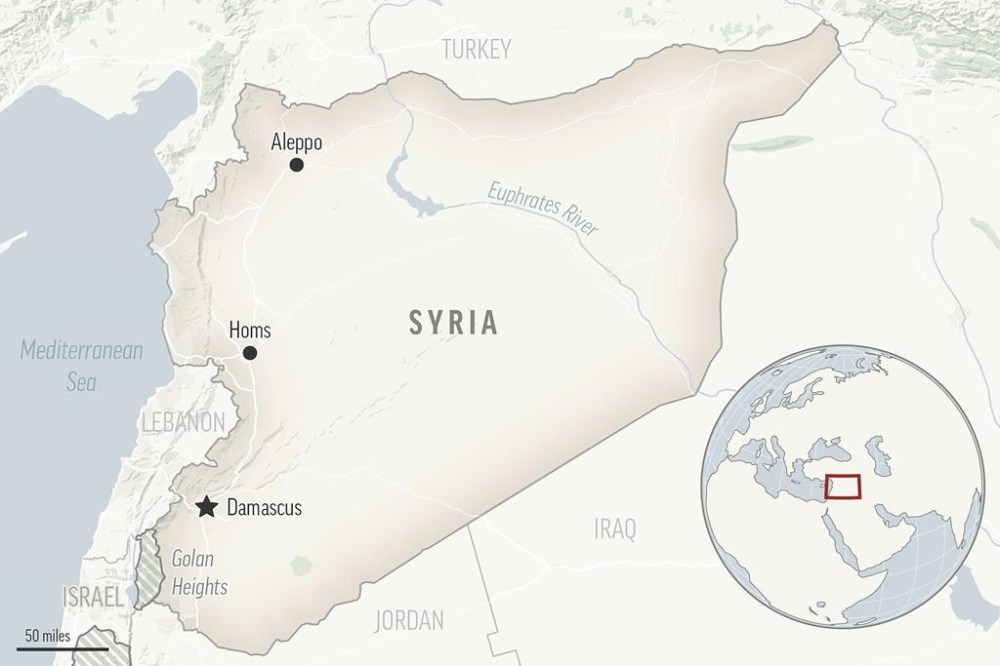
BEIRUT (AP) — The United States on Thursday imposed sanctions on two Turkey-backed Syrian militias and the groups’ leaders accused of human rights abuses in Syria’s northwestern, opposition-held enclave.
The groups are operating in the town of Afrin, which has been under Turkish-backed opposition forces since 2018, following an Ankara-backed military operation. That offensive pushed Syrian Kurdish fighters and thousands of Kurdish residents from the area.
The Treasury Department’s Office of Foreign Assets Control sanctioned The Suleiman Shah Brigade and The Hamza Division, as well as their leaders, Mohammad Hussein al-Jasim, Walid Hussein al-Jasim, and Sayf Boulad Abu Bakr.
The Suleiman Shah Brigade was accused of abductions and extortion of residents, especially Afrin’s Kurdish residents, to force them to abandon their homes and flee or to “pay large ransoms for return of their property or family members”.
The Treasury said The Hamza Division was also involved in running detention centers where it held abducted victims for ransom who were tortured and sexually abused.
Mohammad Hussein al-Jasim, who leads The Suleiman Shah Brigade, allegedly ordered his forces to displace Kurdish residents and give their property to Syrians from outside the area “often related” to fighters of the brigade.
The Treasury estimated that al-Jasim was ”likely generating tens of millions of dollars a year” through abductions, confiscations, and ransoms.
Al-Jasim’s Turkey-based car dealership Al-Safir Oto was also listed, because he allegedly invested his money there. According to the announcement, commanders of his brigade managed the dealership’s different branches. It was co-owned by sanctioned militia leader Ahmad Ihsan Fayyad al-Hayes, who heads the Ahrar Al-Sharqiya group.
His younger brother, Walid Hussein al-Jasim, was accused of several cases of sexual assault, as well as killing a prisoner unable to pay ransom in 2020.
Meanwhile, the head of The Hamza Brigades, Sayf Boulad Abu Bakr, was sanctioned for the “brutal repression of the local population.” The statement said he had been involved in the kidnapping of Kurdish women and severely abusing prisoners, sometimes killing them.