

Mississippi seeks new court hearing to revive its permanent stripping of some felons’ voting rights
Advertisement
Read this article for free:
or
Already have an account? Log in here »
To continue reading, please subscribe:

Digital Subscription
One year of digital access for only $205*
- Enjoy unlimited reading on winnipegfreepress.com
- Read the E-Edition, our digital replica newspaper
- Access News Break, our award-winning app
- Play interactive puzzles
*First annual payment billed as $205.00 + GST for one year. This annual subscription will automatically renew at $233.00 + GST every 52 weeks (10% off the regular annual price of $259.35). Offer available to new and qualified returning subscribers only. Cancel any time.
To continue reading, please subscribe:
Add Free Press access to your Brandon Sun subscription for only an additional
$1 for the first 4 weeks*
- Enjoy unlimited reading on winnipegfreepress.com
- Read the E-Edition, our digital replica newspaper
- Access News Break, our award-winning app
- Play interactive puzzles
*Your next Brandon Sun subscription payment will increase by $1.00 and you will be charged $17.95 plus GST for four weeks. After four weeks, your payment will increase to $24.95 plus GST every four weeks.
Read unlimited articles for free today:
or
Already have an account? Log in here »
Hey there, time traveller!
This article was published 18/08/2023 (1149 days ago), so information in it may no longer be current.
NEW ORLEANS (AP) — A court ruling striking down Mississippi’s practice of permanently stripping voting rights from people convicted of certain felonies should be reconsidered and reversed, the state said Friday as it asked for new hearing by the 5th U.S. Circuit Court of Appeals.
Enforcement of the voting ban, which is part of the state’s constitution, was blocked by in a 2-1 decision by a panel of 5th Circuit judges on Aug. 4. Mississippi attorneys, led by state Attorney General Lynn Fitch, asked the full New Orleans-based court, with 16 active members, to reconsider the case, saying the earlier ruling conflicts with Supreme Court precedent and rulings in other circuit courts.
The voting ban affects Mississippi residents convicted of specific felonies, including murder, forgery and bigamy.
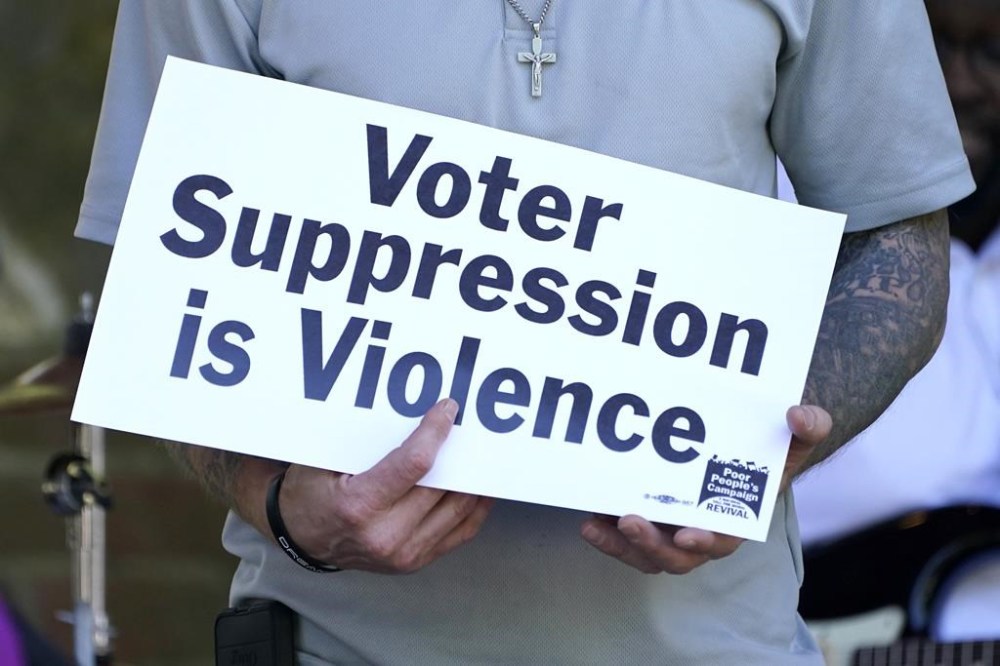
The Aug. 4 ruling held that denying voting rights violated the constitutional ban on cruel and unusual punishment. Mississippi lawyers argued Friday that the panel’s decision would “inflict profound damage and sow widespread confusion.”
If the ruling stands, tens of thousands of people could regain voting rights, possibly in time for the Nov. 7 general election for governor and other statewide offices. But the future of the ruling is uncertain at the 5th Circuit, which is widely considered among the most conservative of the federal appellate courts.
The 5th Circuit last year rejected a call to end the state’s prohibition of felons’ voting, ruling in a lawsuit that argued that the Jim Crow-era authors of the Mississippi Constitution stripped voting rights for crimes they thought Black people were more likely to commit, including forgery, larceny and bigamy. The Supreme Court let that decision stand.
The majority in the Aug. 4 decision, consisted of judges nominated to the court by Democratic presidents: Carolyn Dineen King, nominated by President Jimmy Carter, and James L. Dennis, nominated by President Bill Clinton. Judge Edith Jones, nominated by Republican President Ronald Reagan, strongly dissented.
The 5th Circuit currently has one vacancy. If it agrees to the state’s request, the case would likely be heard by the court’s current contingent of 16 full-time “active” judges. Dennis and King are both on “senior status” with a limited work load. But as participants in the panel hearing, they could be part of the full-court hearing under court rules.
Of the 16 active judges, 12 are Republican nominees.