

Spain’s king begins talks with party leaders in hopes of choosing one to form a government
Advertisement
Read this article for free:
or
Already have an account? Log in here »
To continue reading, please subscribe:

Digital Subscription
One year of digital access for only $205*
- Enjoy unlimited reading on winnipegfreepress.com
- Read the E-Edition, our digital replica newspaper
- Access News Break, our award-winning app
- Play interactive puzzles
*First annual payment billed as $205.00 + GST for one year. This annual subscription will automatically renew at $233.00 + GST every 52 weeks (10% off the regular annual price of $259.35). Offer available to new and qualified returning subscribers only. Cancel any time.
To continue reading, please subscribe:
Add Free Press access to your Brandon Sun subscription for only an additional
$1 for the first 4 weeks*
- Enjoy unlimited reading on winnipegfreepress.com
- Read the E-Edition, our digital replica newspaper
- Access News Break, our award-winning app
- Play interactive puzzles
*Your next Brandon Sun subscription payment will increase by $1.00 and you will be charged $17.95 plus GST for four weeks. After four weeks, your payment will increase to $24.95 plus GST every four weeks.
Read unlimited articles for free today:
or
Already have an account? Log in here »
Hey there, time traveller!
This article was published 21/08/2023 (1139 days ago), so information in it may no longer be current.
MADRID (AP) — King Felipe VI began consultations with leaders of Spain’s political parties Monday to see which one has the best chance to form a government following an inconclusive national election last month.
The July 23 election left no obvious coalition with a clear path to power. Parties on the left and the right received almost an equal number of seats.
The king started his talks with the representatives of several smaller parties. He is expected to wrap up the sessions Tuesday, when he plans to receive acting Prime Minister Pedro Sánchez, whose Spanish Socialist Workers’ Party finished second in the election, and Alberto Núñez Feijóo, whose right-of-center Popular Party won the most votes.
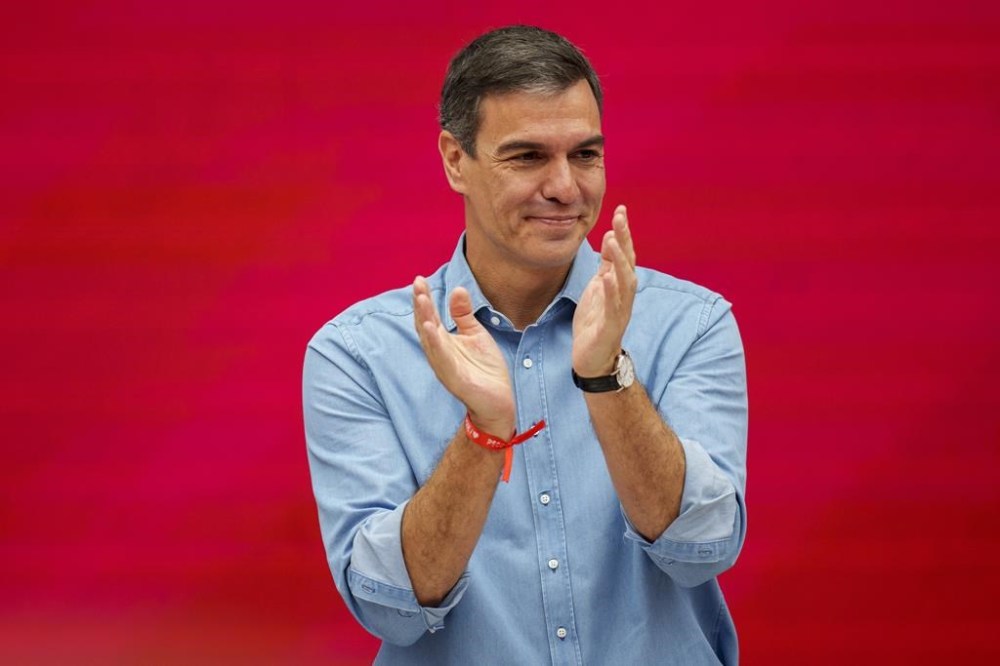
Both Feijóo and Sánchez hope to receive the mandate to try to form a government, but it remains to be seen which of them can muster an absolute majority of 176 votes to support them in Spain’s 350-seat parliament.
Sánchez’s Socialists, the center-left Sumar (Joining Forces) and four smaller parties together won 171 seats. The Popular Party, the far-right Vox party, and two smaller parties secured a total of 172 seats.
A majority of lawmakers in the new parliament voted Thursday to elect a Socialist candidate as Congress of Deputies speaker, breathing some life into Sánchez´s aspirations.
However, the Socialists had to rely on 14 votes from two separatist parties based in Spain’s Catalonia region, including seven from Junts (Together), a party led by fugitive Catalan politician Carles Puigdemont, who fled Spain after leading an unsuccessful 2017 push for the region to secede from the rest of the country.
Junts stressed that Thursday’s vote was solely for the speaker position and did not indicate the party would back giving Sánchez another term as prime minister.
If the party ends up pledging its support to Sánchez, Puigdemont, who lives in Brussels and faces criminal charges in Spain, would be in position to determine the course of Spain’s politics for the next four years.
The Popular Party’s campaign for last month’s election sought to persuade voters that Sánchez was too close to the separatists.
After the king selects a leader, the chamber speaker sets a date for a parliamentary vote. If the candidate fails to secure the backing of lawmakers, a two-month countdown starts toward a new election. During that time, another party leader could try to assemble the votes to form a government.