

Alaska report details 280 missing Indigenous people, including whether disappearances are suspicious
Advertisement
Read this article for free:
or
Already have an account? Log in here »
To continue reading, please subscribe:

Digital Subscription
One year of digital access for only $205*
- Enjoy unlimited reading on winnipegfreepress.com
- Read the E-Edition, our digital replica newspaper
- Access News Break, our award-winning app
- Play interactive puzzles
*First annual payment billed as $205.00 + GST for one year. This annual subscription will automatically renew at $233.00 + GST every 52 weeks (10% off the regular annual price of $259.35). Offer available to new and qualified returning subscribers only. Cancel any time.
To continue reading, please subscribe:
Add Free Press access to your Brandon Sun subscription for only an additional
$1 for the first 4 weeks*
- Enjoy unlimited reading on winnipegfreepress.com
- Read the E-Edition, our digital replica newspaper
- Access News Break, our award-winning app
- Play interactive puzzles
*Your next Brandon Sun subscription payment will increase by $1.00 and you will be charged $17.95 plus GST for four weeks. After four weeks, your payment will increase to $24.95 plus GST every four weeks.
Read unlimited articles for free today:
or
Already have an account? Log in here »
Hey there, time traveller!
This article was published 28/08/2023 (1112 days ago), so information in it may no longer be current.
ANCHORAGE, Alaska (AP) — Law enforcement has prepared a first-of-its-kind report detailing missing Alaska Natives and American Indian people in Alaska, a newspaper reported.
The Alaska Department of Public Safety last week released the Missing Indigenous Persons Report, which includes the names of 280 people, dates of their last contact and whether police believe the disappearance was suspicious in nature, the Anchorage Daily News reported.
In the report, the circumstances of each missing person in classified into one of four categories: environmental, nonsuspicious, suspicious or unknown. This is considered a point-in-time snapshot because it includes people who were missing as of July 14. Austin McDaniel, a Department of Public Safety spokesperson, said it’s possible some have since been found.
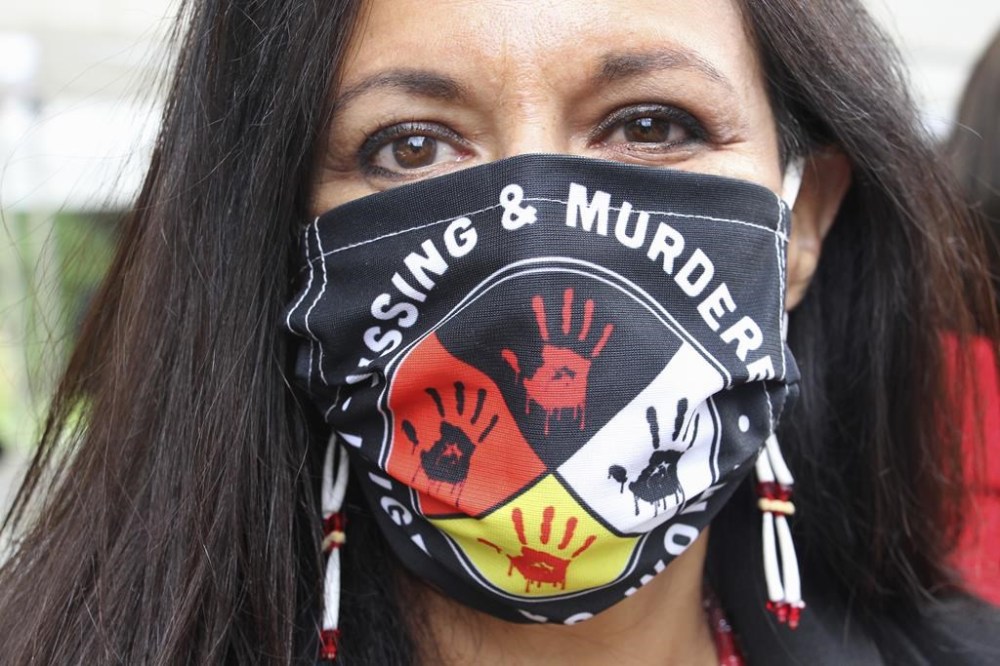
About 75% of the cases fit in the environmental category: The person is believed to have died or disappeared in the wilderness after a plane crash, boat sinking or other outdoor accident, and their remains have never been found. Some cases here date back to the 1960s. Even though some people have been declared legally dead, McDaniel said they are considered missing until law enforcement “lays eyes on them.”
Of the remaining cases, 18 were ruled suspicious, 30 as not suspicious and 17 unknown.
The list is not complete. It only represents missing persons cases investigated by the Anchorage Police Department or the Alaska State Troopers and not those of other police departments in Alaska, like Fairbanks or Juneau.
The statewide agency hopes smaller departments will contribute data for quarterly updates, McDaniel said.
Each name on the list represents a loved and missed person, said Charlene Aqpik Apok, executive director of Data for Indigenous Justice.
This organization created its own database of missing and murdered Indigenous people in 2021 and has advocated for Alaska law enforcement to better track the issue.
“This report was definitely a step in the right direction,” Apok said.
Detailing the circumstances of disappearances could present a clearer picture to law enforcement of the overall situation.
“Going missing while going on a hike or hunting is very different than someone being abducted,” Apok said. “We really wanted to clarify those circumstances.”
She said it’s also validating for families to see what they long suspected about the disappearances.
“For a very long time we’ve been hearing from families, this is what happened, and it hasn’t been recognized,” she said.
Much of the data in the new state report is already in two existing databases of missing people, the state’s Missing Persons Clearinghouse and NamUs, a nationwide database overseen by the U.S. Department of Justice. The state says it has committed to regularly updating the data in NamUs, something it hasn’t always done before and isn’t mandated.