

Journalist for top Polish paper allegedly denied medication in Belarusian prison
Advertisement
Read this article for free:
or
Already have an account? Log in here »
To continue reading, please subscribe:

Digital Subscription
One year of digital access for only $205*
- Enjoy unlimited reading on winnipegfreepress.com
- Read the E-Edition, our digital replica newspaper
- Access News Break, our award-winning app
- Play interactive puzzles
*First annual payment billed as $205.00 + GST for one year. This annual subscription will automatically renew at $233.00 + GST every 52 weeks (10% off the regular annual price of $259.35). Offer available to new and qualified returning subscribers only. Cancel any time.
To continue reading, please subscribe:
Add Free Press access to your Brandon Sun subscription for only an additional
$1 for the first 4 weeks*
- Enjoy unlimited reading on winnipegfreepress.com
- Read the E-Edition, our digital replica newspaper
- Access News Break, our award-winning app
- Play interactive puzzles
*Your next Brandon Sun subscription payment will increase by $1.00 and you will be charged $17.95 plus GST for four weeks. After four weeks, your payment will increase to $24.95 plus GST every four weeks.
Read unlimited articles for free today:
or
Already have an account? Log in here »
Hey there, time traveller!
This article was published 30/08/2023 (1131 days ago), so information in it may no longer be current.
TALLINN, Estonia (AP) — A former correspondent for a top Polish newspaper has been denied life-saving heart medication in Belarusian prison, a representative of Belarus’ largest Polish community organization told reporters Tuesday.
Andrzej Poczobut, 50, a former reporter with the Gazeta Wyborcza daily, has been put in solitary confinement with no access to lawyers or medical care, Marek Zaniewski from the Union of Poles in Belarus said at a press briefing.
The country’s largest and most prominent rights group, Viasna, also reported on its website that Poczobut has been transferred to a one-man “punishment cell” at a prison in Navapolatsk, a city in northern Belarus, where he is serving an eight-year sentence.
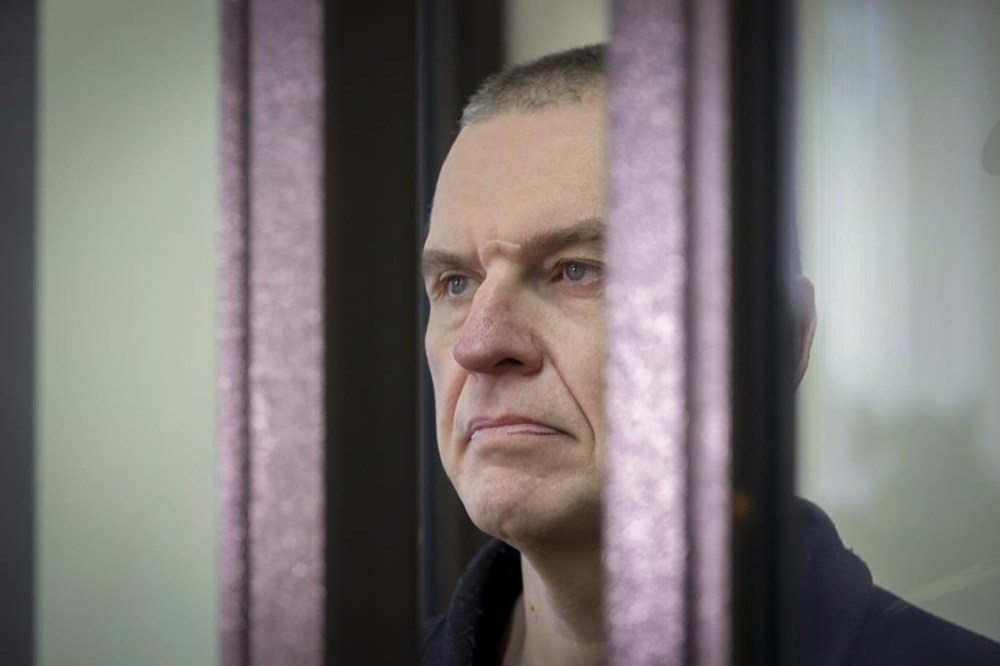
Poczobut, a prominent member of Belarus’ sizable Polish minority, was found guilty in February of “sowing discord” and harming the country’s national security.
His closed trial in the Belarusian city of Grodno was widely seen as part of Minsk’s sweeping crackdown on opposition figures and civil society. Belarus’ Supreme Court dismissed Poczobut’s appeal in May, and he has remained behind bars ever since his detention in March 2021.
Zaniewski, the Polish community leader, described Poczobut’s situation as “very difficult” and said the conditions in which he is held continue to deteriorate.
“Andrzej is being kept in complete isolation, but we have learned that he is not receiving heart medication, which he needs to take every day. This worries us very much,” Zaniewski said.
Poczobut’s wife Oksana told The Associated Press on Tuesday that the conditions of his imprisonment were “akin to torture.” She said that following his transfer to Navapolatsk prison, he was placed in a “punishment cell” for refusing to do hard labor. His visiting rights were also revoked.
“Andrzej has been diagnosed with a heart rhythm disorder and high blood pressure. Events have been developing according to the worst-case scenario,” Oksana Poczobut said.
Poczobut had extensively covered mass protests that engulfed Belarus in 2020 in the wake of the disputed presidential election that handed authoritarian President Alexander Lukashenko his sixth term in office. Both the Belarusian opposition and the West have denounced the vote as rigged.
Poczobut’s indictment pointed to his coverage of the protests, his statements in support of ethnic Poles in Belarus and a reference to the 1939 Soviet invasion of Poland as an act of “aggression” as evidence of his guilt.
The journalist chose to remain in Belarus despite Minsk’s ongoing crackdown that saw more than 35,000 people arrested, thousands beaten by police, and tens of thousands fleeing abroad.
According to Viasna, the rights group, Poczobut refused to sign a petition to be pardoned by Lukashenko following his detention. The journalist’s relatives claimed he was subsequently forbidden family visits and was unable to receive letters from his 12-year-old son.
Polish authorities have repeatedly called on Minsk to release Poczobut, while Belarusian opposition leader Sviatlana Tsikhanouskaya described the verdict against him as Lukashenko’s “personal revenge.”
Viasna has also included Poczobut in its list of 1,496 political prisoners held by Belarus.