

Appeals court agrees that a former Tennessee death row inmate can be eligible for parole in 4 years
Advertisement
Read this article for free:
or
Already have an account? Log in here »
To continue reading, please subscribe:

Digital Subscription
One year of digital access for only $205*
- Enjoy unlimited reading on winnipegfreepress.com
- Read the E-Edition, our digital replica newspaper
- Access News Break, our award-winning app
- Play interactive puzzles
*First annual payment billed as $205.00 + GST for one year. This annual subscription will automatically renew at $233.00 + GST every 52 weeks (10% off the regular annual price of $259.35). Offer available to new and qualified returning subscribers only. Cancel any time.
To continue reading, please subscribe:
Add Free Press access to your Brandon Sun subscription for only an additional
$1 for the first 4 weeks*
- Enjoy unlimited reading on winnipegfreepress.com
- Read the E-Edition, our digital replica newspaper
- Access News Break, our award-winning app
- Play interactive puzzles
*Your next Brandon Sun subscription payment will increase by $1.00 and you will be charged $17.95 plus GST for four weeks. After four weeks, your payment will increase to $24.95 plus GST every four weeks.
Read unlimited articles for free today:
or
Already have an account? Log in here »
Hey there, time traveller!
This article was published 31/08/2023 (1132 days ago), so information in it may no longer be current.
MEMPHIS, Tenn. (AP) — An appeals court has upheld a judge’s ruling that allows a former Tennessee death row inmate to be eligible for parole in four years after spending more than three decades in prison.
The Tennessee Court of Criminal Appeals decided Wednesday that Shelby County Judge Paula Skahan properly ruled in January 2022 that Pervis Payne should serve the remainder of two life sentences at the same time, or concurrently, in the killings of a mother and her 2-year-old daughter.
Payne, 56, received the new sentences after he was removed from death row by the judge in November 2021 based on decisions by two court-appointed experts that Payne was intellectually disabled and could not be executed.
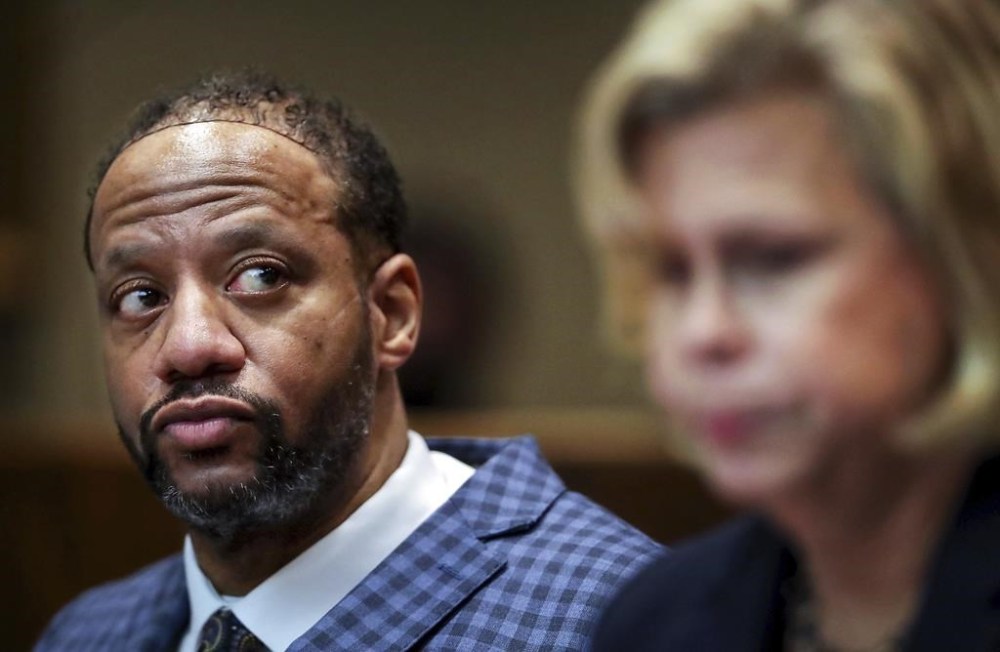
Payne was convicted of first-degree murder and received the death penalty for the 1987 slayings of Charisse Christopher and her 2-year-old daughter, Lacie Jo, who were repeatedly stabbed in their Millington apartment and left in a pool of blood. Christopher’s son, Nicholas, who was 3 at the time, also was stabbed but survived.
Under state law in effect at the time of Payne’s original sentencing, he must serve at least 30 years of his life sentences. His sentence in the stabbing of Nicolas has remained in place. Essentially, Skahan’s ruling meant Payne is eligible for parole after serving 39 years in prison.
The appeals court ruling affirms that Payne is eligible for a parole hearing in four years, said his lawyer, Kelley Henry.
State prosecutors argued Payne should serve the life sentences consecutively, or one after the other. He would not have been eligible for parole until he was 85 if Skahan had agreed. Instead, Skahan sided with defense lawyers after they presented witnesses during a December 2021 resentencing hearing who said Payne would not be a threat to the public if he were released.
Skahan said at the time that Payne “has made significant rehabilitative efforts” and he would have an extensive support network to help him if let out of prison.
“The trial court found that the State failed to carry its burden of showing by a preponderance of the evidence that the Defendant is a dangerous offender based upon the current need to protect the public,” the appeals court ruling said.
Payne, who is Black, has always maintained his innocence. He told police he was at Christopher’s apartment building to meet his girlfriend when he heard screaming from Christopher’s apartment. He entered her apartment to help but panicked when he saw a white policeman and ran away. Christopher was white.
During his trial, prosecutors alleged Payne was high on cocaine and looking for sex when he killed Christopher and her daughter in a “drug-induced frenzy.” Shelby County district attorney Amy Weirich, who was in office at the time of Skahan’s ruling freeing Payne from death row, said the evidence overwhelmingly points to Payne as the killer. Weirich’s office initially contested the intellectual disability claims, but backed off after he was found mentally disabled.
Executions of the intellectually disabled were ruled unconstitutional in 2002, when the U.S. Supreme Court found they violate the Eighth Amendment’s ban on cruel and unusual punishment.
But until Republican Gov. Bill Lee signed a bill in May 2021 making Tennessee’s law retroactive in prohibiting the execution of the intellectually disabled, Tennessee had no mechanism for an inmate to reopen a case to press an intellectual disability claim. Payne’s lawyers have said the law was critical in freeing Payne from death row.
The case drew national attention from anti-death-penalty activists and included the involvement of the Innocence Project, which argues for the use of DNA testing in cases claiming wrongful conviction. DNA tests failed to exonerate Payne, but his lawyers say they will keep fighting to prove his innocence.
“Mr. Payne acts like an innocent man because he is an innocent man,” said Henry, his lawyer. “One day is too long to serve in prison for a crime you didn’t commit.”