

Australians start applying for mail-in ballots ahead of Indigenous Voice referendum
Advertisement
Read this article for free:
or
Already have an account? Log in here »
To continue reading, please subscribe:

Digital Subscription
One year of digital access for only $205*
- Enjoy unlimited reading on winnipegfreepress.com
- Read the E-Edition, our digital replica newspaper
- Access News Break, our award-winning app
- Play interactive puzzles
*First annual payment billed as $205.00 + GST for one year. This annual subscription will automatically renew at $233.00 + GST every 52 weeks (10% off the regular annual price of $259.35). Offer available to new and qualified returning subscribers only. Cancel any time.
To continue reading, please subscribe:
Add Free Press access to your Brandon Sun subscription for only an additional
$1 for the first 4 weeks*
- Enjoy unlimited reading on winnipegfreepress.com
- Read the E-Edition, our digital replica newspaper
- Access News Break, our award-winning app
- Play interactive puzzles
*Your next Brandon Sun subscription payment will increase by $1.00 and you will be charged $17.95 plus GST for four weeks. After four weeks, your payment will increase to $24.95 plus GST every four weeks.
Read unlimited articles for free today:
or
Already have an account? Log in here »
Hey there, time traveller!
This article was published 11/09/2023 (1125 days ago), so information in it may no longer be current.
CANBERRA, Australia (AP) — Voters began applying Monday for mail-in ballots ahead of the Oct. 14 referendum that would create an Indigenous Voice to Parliament, a proposal for constitutional change that opinion polls suggest is becoming increasingly likely to be rejected.
Australians will vote at the first referendum in a generation whether to enshrine in the constitution a collection of appointed Indigenous advocates aimed at giving the nation’s most disadvantaged ethnic minority more say on government policy.
People who are unable to attend a polling booth on Oct. 14 for reasons including distance, disability and prison sentences can apply from 6 p.m. Monday for authorities to provide them with postal ballots, which will be cast in Australia’s first referendum since 1999.
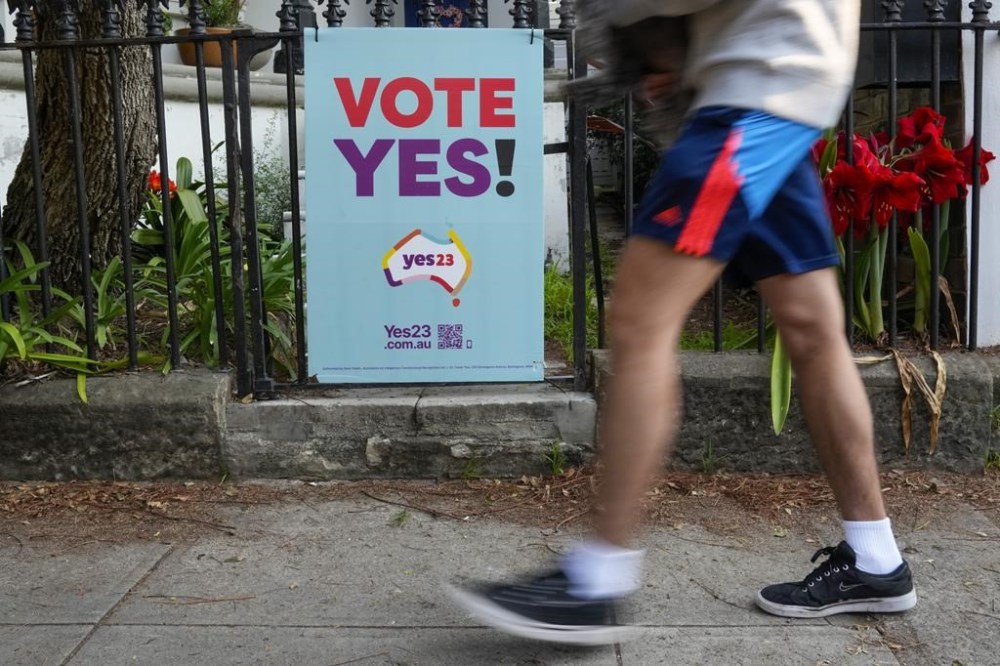
A majority of voters across the nation and in a majority of Australia’s six states need to support the referendum for it to pass. Only eight out of 44 referendums have achieved that double majority.
But a Resolve Political Monitor opinion poll published in newspapers on Monday suggested the smallest state, Tasmania, was the only one with majority support for the Voice.
National support for the Voice was at 65% when polls on the question were first held in August 2022, but support has been declining for months.
Proponents hope support will rally when voters become more engaged with the question closer to the voting day.
Prime Minister Anthony Albanese took the final step in ensuring the referendum goes ahead by directing the governor-general late Monday to issue electoral authorities with a required legal order to conduct the vote.
Opposition leader Peter Dutton had earlier urged Albanese in Parliament to call the referendum off because of the declining support in polls.
“Will the prime minister withdraw his Voice referendum so that we can avoid an outcome which sets back reconciliation and divides the nation?” Dutton asked Albanese.
Albanese criticized Dutton over his opposition to the Voice, saying the conservative party leader had “chosen politics over substance.”
The Voice referendum would be the first in Australia’s history to pass without bipartisan support.
Melbourne University election analyst Adrian Beaumont said referendums proposed by Albanese’s center-left Labor Party have always been opposed by their conservative opponents since 1946.
“It’s very clear that Voice support is slumping in all polls,” Beaumont said. “Conservative oppositions always oppose Labor referendums, and they are able to scare the electorate into opposing changes.”
Proponents say embedding the Voice in the constitution would recognize the special place that Indigenous people have in Australian history while giving them input in government policies.
Opponents argue it would be the biggest change to Australia’s democracy in the nation’s history and divide Australians along racial lines without reducing Indigenous disadvantage.
Indigenous Australians account for 3.8% of the population and they die around eight years younger than Australia’s wider population on average.